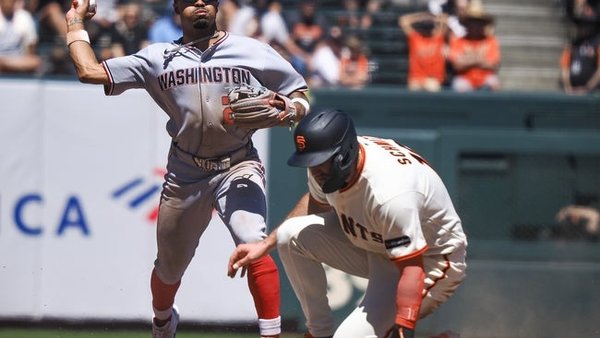
San Francisco arrives in South Florida at 31-43 with a -49 run differential, two starters on the IL, and two outfielders unavailable — while Miami has won seven of its last ten and just posted a 12-4 demolition of the Phillies. The market has the Marlins at -130, a number shaped more by TBD-starter uncertainty than by the structural gap between these two rosters.
Landen Roupp vs. TBD: San Francisco Giants at Miami Marlins Betting Preview
The market has Miami at -130 against a Giants team that is 31-43, carrying a -49 run differential, and arriving in South Florida without Heliot Ramos (quad, IL), Harrison Bader (foot, IL), Hayden Birdsong (elbow, IL), and Tyler Mahle (hamstring, IL). That’s two starters and two outfielders gone from a roster that was already thin. Meanwhile, Miami is 7-3 over its last 10 games and just posted a 12-4 demolition of the Phillies on Wednesday behind Sandy Alcantara’s six innings and Kyle Stowers going deep twice. The price at -130 is exactly at the ceiling I’m willing to pay — and this is one of those spots where the structural edges are real enough to use it.
The biggest wildcard in this game isn’t Roupp. It’s the fact that Miami’s starter is listed as TBD. That introduces genuine volatility. But here’s the counterintuitive read: a home team managing a bullpen game in their own dome, against a depleted road club, is a different situation than a road team opening with an opener. Miami knows their pen, knows the sequencing, and controls the matchups. San Francisco is the team that has to react.
This isn’t a total play — it’s a side lean built on pitching staff depth, momentum, and roster health. The Giants’ +110 is tempting on the surface given how close the numbers sit, but the structural case for Miami holds up enough to back them at this number.
Game Info & Betting Lines
- Date/Time: Friday, June 19, 2026 — 7:10 PM ET
- Venue: loanDepot Park (Dome) | Park Factor: 0.95 — slight run suppressor
- Probable Starters: Landen Roupp (SF, 5-7, 4.24 ERA) vs. TBD (MIA)
- Moneyline: San Francisco Giants +110 / Miami Marlins -130
- Run Line: Miami Marlins +1.5 (-220) / San Francisco Giants -1.5 (+180)
- Total: 8 (Over -108 / Under -112)
Why This Number Is Close
The market has set this line to reflect two things: Miami’s home field edge and recent momentum, offset by genuine uncertainty around their TBD starter. At -130, the Marlins are priced as modest favorites — roughly 56% implied win probability, which tracks almost exactly with the 56.2% home win probability the numbers produce. The line isn’t wrong. It’s just slightly incomplete.
The case for the Giants at +110 is real. Roupp is a known quantity. San Francisco’s lineup — Luis Arraez at .326, Jung Hoo Lee at .325, and Bryce Eldridge posting a .962 OPS — gives them legitimate firepower against whatever Miami deploys. Eldridge’s xwOBA of .468 and Rafael Devers’ .390 xwOBA are genuinely dangerous numbers, particularly against an unknown arm in the first few innings when sequences haven’t been established. The Giants have averaged 4.19 runs per game this season, and their recent cold stretch may be more about facing elite competition than a structural offensive collapse.
Where the market gets it slightly wrong is the weight placed on the TBD starter as a pure liability. A home bullpen game managed correctly, in a 0.95 park factor dome, against a -49 run differential road team missing two starting pitchers and two outfielders, is not the same as a road team opener against a healthy club. Miami has the infrastructure to manage it. San Francisco is piecing things together.
What Separates the Pitching
Roupp’s arsenal tells a nuanced story. His primary offering is a sinker at 93.4 mph, thrown 37.7% of the time — but that pitch carries an xwOBA-against of .355 and a whiff rate of just 9.8%. It’s a contact-inducing pitch in a dome environment, which means Miami’s lineup will see the ball in play early and often. The flip side is his curveball (28.0% usage, 76.7 mph), which is genuinely filthy — a 36.9% whiff rate and .217 xwOBA against. That’s a legitimate swing-and-miss weapon that can suppress Miami’s middle-order bats when he locates it. His overall strikeout rate of 9.93 K/9 says he’s not just a groundball artist — he can put away hitters when ahead in counts.
The concern with Roupp is the sinker-heavy workload into a lineup that makes contact and runs. Otto Lopez sits at a .374 xwOBA against right-handed pitching and a 29.2% hard-hit rate — he’s a real threat against a pitch-to-contact approach. Kyle Stowers, fresh off two homers Wednesday, carries a .432 xwOBA vs RHP (his overall xwOBA is .421; the split against right-handers is the relevant number since Roupp is a righty) and a 29.2% hard-hit rate. Even with Stowers’ 32.5% whiff rate, when he makes contact, it travels. The sinker-heavy profile feeds into Miami’s strengths.
Miami’s TBD arm is the gap that cuts both ways. Against San Francisco’s top five, the Statcast numbers are uneven. Eldridge’s .468 xwOBA is the biggest mismatch in this game — an unknown arm in the early innings is exactly when a hitter of his caliber does damage. Devers at .406 xwOBA vs RHP adds another genuine threat. The first time through the order is real exposure for whoever Miami sends out.
Pushback: The Case Against Miami
Let me steelman the other side before closing this out. Roupp at 4.24 ERA and 9.93 K/9 is not a soft draw. His curveball’s .217 xwOBA against is the kind of put-away weapon that can shut down a lineup for six innings if he’s commanding it. Eldridge’s .962 OPS in 113 AB with a .468 xwOBA and 27.9% hard-hit rate means San Francisco has a genuine middle-of-the-order threat regardless of who’s pitching.
I also looked hard at the Miami -1.5 run line at -220. The numbers project this game 4.3-4.2 — a one-tenth run margin. Laying -220 juice on a home team to cover a run and a half when the projected margin is essentially a coin flip is not a bet worth taking. The price is simply too prohibitive relative to how thin the projected separation is. That angle gets rejected on price alone.
The moneyline at -130 is a different conversation. You’re paying for a team with real structural advantages — home dome, 7-3 last 10, superior run prevention (4.14 team ERA vs. San Francisco’s 4.49), and a depleted opponent — at a number that reflects the market’s uncertainty around the TBD starter rather than Miami’s actual quality. That’s the number worth backing.
The Pick
Miami’s structural edges — roster health, home environment, recent form, and run prevention — outweigh the TBD starter uncertainty at this price. San Francisco is a 31-43 club with a -49 run differential, a gutted rotation, and two outfielders on the IL. The Marlins are the better team in this building on this night.
Bet: Miami Marlins Moneyline (-130) — 2 Units