Gavin Williams carries a 3.83 ERA and 10.1 K/9 into Guaranteed Rate Field against Anthony Kay’s 4.61 ERA and 1.44 WHIP — a measurable pitching gap the moneyline at -116 barely acknowledges. Chicago’s most dangerous bat, Murakami (.938 OPS, 20 HR), is on the IL, leaving Kay to outpitch a superior arm at near pick-em odds.
Gavin Williams vs Anthony Kay: Cleveland Guardians at Chicago White Sox Betting Preview
The case for Cleveland here starts and ends with the pitching matchup. Gavin Williams is a legitimate top-of-rotation arm. Anthony Kay is a serviceable back-end starter who has benefited from wins without dominating. That gap matters — and the market isn’t fully pricing it in at -116.
The noise around this game is real. Both teams are banged up. Both are 4-6 over their last 10. Chicago gets a home number that reflects neither their injury toll nor their recent offensive cold stretch. Cleveland arrives from Houston having just dropped the series finale 2-1, while Chicago absorbed a gut-punch 10th-inning walk-off loss to Detroit on Sunday. Two tired, depleted rosters — but only one is sending out a pitcher who can genuinely control a game.
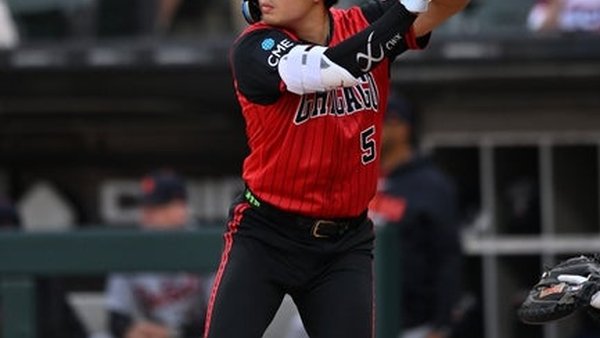
What tips this lean is simple: Chicago’s best hitter, Munetaka Murakami, is on the 10-Day IL. That’s the hitter carrying a .938 OPS with 20 home runs — the one bat capable of single-handedly neutralizing Williams’ efficiency. Without him, Kay has to outpitch Williams in a near-coin-flip price environment. That’s a tough ask.
Game Info & Betting Lines
- Date/Time: Monday, June 22, 2026 — 7:40 PM ET
- Venue: Guaranteed Rate Field (Park Factor: 0.98 — slightly pitcher-friendly)
- Probable Starters: Gavin Williams (CLE) vs. Anthony Kay (CHW)
- Moneyline: Cleveland Guardians -116 / Chicago White Sox -102
- Run Line: Cleveland Guardians -1.5 (+142) / Chicago White Sox +1.5 (-172)
- Total: 7.5 (Over -124 / Under +102)
Why This Number Is Off
At -116, Cleveland is priced as if this is a roughly even contest. The market is doing legitimate work here — it’s accounting for Cleveland’s offensive limitations (.683 team OPS, second-lowest in the AL), Chicago’s home field edge, and the fact that Kay’s 6-2 record signals he’s been a functional winner despite pedestrian underlying numbers.
The case for Chicago at -102 isn’t absurd. Kay has kept his team in games. Chicago’s lineup — even with Murakami out — still carries real power: Colson Montgomery (.810 OPS, 20 HR) and Miguel Vargas (.818 OPS, 16 HR) are legitimate threats batting third and ninth tonight. The White Sox have 106 team home runs compared to Cleveland’s 74, and Guaranteed Rate Field is close enough to neutral that it won’t suppress that power meaningfully.
But here’s the problem: the market is balancing lineup depth against pitching quality, and in this specific case, the pitching gap is more decisive than the power differential. Williams suppresses quality contact at a level Kay simply doesn’t. At near pick-em odds, that gap is worth backing — you’re getting a meaningful starter advantage at a price that implies a coin flip.
What Separates the Pitching
The gap between these two starters is measurable at every level. Williams sits at a 3.83 ERA, 1.13 WHIP, and 10.1 K/9 across 91.2 innings — an arm carrying a 1.53 WAR. Kay counters with a 4.61 ERA, 1.44 WHIP, and 7.0 K/9 across 70.1 innings — a 0.68 WAR arm who generates softer contact but not a lot of swing-and-miss.
The Statcast profiles deepen that gap. Williams’ best pitch is his sweeper — deployed 25.3% of the time at 87.0 mph, generating a 44.6% whiff rate with a .248 xwOBA against. That’s an elite offering that creates empty swings up and down the lineup. His four-seamer sits at 96.5 mph with a 25.0% whiff rate. He’s a high-strikeout pitcher who can manufacture quick innings and avoid deep counts.
Kay’s arsenal tells a different story. His four-seamer runs at 95.7 mph but produces only a 14.9% whiff rate with a .391 xwOBA against — hitters are making consistent contact when they swing. His best secondary offering is actually his changeup (.260 xwOBA), but he uses it only 14.1% of the time. His cutter generates a .439 xwOBA — that’s a pitch that gets hit hard when it’s located poorly.
For Cleveland’s lineup, the matchup against Kay is particularly interesting at the top. Kyle Manzardo carries an xwOBA of .473 against left-handed pitching — Kay is a lefty. Gabriel Arias shows an xwOBA of .349 against lefties, though his 40.8% whiff rate makes him a boom-or-bust bat. The Guardians may be offensively depleted, but they have genuine contact quality threats against this specific arm.
The Pushback
The concern here is real and shouldn’t be glossed over. Cleveland’s injury report is nearly as damaging as Chicago’s. Jose Ramirez (10-Day IL, hand) and Chase DeLauter (10-Day IL, ribs) are both out. Ramirez is the Guardians’ most impactful offensive presence — their RBI leader with 33 — and DeLauter is one of their top producers (.745 OPS, 34 RBI). Meanwhile, Travis Bazzana leads Cleveland in OPS at .838 and provides the lineup’s best contact quality, but the overall team OPS sits at a depleted .683. Tonight’s projected lineup is a hodgepodge of fringe starters and depth pieces.
Chicago, even minus Murakami, still has more offensive upside in aggregate. The White Sox carry a .729 team OPS and 106 home runs. Kay’s 6-2 record isn’t nothing — he’s shown an ability to keep his team in games even when his underlying numbers suggest he shouldn’t be winning. The price on Cleveland reflects a real risk that the bats go quiet behind Williams and this turns into a grind.
Why not CLE -1.5 at +142? The plus-money price on the run line is tempting, but I’m passing on it. With Cleveland’s offense this depleted — team OPS of .683, Ramirez and DeLauter both on the IL — counting on a multi-run margin in a game the numbers project as a near-coin-flip (CLE 4.5, CHW 4.3) is asking too much. A one-run Cleveland win is a live outcome in this spot, and the run line turns that into a loss. The moneyline captures the edge without the margin dependency.
Run Environment & Game Shape
Guaranteed Rate Field carries a 0.98 park factor — essentially neutral, with a slight lean toward pitchers. That context matters when you’re evaluating a total set at 7.5. The numbers project this game at 4.5-4.3, which is notably below that total. Both offenses are running cold over their last ten games, both are missing key contributors, and both starters figure to be competitive into the fifth or sixth inning.
The game shape here is a low-scoring, close affair — exactly the kind of game where the better starter carries disproportionate weight. In a projected blowout, bullpen management and offensive depth are the deciding factors. In a 4-3, 5-4 game, the starter who can generate whiffs and avoid multi-run innings wins the matchup. Williams’ sweeper (.248 xwOBA, 44.6% whiff rate) and four-seamer (25.0% whiff rate) are built for that environment. Kay’s contact-driven profile — four-seamer at 14.9% whiff, cutter at .439 xwOBA — is not. This game shape amplifies the moneyline as the right bet type and makes the run-line question more complicated, which is precisely why the run line is off the table.
Joe Jensen’s Pick
The pitching edge is real, the price is palatable, and the Murakami absence removes the one bat most capable of short-circuiting Williams’ efficiency. Cleveland wins more than half these games at this price point, and that’s all you need at -116.
Projected score: Cleveland Guardians 4.5, Chicago White Sox 4.3.
Bet: Cleveland Guardians moneyline -116 — 2 units, moderate confidence.
You’re getting a legitimate starter advantage in a near-coin-flip market — Williams’ sweeper and strikeout profile give Cleveland the pitching edge that justifies laying the small number.