The projected run total lands at 8.3 — the posted number sits at 9, priced at -105. That 0.7-run gap gets sharper when you layer in a run-suppressing park, two mid-rotation starters who limit multi-run innings, and a Seattle lineup missing Cal Raleigh posting a .696 team OPS. The market has not fully accounted for what this environment does to scoring floors.
Logan Gilbert vs. Jeffrey Springs: Under 9 Is the Play at Sutter Health Park
The numbers spit out 8.3 combined runs in a park that actively suppresses scoring, and the posted total sits at 9 — that 0.7-run gap at -105 juice is the number I keep coming back to, and it has nothing to do with either starter being special.
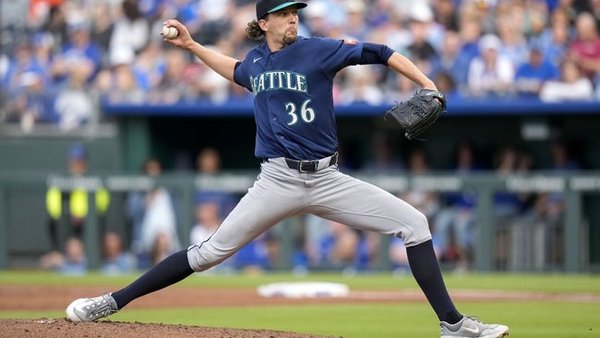
Logan Gilbert vs. Jeffrey Springs: Seattle Mariners at Athletics Betting Preview
After taking a loss on the Athletics moneyline yesterday, the lens shifts today — and the market has moved on too. Seattle has outscored Oakland 13-3 in the first two games of this series, but the betting angle here isn’t about which team is rolling. It’s about a run environment that the posted total hasn’t fully accounted for. The edge isn’t in picking a winner. It’s in recognizing that Sutter Health Park, a 0.93 run-factor venue, combined with two serviceable mid-rotation starters and a compromised Seattle lineup, creates conditions where nine runs is one run too many for the market to be asking me to clear.
The core thesis is structural: the numbers project 8.3 combined runs. The total is 9. That gap — 0.7 runs — at -105 juice is among the cleanest entry points on the board. This isn’t a dominant pitching duel or a shutdown offense situation. It’s a value play on a suppressed environment where the numbers quietly point in one direction.
Game Info & Betting Lines
- Date/Time: Wednesday, May 27, 2026 | 3:05 PM ET
- Venue: Sutter Health Park | Park Factor: 0.93 (run-suppressing)
- TV: MLB.TV, NBC Sports CA, Mariners.TV
- Probable Starters: Logan Gilbert (SEA) vs. Jeffrey Springs (OAK)
- Moneyline: Seattle Mariners -134 / Athletics +114
- Run Line: Athletics +1.5 (-150) / Seattle Mariners -1.5 (+125)
- Total: 9 (Over -115 / Under -105)
Why This Number Is Slightly Off
The market’s logic for a 9-run total is defensible on the surface. Neither starter is a shutdown arm — both Gilbert (4.04 ERA, 1.11 WHIP) and Springs (4.11 ERA, 1.17 WHIP) are essentially the same pitcher on paper, mid-rotation guys who eat innings without dominating. The Athletics have legitimate run producers in Shea Langeliers (.931 OPS, 13 HR) and Nick Kurtz (.926 OPS, 8 HR). Seattle has shown real pop this series — 9 runs Monday, 4 on Tuesday. A total of 9 doesn’t look unreasonable given those factors.
But the market is slightly mispricing what this park does to scoring outcomes. Sutter Health Park carries a 0.93 run factor — every scoring event gets nudged downward. When you layer that onto a Seattle lineup sitting at a .696 team OPS (one of the weakest in the American League), missing Cal Raleigh on the 10-Day IL with an oblique and Brendan Donovan also sidelined, the offensive ceiling for the Mariners drops meaningfully. The Athletics carry a -14 run differential despite their winning record, suggesting their offense has been inconsistent. The projection lands at 8.3. The market says 9. At -105, that’s a clean spot.
What Separates the Pitching
The honest answer is: not much. But the Statcast profiles reveal some meaningful texture beneath the similar surface numbers.
Gilbert works with a five-pitch mix anchored by a 95.4 mph four-seamer (31.5% usage) that generates a .388 xwOBA against — not a swing-and-miss pitch, but he sequences it effectively. The real weapon is his split-finger, sitting at 81.1 mph with a .192 xwOBA against and a 37.2% whiff rate. That’s a genuine put-away pitch. His slider adds another 37.0% whiff rate. Gilbert’s profile is a groundball/strikeout blend that keeps traffic manageable — his 9.1 K/9 and 1.11 WHIP reflect a guy who limits baserunners well even when he’s not dominant.
The concern against Oakland’s lineup is real. Langeliers posts a .462 xwOBA with a 9.3% barrel rate against right-handed pitching (.460 xwOBA vs. RHP specifically), and the BvP sample against Gilbert shows 2 HRs in 23 PA — a meaningful signal. Kurtz sits at a .490 xwOBA overall with an 8.3% barrel rate, though he’s 2-for-6 with 2 strikeouts against Gilbert in limited exposure. Brent Rooker is a 10.8% barrel-rate threat, but he’s just 1-for-19 (1 hit, 11 strikeouts) against Gilbert — that matchup strongly favors the pitcher.
Springs operates differently — a 91.4 mph four-seamer (44.6% usage) that generates only a 10.5% whiff rate, meaning hitters make consistent contact. His best weapon is his changeup: 22.4% usage, 79.3 mph, 38.2% whiff rate, and a .226 xwOBA. That pitch neutralizes right-handed bats, which matters facing Seattle’s lineup. His slider generates a 25.2% whiff rate at 83.6 mph. The sweeper (7.6% usage) is a vulnerability — .451 xwOBA against — but he uses it sparingly. Springs won’t dominate, but he creates weak contact at a rate his ERA suggests.
The gap between these arms is narrow. Gilbert has a slight edge in strikeout rate and pitch quality, but neither profile screams “shutdown.” What they share is the ability to limit multi-run innings, which is exactly what an Under needs.
The Pushback
Here’s the problem: this total is already set at 9, not 9.5 or 10. The market has some suppression priced in. When you’re working with a 0.7-run projected gap against a number the books already discounted, the edge is thin enough that a single big inning erases it.
Oakland’s lineup is genuinely dangerous in a way the season stats undersell. Carlos Cortes at a .964 OPS, Langeliers with 13 home runs, Kurtz with his extraordinary on-base ability — these aren’t paper threats. And Springs has allowed 11 home runs in 61.1 innings, meaning Seattle’s hitters can get to him with one swing. The Mariners posted 9 runs two nights ago against this same Athletics staff. There’s a real scenario where this game goes 5-4 and I’m counting on a clean ninth inning that never comes.
The counter to that pushback is Seattle’s current construction. Without Raleigh behind the plate anchoring the lineup and Donovan out, the Mariners are running a lineup that posted a .696 team OPS — and that number was compiled with both players healthy. Colt Emerson slots into the nine-hole at third base. Rob Refsnyder hits fifth. This is not a lineup built to pile up runs against a competent left-hander throwing an effective changeup.
Run Environment & Game Shape
The game shape projects as a tightly contested 4-4 type of affair, where scoring comes in bursts rather than sustained rallies. Sutter Health Park’s 0.93 park factor quietly shaves expected run totals across the board — it’s not a dramatic effect, but in a game projected this close to the number, it matters. Gilbert and Springs are both mid-rotation arms who will give up their share of baserunners, but neither profiles as a blowup candidate in a single outing. The 8.3 projected total, the suppressive park, and a Seattle lineup operating well below its peak capacity all point the same direction: the market’s 9 is one run too generous.
This isn’t a screaming edge. It’s a moderate, disciplined play grounded in three converging factors — the 8.3 projection sitting 0.7 runs below the posted total, a run-suppressing ballpark at 0.93, and a Mariners offense compromised by injuries to two key contributors. At -105 juice, the risk-reward is favorable enough to take a stand.
Bet: Under 9 (-105) | 2 Units | Moderate Confidence