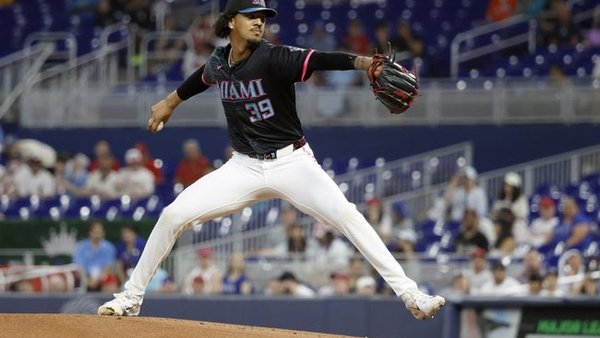
Perez’s strikeout rate against Ober’s contact approach creates one picture — the run line price suggests the market hasn’t factored in Minnesota’s four missing bullpen arms.
Miami Marlins -1.5 Run Line Edge: Why the Pitching Advantage Demands the Extra Run
While the moneyline sits at Miami -102 in what appears to be a coin flip, the run line at Miami -1.5 (+164) represents the superior betting value. Eury Perez’s 9.8 K/9 against Bailey Ober’s 6.7 creates the type of strikeout differential that generates clean innings and multi-run margins. When you combine Miami’s 4.06 team ERA advantage over Minnesota’s 4.62 mark with the Twins missing four key relievers, the Marlins possess the pitching depth to not just win, but cover the run line in what projects as a methodical, pitcher-friendly game where late-inning execution becomes paramount.
Game Info & Betting Lines
- Date/Time: Tuesday, May 12, 2026 | 7:40 PM ET
- Venue: Target Field (Park Factor: 1.00)
- Probable Starters: Eury Perez (2-4, 5.01) vs Bailey Ober (3-2, 4.19)
- Moneyline: Miami Marlins -102 / Minnesota Twins -116
- Run Line: Minnesota Twins +1.5 (-200) / Miami Marlins -1.5 (+164)
- Total: 9 (Over -105 / Under -115)
Why the Run Line Creates Value
The market recognizes Miami as a slight favorite but hasn’t properly adjusted for the magnitude of their pitching advantage. Byron Buxton’s 13 homers in 23 games commands respect, but individual power doesn’t overcome systemic pitching depth issues. Minnesota’s bullpen is decimated with Taj Bradley, Cody Laweryson, Garrett Acton, and Cole Sands all sidelined, forcing the Twins to rely on inferior arms in late-game situations where run differentials get decided.
The +164 price on Miami -1.5 undervalues how pitching advantages compound in low-scoring games. When the total sits at 9 and Target Field’s neutral park factor keeps scoring contained, the team with superior arms from starter through bullpen should win by multiple runs more often than the price suggests. Miami’s recent comeback victories demonstrate offensive resilience that, combined with their pitching edge, creates the recipe for decisive wins rather than nail-biters.
How Perez’s Arsenal Generates Run Separation
Perez’s 98.0 mph four-seam generates a 20.6% whiff rate, but his run line value comes from the secondary offerings that create strikeout innings. The sweeper at 83.6 mph devastates hitters with a .193 xwOBA and 30.6% whiff rate, while his changeup produces a massive 42.4% whiff rate at 89.2 mph. This arsenal diversity allows Perez to work through lineups multiple times without losing effectiveness, the type of deep start that protects Miami’s bullpen while forcing Minnesota’s depleted relief corps into extended action.
The strikeout differential becomes crucial for run line coverage. Perez’s 9.8 K/9 creates clean innings that limit Minnesota’s scoring opportunities, while his ability to work deep means Miami’s fresher bullpen faces fewer high-leverage situations. Every strikeout represents a missed chance for Minnesota to chip away at multi-run deficits, and in a projected 4-5 run scoring environment, those missed opportunities compound into run line margins.
Ober’s Contact Profile vs Miami’s Precision Hitters
Ober operates with a fundamentally different approach, relying on his 83.0 mph changeup (35.7% usage) that generates just a 22.0% whiff rate and allows .290 xwOBA. His 88.7 mph four-seamer lacks the velocity to overpower hitters and produces only a 16.7% whiff rate. The concerning element for run line purposes is his sinker, which opponents crush to a .636 xwOBA — exactly the type of mistake pitch that creates extra-base hits and multi-run innings.
Miami’s lineup features three hitters batting over .300 who excel at capitalizing on contact opportunities. Xavier Edwards (.322 average) shows a .361 xwOBA against right-handed pitching, while Otto Lopez (.344) produces a robust .414 xwOBA with quality hard contact rates. These aren’t free-swingers who will bail out Ober with strikeouts — they’re precision hitters who turn mistakes into runs, the exact profile that creates run line coverage in pitcher-friendly environments.
The Bullpen Mathematics
Minnesota’s relief situation creates the perfect storm for run line value. With four key arms sidelined, the Twins are forced to rely on inferior options in late-game situations where 1-2 run leads become 3-4 run margins. Miami’s superior team ERA of 4.06 compared to Minnesota’s 4.62 represents genuine quality depth, not statistical noise, and that half-run advantage becomes amplified when both teams need late-innings execution.
The mathematics favor Miami’s run line coverage: in a projected 4-5 run game, the team with better bullpen depth should outscore opponents in the final three innings. Minnesota’s depleted relief corps will struggle to preserve close games, while Miami’s fresher arms can extend leads. This isn’t about blowouts — it’s about winning 6-3 or 5-2 instead of 4-3, exactly the margins that cover -1.5 at generous odds.
Why the Moneyline Misses the Point
The tempting play appears to be Miami’s moneyline at -102, especially given the clear pitching edge. But the moneyline ignores the magnitude of Miami’s advantages and focuses only on win probability. In a low-scoring environment where starting pitching depth and bullpen quality determine outcomes, the superior team should win decisively more often than by single runs. The run line captures this reality while offering significantly better odds.
Backing Miami at -102 requires laying juice for what should be a comfortable advantage. The -1.5 run line at +164 provides plus money while betting on Miami’s pitching depth to translate into the type of methodical victory that their arsenal and bullpen situation suggests. In a game where both starters need to work deep and late-inning execution becomes paramount, the team with superior depth should cover run spreads, not scratch out one-run victories.
Run Environment & Game Shape
Target Field’s neutral park factor and the 9-run total create the ideal environment for run line value. This projects as a methodical, pitcher-friendly affair where starting pitching depth and bullpen quality determine final margins. Miami’s superior team ERA suggests they’re better equipped to maintain and extend leads in the late innings, while Minnesota’s injured relief options create vulnerability exactly when run differentials get decided.
The projected scoring range keeps this away from explosive offensive environments where run lines become lottery tickets. Instead, we’re looking at a 5-3 or 6-4 type game where Miami’s pitching advantages compound into decisive margins. The Marlins’ recent comeback victories demonstrate offensive resilience that, combined with their superior arms, creates the recipe for run line coverage at generous odds that undervalue their systemic advantages.
Take the Marlins -1.5 +164