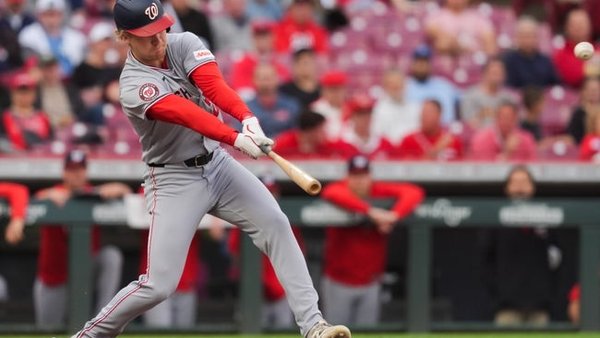
Tanner Bibee’s 3.75 ERA and multi-pitch whiff profile sit across from Zack Littell’s 5.83 ERA and a sinker posting a .558 xwOBA — the starter gap is as wide as any on the slate. The Guardians moneyline has already absorbed that mismatch at -174, pushing the real decision toward a total sitting at 8.5 with Cleveland’s passive .228/.693 OPS lineup doing little to fuel a high-scoring game shape.
Zack Littell vs Tanner Bibee: Washington Nationals at Cleveland Guardians Betting Preview
The Cleveland moneyline looks like the only logical conclusion here. Tanner Bibee owns a 3.75 ERA and 1.25 WHIP in 60 innings while Zack Littell has been one of the more punishing rotation assignments a bettor could face, posting a 5.83 ERA and allowing 15 home runs in 46.1 innings. The talent gap is real. The problem is the market has already priced it at -174, which is past the juice ceiling for a responsible moneyline play.
That forces a pivot. When the side is off the board on price, the cleanest alternative is the total — and this game has the architecture of a sub-9 finish. Progressive Field is a mild run-suppressor at 0.98 park factor, Cleveland’s pitching staff carries a 3.55 ERA as a unit, and even Littell’s high home-run rate operates in a ballpark that doesn’t amplify fly balls. The total sits at 8.5, and the Under is priced at -122 — reasonable juice for what projects as a tightly scored game.
Washington arrives having won two of three in Atlanta, and Cleveland comes home after taking two of three from Philadelphia. Both clubs are entering this series with momentum, which doesn’t change the pitching equation — it just tells you neither offense is in a prolonged slump entering this one.
Game Info & Betting Lines
- Date/Time: Monday, May 25, 2026 | 6:10 PM ET
- Venue: Progressive Field | Park Factor: 0.98 (slight run-suppressor)
- Probable Starters: Zack Littell (Washington Nationals, 3-4, 5.83 ERA) vs Tanner Bibee (Cleveland Guardians, 0-6, 3.75 ERA)
- Moneyline: Washington Nationals +146 / Cleveland Guardians -174
- Run Line: Cleveland Guardians -1.5 (+122) / Washington Nationals +1.5 (-146)
- Total: 8.5 (Over +100 / Under -122)
Why This Number Is Close
The numbers project a combined 9.4 runs in this game — 5.0 for Cleveland and 4.4 for Washington. That figure technically points toward the Over, and books have the total set at 8.5 with the Over at plus-money (+100). The market is not pricing this as a lock on either side of the total — it’s essentially acknowledging uncertainty and letting the public come in on the Over without paying heavy juice.
The legitimate case for the Over is grounded in Littell’s alarming profile. A 5.83 ERA starter allowing home runs at nearly one per three innings is a real threat to blow up early — and if Cleveland’s lineup catches him in the first or second inning, this game shape can change quickly. Washington’s offense isn’t without teeth either: CJ Abrams (.918 OPS) and James Wood (.910 OPS) are legitimate middle-of-order threats who could punish Bibee if he misses his spots.
But here’s where the market is slightly off: the 9.4 projection is top-heavy toward Cleveland’s side of the ledger (5.0 runs), and that number assumes Littell continues pitching at his current rate in a park that doesn’t inflate run totals. Cleveland’s offense, hitting .228 with a .693 OPS, is one of the weaker run-scoring units in the American League — and 5.0 runs against a starter who could be pulled early feels like a stretch for this lineup.
What Separates the Pitching
The gap between these two starters is substantial, and it shows up most clearly in the Statcast data. Bibee’s cutter is arguably his best weapon — it generates a 38.0% whiff rate and holds hitters to a .347 xwOBA while he throws it 27.1% of the time. His changeup is even more dominant: 34.7% whiff rate with an xwOBA of .253 and a 25.4% put-away rate. His four-seamer sits at 94.1 mph and generates a .341 xwOBA. This is a starter who creates genuine swing-and-miss across multiple pitch types — and the curveball, used 10.1% of the time, posts a .212 xwOBA that acts as a freeze pitch. The combined effect is a deep, diverse arsenal that makes runs genuinely difficult to string together.
Littell’s profile runs the opposite direction. His slider — his most-used pitch at 27.6% — generates only a 17.3% whiff rate and an alarming .428 xwOBA. His four-seam fastball, also at 27.3% usage, posts a .419 xwOBA against. The split-finger provides some relief with a .332 xwOBA and 18.4% whiff rate, but his sinker is actively dangerous: .558 xwOBA at 90.9 mph — a pitch that generates weak whiff rates and strong contact. That sinker is the primary driver behind his elevated home-run rate.
James Wood’s Statcast profile is the most concerning matchup note for the Under: his .585 xwOBA with a 12.5% barrel rate and 37.5% hard-hit rate makes him a genuine power threat against a sinker-heavy starter posting a .558 xwOBA on that very pitch. If Wood gets a sinker belt-high in the zone in an early count, the damage can be immediate and multi-run. That’s the single biggest volatility risk to this Under ticket — one Wood at-bat can reshape the entire total.
Run Environment & Game Shape
Progressive Field’s 0.98 park factor is modest but directionally meaningful. It marginally favors pitchers — particularly fly-ball arms who don’t need an extreme suppressor environment to post clean outings. Bibee’s profile fits that mold precisely: he doesn’t rely on the park to do work for him, because his cutter and changeup generate whiffs before balls ever reach the outfield. When a pitcher is neutralizing contact at the source rather than depending on a deep outfield or heavy air, a 0.98 factor is more than sufficient runway.
The game shape here points toward a low-scoring first five innings on the Cleveland side, with the real run-scoring risk concentrated in the middle innings if Littell’s command starts to slip. Cleveland’s bullpen has been a strength — the staff ERA of 3.55 doesn’t happen without quality relief work — and if the Guardians carry a lead into the sixth, Washington’s chances of crossing 8.5 combined runs get considerably thinner. The home team’s lineup, hitting .228 with a .693 OPS as a unit, isn’t built to put up crooked numbers even against a hittable starter. That’s the quiet anchor of the Under case: Cleveland’s offense is too passive to make a shootout happen on its own, and Bibee is too sharp to let Washington do it unilaterally.
The honest counter-argument is the 9.4 combined-run projection, and I’m not dismissing it. That number reflects Littell’s real vulnerability and the legitimate offensive upside Abrams and Wood carry into this lineup. Bettors backing the Over at +100 are getting compensated fairly for the uncertainty. The projection deserves respect — and it’s the primary reason I’m landing at moderate confidence rather than leaning heavier.
But the thesis here is that Bibee’s suppression ability is the strongest single variable in this game, Cleveland’s offense isn’t capable of carrying the total on its own, and a 0.98 park factor removes the environmental amplifier the Over needs to cash. When you combine a front-line arm, a weak home offense, and a mild run-suppressor, you have a structural lean toward the Under — and -122 is a reasonable price to pay for that structure.
Bet: Under 8.5 (-122) — 2 units — Moderate Confidence