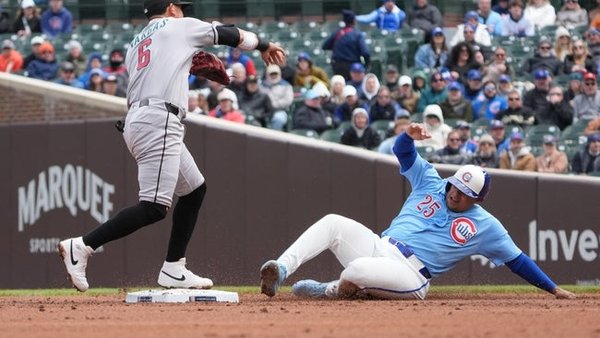
Singer’s 5.57 ERA and 1.73 WHIP create a stark mismatch against Rea’s sharper profile. The Cubs’ 13-game home winning streak meets a pitcher allowing consistent contact — the number at -168 still feels steep given recent tight margins.
Brady Singer vs Colin Rea: Cincinnati Reds at Chicago Cubs Betting Preview
The Cubs continue their remarkable run at Wrigley Field, riding a 13-game home winning streak into Wednesday’s matchup with Cincinnati. After back-to-back comeback victories over the Reds that showcased Chicago’s late-inning resolve, the focus shifts to a stark pitching disparity that the market may not be fully pricing.
Brady Singer brings a troubling 5.57 ERA and 1.73 WHIP to the mound for Cincinnati, numbers that reflect deeper control issues and an inability to miss bats consistently. Meanwhile, Colin Rea has been far more reliable for the Cubs with a 4.41 ERA, 1.32 WHIP, and significantly better strikeout production. The pitching gap alone creates betting value, but when combined with Chicago’s superior offense and current home dominance, the foundation for a Cubs moneyline play emerges.
Game Info & Betting Lines
- Date/Time: Wednesday, May 6, 2026 | 7:40 PM ET
- Venue: Wrigley Field (Park Factor: 1.02 – slightly hitter-friendly)
- Probable Starters: Brady Singer (2-2, 5.57) vs Colin Rea (4-1, 4.41)
- Moneyline: Cincinnati Reds +142 / Chicago Cubs -168
- Run Line: Chicago Cubs -1.5 (+126) / Cincinnati Reds +1.5 (-152)
- Total: 8 (Over -105 / Under -115)
The Cubs moneyline at -168 carries significant juice, reflecting the market’s recognition of multiple edges favoring the home side. But I keep coming back to those recent margins—both Cubs wins came by exactly one run despite clear talent advantages. There’s something unsettling about laying this much chalk when Chicago needed late heroics from Michael Busch and Michael Conforto in consecutive games against this same Cincinnati team.
What Separates the Pitching
The starting pitching comparison reveals why this game tilts heavily toward Chicago. Colin Rea has been the far superior arm, posting an 8.27 K/9 compared to Singer’s pedestrian 5.57 K/9. More importantly, Rea’s 1.32 WHIP demonstrates much better command, while Singer’s bloated 1.73 WHIP indicates persistent baserunner issues.
Singer’s Statcast profile exposes the problems. His primary offering, a sinker thrown 50.1% of the time at 91.2 mph, generates just a 10.3% whiff rate while allowing a troubling .411 xwOBA. His slider provides some relief at 22.7% whiffs, but the overall arsenal lacks the deception needed against quality hitting. The 31.9% slider usage suggests over-reliance on his second-best pitch.
Yet here’s where I start questioning myself—Singer’s unpredictability cuts both ways. Yes, that .411 xwOBA on his sinker is alarming, but sometimes chaos creates its own opportunities. When a pitcher is this hittable, does it actually make the Cubs overconfident? Do they start hunting mistakes instead of working counts?
Rea counters with a more balanced and effective mix. His four-seam fastball sits at 93.9 mph with 39.4% usage, but his real weapons are a devastating slider (36.7% whiff rate, .240 xwOBA) and split-finger (29.5% whiffs, .305 xwOBA). The strikeout differential isn’t just about stuff—Rea creates longer at-bats and more swing-and-miss, while Singer allows consistent contact that turns into baserunners.
The Cubs’ offensive advantages compound Singer’s problems. Seiya Suzuki’s .459 xwOBA and Ian Happ’s .436 mark represent significant threats against Singer’s contact-heavy approach. With Chicago posting 193 runs compared to Cincinnati’s 147, the offensive gap mirrors the pitching disparity.
But watching those recent games, the Reds found ways to scratch across runs despite their offensive limitations. JJ Bleday homered in consecutive games, and they managed 4 runs against Cubs pitching on Monday. Singer’s volatility might actually help Cincinnati if it forces Rea into difficult counts early.
Run Line Considerations
The run line presents an interesting alternative at Cubs -1.5 (+126), especially given the pitching gap and Chicago’s home dominance. My model projects the Cubs winning by 2.2 runs, suggesting value on the spread. With Singer’s contact issues and Chicago’s patient approach (.352 OBP vs .303), multi-run innings feel likely.
The recent game flow troubles me though. These teams have played tight contests, and Cincinnati’s bullpen showed resilience Tuesday night when Jose Franco escaped bases loaded in the ninth. Even with Emilio Pagán headed to the IL with that hamstring injury, the Reds have found ways to keep games close.
Still, the underlying numbers support a bigger Cubs victory. Singer’s 1.73 WHIP against Chicago’s lineup construction creates multiple scoring opportunities. The Cubs rank better in every major offensive category—batting average (.258 vs .218), OBP (.352 vs .303), and OPS (.780 vs .687). When you combine that with Singer’s propensity for traffic on the bases, the run line holds appeal.
The problem is reconciling those projections with reality. If the Cubs have this much of an edge, why have both recent games been decided by one run? Either I’m overvaluing the talent gap, or Chicago hasn’t figured out how to pull away from inferior teams. That uncertainty makes the juice on the moneyline feel steeper than the underlying advantages suggest.
Final Verdict
This game showcases everything I both love and hate about betting favorites. The Cubs check every analytical box—better pitcher, superior offense, home field advantage, and momentum. Singer’s 5.57 ERA isn’t a small sample fluke; it’s supported by alarming contact rates and control issues that should favor Chicago’s patient hitters.
Yet that -168 price keeps nagging at me. Recent evidence suggests the Cubs struggle to separate from teams they should dominate, and Singer’s chaos-agent potential could keep this closer than expected. The line asks us to believe Chicago will finally pull away decisively, but they’ve needed late magic in consecutive games against this same Cincinnati squad.
The analytical case for the Cubs remains compelling—the pitching gap, offensive advantages, and home field create multiple edges that compound together. But at this price, with this much recent evidence of tight games, I can’t recommend laying the chalk.
Recommendation: Pass on Cubs -168. The edges are real, but the price doesn’t reflect the game-to-game volatility we’ve seen from both teams.
Units: 0