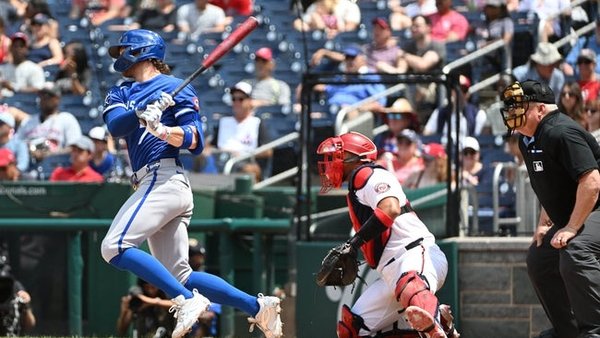
Rate Field plays slightly pitcher-friendly, but Luinder Avila’s 1.617 WHIP and 27 walks in 42.2 innings give a White Sox lineup built to punish free baserunners every reason to be confident at home. The -142 price has absorbed most of that edge — the question is whether the gap between these starter profiles is still wide enough to justify the juice.
Luinder Avila vs. Anthony Kay: Kansas City Royals at Chicago White Sox Betting Preview
After yesterday’s walk-off loss on the Yankees moneyline in Boston, I’m coming into Sunday’s rubber game with a cleaner head and a simpler question: does the pitching gap between these two starters justify the price the market is asking? The short answer is yes — but not by enough to feel good about it. Chicago White Sox -142 is the correct side. It is not, however, the correct price for a standalone bet.
Kansas City drops into this finale at 34-50, having lost four straight and getting outscored 23-2 over the previous two games of this series alone. Chicago is 27-13 at Rate Field this season, tied for the best home record in MLB. The market knows all of this. That’s why the White Sox are priced at -142. The question a bettor has to answer isn’t “who wins?” — it’s “is this number wrong enough to profit?”
The pitching gap is real. The offensive edge is real. The juice is just steep enough to make this a lean rather than a play.
Game Info & Betting Lines
- Date/Time: Sunday, June 28, 2026 | 2:10 PM ET
- Venue: Rate Field (Park Factor: 0.98 — slightly pitcher-friendly)
- Probable Starters: Luinder Avila (KC) vs. Anthony Kay (CWS)
- Moneyline: Kansas City Royals +120 / Chicago White Sox -142
- Run Line: Chicago White Sox -1.5 (+146) / Kansas City Royals +1.5 (-178)
- Total: 8.5 (Over -122 / Under +100)
Why This Number Is Close
The market has set this line with full awareness of the context: Chicago’s home dominance, Kansas City’s four-game losing streak, and a starters matchup that clearly favors the home side. The -142 price reflects all of that. The legitimate case for the Royals at +120 centers on a few things — early-season variance in Avila’s numbers could be stabilizing, the Royals have Bobby Witt Jr. anchoring a lineup capable of a crooked number against any starter on any given day, and one-run games have a way of evening out regardless of who throws the ball.
But here’s where the market may be slightly wrong: it’s pricing this as closer to a coin flip than the pitching gap actually supports. Avila’s 1.617 WHIP and 27 walks in 42.2 innings (5.7 BB/9) aren’t just bad numbers on a box score — they’re a structural problem that a White Sox lineup with a .739 team OPS is perfectly positioned to exploit. Chicago has hit 115 home runs this season versus Kansas City’s 82. The gap between these offenses is real, and Avila is the pitcher most likely to turn free baserunners into crooked innings.
The concern is that -142 already prices in most of that edge. The market isn’t asleep here. It’s the margin between “correct side” and “correct number” that makes this a lean.
What Separates the Pitching
Anthony Kay enters Sunday at 6-2 with a 4.24 ERA and 1.389 WHIP across 76.1 innings — nearly double Avila’s workload. His changeup is the best weapon in his arsenal, holding hitters to a .272 xwOBA with a 25.7% whiff rate. His sweeper generates a 33.6% whiff rate and a .296 xwOBA against. The concern with Kay is his four-seam fastball, which sits at 95.7 mph but allows a .386 xwOBA — hitters are making decent contact when they get to it. His cutter is the soft spot of his arsenal, surrendering a .444 xwOBA. Kay is a mid-rotation starter managing to outperform his stuff through sequencing and mix, not overpowering anyone. Against Royals hitters, that’s workable — Kansas City’s lineup doesn’t have the elite bat-to-ball skills to punish a pitcher who stays off-center.
Luinder Avila is a different story. His sinker sits at 96.4 mph and his slider generates a solid 31.7% whiff rate with a .281 xwOBA against — there’s legitimate swing-and-miss here. But the changeup (37.5% whiff, .260 xwOBA) is the only true put-away pitch, and his curveball (.364 xwOBA, 7.9% put-away rate) is getting hit hard when hitters make contact. The bigger issue is the walks. Randal Grichuk posts an xwOBA of .496 with an 8.5% barrel rate; Colson Montgomery sits at .442 xwOBA. These aren’t hitters you want to pitch around. Miguel Vargas (.432 xwOBA; against lefties: .518) is the matchup Avila should fear most — a left-on-left advantage that disappears when Avila can’t locate his slider.
The gap between a 1.389 WHIP and a 1.617 WHIP, extrapolated over six innings in a hitter-ready Chicago lineup, is the entire thesis.
The Pushback
The strongest case against this lean is that both offenses have been cold recently, and cold offenses flatten pitcher gaps in small samples. Chicago has been shutting Kansas City down, but one-run walk-offs and 22-1 blowouts in the same series don’t tell you much about today’s game shape. Small samples in early-to-mid season are noise, not signal.
There’s also the injury context on the Chicago side. Munetaka Murakami — the team’s top OPS hitter among healthy regulars at a .938 OPS with 20 home runs — is listed on the 10-day IL with a hamstring issue. His absence from the lineup removes the biggest individual threat against Avila. Grichuk and Vargas are legitimate bats, but losing your best power hitter in a game you’re projecting to win by less than half a run matters.
Then there’s the simple math: the numbers project a 0.37-run margin. That is not a comfortable edge. At -142, you’re laying significant juice on less than four-tenths of a run of projected separation. Witt Jr. is hitting .400 in a 6-PA sample against Kay — small but worth noting — and his .471 xwOBA against left-handed pitching is a real matchup concern Kay will need to manage carefully. The run line at -1.5 (+146) is not the play here; this game shape projects closer to 5-4 than a blowout, and a one-run margin doesn’t cover.
Joe Jensen’s Pick
The pitching gap is real, Avila’s walk rate is a structural liability, and the White Sox home edge is legitimate — but -142 is too much juice for a 0.37-run projected margin. My ceiling for a standalone moneyline play here is -130, and this number blew past that threshold before Sunday morning lines settled. This is a parlay leg or beer money only — do not pound this number standalone.
If you’re building a parlay, Chicago fits as a supporting leg where the edge compounds rather than stands alone. As a single-game bet at this price, the math doesn’t clear the bar. Lean White Sox, respect the juice, and size accordingly.
Bet: Chicago White Sox Moneyline (Lean — parlay leg or small units only)