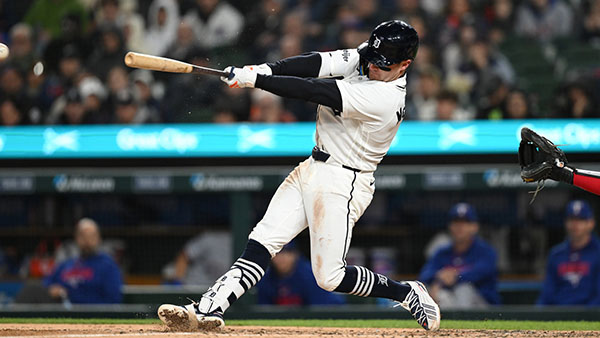
Valdez’s 40.1 innings of established performance faces Moran’s 19.1-inning sample — but yesterday’s 5-4 result suggests these lineups are closer than the experience gap implies.
Jovani Moran vs Framber Valdez: Boston Red Sox at Detroit Tigers Run Line Analysis
The market has Detroit favored by 1.5 runs at +116, essentially asking whether the Tigers can build on yesterday’s narrow loss and create meaningful separation. Boston just proved they can compete in this venue, rallying for a 5-4 win behind Payton Tolle’s seven strong innings. But today’s pitching dynamic flips entirely — Detroit gets Framber Valdez with his 40.1 innings of established performance against Jovani Moran’s 19.1-inning sample size.
The core conundrum here is whether Detroit’s superior offensive production (.728 OPS vs .671) and deeper pitching track record can translate to covering a run and a half when yesterday’s game finished as a one-run contest. Boston’s 14-21 record with -18 run differential suggests they’re vulnerable to blowouts, but their ability to score five runs yesterday against this same Detroit staff complicates the run line narrative.
Game Info & Betting Lines
- Date/Time: Tuesday, May 5, 2026 | 6:40 PM ET
- Venue: Comerica Park (Park Factor: 0.99)
- Probable Starters: Jovani Moran (BOS) vs Framber Valdez (DET)
- Moneyline: Boston Red Sox +152 / Detroit Tigers -180
- Run Line: Detroit Tigers -1.5 (+116) / Boston Red Sox +1.5 (-140)
- Total: 8.0 (Over -112 / Under -108)
Why The Run Line Offers Better Value Than Moneyline
At +116, Detroit’s run line requires just a 46.2% probability to break even — significantly better than the 64.3% needed for the -180 moneyline. The market is essentially giving us extra value for Detroit to win by two or more runs, which aligns with their offensive advantage and home field edge. Detroit’s 162 runs scored versus Boston’s 135 creates a meaningful gap, especially when factored with the pitching experience differential.
The legitimate case for this run line centers on Detroit’s ability to generate sustained offense. Kerry Carpenter’s .407 xwOBA leads a lineup where Dillon Dingler (.493 xwOBA), Riley Greene (.497 xwOBA), and Spencer Torkelson (.470 xwOBA) all profile as above-average offensive threats. Against Moran’s limited 19.1-inning sample, this lineup has the depth to create multiple scoring opportunities.
But here’s the friction: yesterday’s 5-4 game suggests these teams are evenly matched in run-scoring ability, at least in the short term. Boston’s lineup, anchored by Willson Contreras (.528 xwOBA) and Wilyer Abreu (.409 xwOBA), showed they can keep pace offensively. The run line requires Detroit not just to win, but to create separation — something that may be difficult given Boston’s proven ability to score in this venue.
What Separates the Pitching For Run Line Coverage
The experience gap becomes crucial for run line coverage — Valdez brings 40.1 innings and 0.94 WAR against Moran’s 19.1-inning sample, but the underlying arsenals create different problems for opposing lineups. Valdez’s sinker-heavy approach (46.4% usage at 93.8 mph) generates weak contact but allows traffic, posting a .376 xwOBA that suggests some regression coming. His 30.1% curveball usage (33.1% whiff rate) provides the swing-and-miss element that could limit Boston’s patient hitters like Trevor Story (.345 xwOBA) and Jarren Duran (.380 xwOBA).
Moran presents more deception despite the limited track record, but his small sample creates vulnerability for run line coverage. His changeup (35.9% usage) generates an elite 44.7% whiff rate, and his 4-seam fastball at 92.0 mph plays up with the off-speed contrast. The concerning signal is his .335 xwOBA against on the changeup — when hitters make contact, it’s been quality. Detroit’s aggressive approach could exploit Moran’s mistake pitches for the type of crooked number innings needed to cover 1.5 runs.
The Statcast matchup data reveals Detroit’s advantage: their top four hitters all post xwOBA marks above .400, while Moran’s limited sample suggests he’s still finding his command against quality hitting. Dingler’s .493 xwOBA and .565 mark against righties specifically targets Moran’s profile. If Detroit can get to Moran early, their deeper offensive lineup should create the multi-run separation the run line requires.
The Case Against Run Line Coverage
Yesterday’s 5-4 result creates the strongest argument against Detroit covering 1.5 runs. These teams just played to a one-run margin despite Detroit’s home field advantage and supposed offensive superiority. Duran’s three-run homer and the 12-hit attack weren’t fluky — they represented patient at-bats and timely hitting that neutralized Detroit’s home edge.
The 8.0 total suggests the market expects a lower-scoring contest where 1.5 runs becomes a significant margin. Comerica Park’s 0.99 park factor creates a neutral run environment that doesn’t favor explosive offensive outputs. If this game plays to the under, Detroit needs to win something like 4-2 or 5-3 to cover, requiring both offensive execution and pitching performance from Valdez.
Moran’s 2.33 ERA across 19.1 innings includes quality starts and swing-and-miss ability that his Statcast arsenal supports. His 17.0% whiff rate on the 4-seam fastball combined with the 44.7% changeup whiff rate gives him multiple ways to attack Detroit’s lineup. If Moran maintains command and limits mistakes, this becomes a closer game where 1.5 runs represents a substantial margin.
Why I Considered But Rejected the Moneyline
The -180 moneyline presents clear value concerns despite Detroit’s advantages. At nearly 2-1 odds, the market is pricing Detroit like a dominant favorite when yesterday’s result proved these teams are competitive. Boston’s 42.5% implied win probability at +152 seems too low given their ability to manufacture runs in this venue.
The moneyline also lacks the mathematical edge present in the run line. While Detroit should be favored based on home field and superior offensive numbers, the -180 price requires a 64.3% win probability that feels steep for an 18-18 team against a lineup that just scored five runs. The run line at +116 offers better risk-adjusted value if we believe Detroit wins this game.
Run Environment & Game Shape
The 8.0 total aligns with Comerica Park’s neutral run environment (0.99 park factor) and suggests the market expects a pitcher-friendly contest. Both starters have shown ability to limit big innings — Valdez through ground balls, Moran through strikeouts — creating a game shape that could work against run line coverage if the game stays tight.
But Detroit’s offensive depth creates multiple opportunities for crooked number innings. Matt Vierling’s .315 xwOBA and contact skills complement the power threats, giving Detroit different ways to score. If Valdez can provide 6+ quality innings while Detroit’s offense exploits Moran’s inexperience, the run line becomes achievable.
The key variable is early game script. If Detroit builds an early lead, their superior bullpen depth (3.84 ERA vs 4.14) should protect margins better than Boston’s injured relief corps. But if this game stays close through six innings, 1.5 runs becomes a significant ask in a neutral park environment.
Taking Detroit -1.5 (+116). The pitching experience gap and offensive superiority create enough edge to justify the run line at plus money, especially when yesterday’s offensive output from both teams suggests runs will be available. The value lies in Detroit’s ability to separate late rather than just survive in a close game.