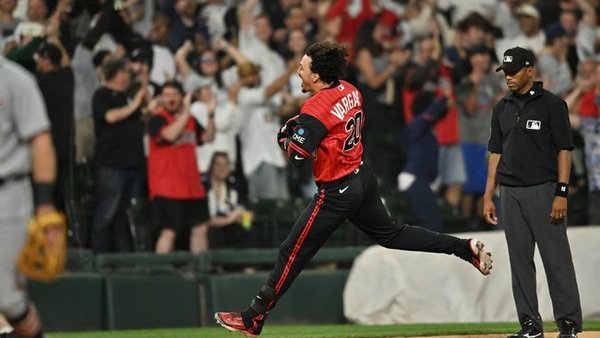
Detroit has lost 20 of their last 24 games while gutting their roster of Skubal, Verlander, Jansen, and more — yet the White Sox moneyline sits at just -130, a price that treats organizational dysfunction like a minor inconvenience. Burke’s 8.1 K/9 and superior whiff profile face a Tigers lineup running on replacement-level depth, and the gap between market-implied probability and the component breakdown is harder to ignore than the juice.
Keider Montero vs. Sean Burke: Detroit Tigers at Chicago White Sox Betting Preview
After yesterday’s 7-1 demolition, the White Sox enter Sunday riding four straight wins and sitting four games above .500 for the first time since September 2022. Detroit, meanwhile, has lost 20 of their last 24 games dating back to May 4 — a collapse that goes beyond a cold stretch and signals something structurally wrong with that roster. The -130 price on Chicago’s moneyline sits exactly at the ceiling of acceptable juice, but when you stack the evidence — the 9-game standings gap, a superior pitching matchup, and a Detroit injury report that reads like a hospital ward — this line is fair, not inflated.
The pitching matchup favors the home side. Sean Burke carries a better strikeout rate, lower home runs allowed, and more innings accumulated than Keider Montero. The White Sox also hold a team OPS advantage of .732 to .680 — a gap that becomes even more meaningful when Burke’s arsenal can generate whiffs and prevent multi-hit innings from compounding. The structural case here is clean.
Yesterday’s under 6.5 in Boston burned, a reminder that clean edges can evaporate in bullpen innings. Today the thesis runs through the starters and the talent separation between these two franchises — not a run environment call.
Game Info & Betting Lines
- Date/Time: Sunday, May 31, 2026 | 2:10 PM ET
- Venue: Guaranteed Rate Field | Park Factor: 0.98 (neutral, slight run suppression)
- Probable Starters: Keider Montero (DET, 2-3, 4.09 ERA) vs. Sean Burke (CHW, 2-3, 3.90 ERA)
- Moneyline: Detroit Tigers +110 / Chicago White Sox -130
- Run Line: Chicago White Sox -1.5 (+164) / Detroit Tigers +1.5 (-200)
- Total: 8 (O -110 / U -110)
Why This Number Is Close
The market is doing legitimate work here. A -130 favorite facing a total of 8 in a neutral park tells you the books see a competitive game — and they’re not wrong to hedge. Burke’s ERA sits at 3.90, not 2.50. He’s working with a bullpen thinned by Jordan Leasure (60-Day IL, forearm) and Jordan Hicks (15-Day IL, lat). Detroit may be reeling, but Riley Greene is slashing .307 with an .832 OPS — a legitimate professional hitter who doesn’t disappear just because his team is struggling around him. Dillon Dingler has 11 home runs and an xwOBA of .455 against right-handed pitching. The Tigers can still score.
The concern is Burke’s pitch count ceiling. At 60 innings through 11 starts, he hasn’t demonstrated the ability to eat deep into games. Once he exits, Chicago is leaning on a thinned relief corps. That’s the legitimate hook for the +110 side — a mid-game handoff to secondary arms that haven’t been particularly reliable this season.
Where the market gets it slightly wrong is in the weight given to Detroit’s broader collapse. Losing 20 of 24 games isn’t just a slump — it’s a roster with Tarik Skubal, Justin Verlander, Casey Mize, Kenley Jansen, Gleyber Torres, and Kerry Carpenter all on the IL simultaneously. What remains is a rotation and lineup running on replacement-level depth. The -130 price accounts for matchup quality; it doesn’t fully price in organizational dysfunction at this scale.
What Separates the Pitching
Burke and Montero post similar surface-line ERAs — 3.90 vs. 4.09 — but the Statcast profile reveals a meaningful gap in how each pitcher attacks hitters and limits damage.
Burke’s four-seam fastball sits at 94.2 mph and generates a 16.4% whiff rate at 37.7% usage — nearly double the whiff rate Montero gets from his own four-seamer (10.0% whiff). Burke’s slider draws whiffs on 28.9% of swings at 16.3% usage, and his knuckle curve posts a 19.6% whiff rate with an xwOBA-against of .280. The profile shows a pitcher who can miss bats at multiple points in the count. His 8.1 K/9 is not a surface illusion — it’s supported by genuine swing-and-miss across three pitches.
Montero is a different type of arm. His best weapon is a changeup generating 25.9% whiffs and an xwOBA-against of just .180 — elite contact suppression on that pitch specifically. His slider also performs (22.4% whiff, xwOBA .307). The problem is that his four-seam and sinker, which together account for over 53% of his pitches, produce modest whiff rates and higher xwOBA values (.338 and .308). Against a Chicago lineup with Colson Montgomery’s .424 xwOBA and Miguel Vargas’s .410 xwOBA against right-handers, Montero’s fastball-heavy approach could get punished in quality contact.
Montero’s WHIP (1.07) is cleaner than Burke’s (1.15), which is the legitimate counter. He allows fewer baserunners per inning on average — and if he leans on the changeup, he can neutralize Chicago’s contact quality. But Burke’s strikeout upside (8.1 K/9 vs. 6.3 K/9) means he can prevent innings from compounding in a way Montero structurally cannot. In a tight game projected around 4-5 runs per side, that difference in strikeout rate carries weight.
The Pushback
The Murakami injury is the real story here, and I’m not going to downplay it. Munetaka Murakami — .938 OPS, 20 home runs, 41 RBI — is gone for four to six weeks with a Grade 2 hamstring strain. That’s Chicago’s most dangerous bat, and yesterday’s 7-1 win came without him. The White Sox won that game on depth and momentum, not their best player. Losing Murakami compresses the lineup in a real way, and the numbers reflect it — without him, the offense leans on Vargas (.850 OPS), Montgomery (.815 OPS), and a supporting cast that is solid but not elite.
The counter to that concern is the matchup itself. Montero is a right-hander, and Vargas carries a .522 xwOBA against left-handed pitching — the lefty splits don’t apply here. Against right-handers, Vargas sits at a more modest .362 xwOBA, which means the production level Chicago gets from that spot in the lineup against Montero is closer to average than dominant. The Murakami absence matters more in a world where Chicago was relying on him to carry the offense; against this particular Detroit arm, the lineup has enough pieces to generate runs without him.
The Numbers That Settle It
Detroit is 22-37 with a -38 run differential. They’ve gone 2-8 over their last ten games. The organizational injury situation strips them of their two best starters (Skubal, Verlander), their closer (Jansen), and key lineup contributors. Chicago is 31-27, has won four straight, and is playing in front of a home crowd with real momentum. The win probability sits at 65.5% for the White Sox based on the component breakdown — starter advantage (+0.511), offense advantage (+0.390) — and the -130 moneyline implies roughly 56.5% probability. That’s a 9-point gap between implied market probability and what the underlying numbers are showing.
At -130, you’re paying for a legitimate favorite. The structural case — pitching advantage, roster depth advantage, home field, momentum — clears the juice threshold. This isn’t a coin flip dressed up as a favorite. The Tigers are actively falling apart, and the White Sox are one of the more coherent teams in the AL Central right now.
The Pick
Bet: Chicago White Sox Moneyline (-130) — 2 units
Burke’s superior whiff profile, Detroit’s 20-of-24 collapse, and the 9-percentage-point gap between market-implied probability and underlying component data all point the same direction. The Murakami absence is real, but it doesn’t close that gap enough to walk away from Chicago at this number. Lay the -130, take the White Sox at home.