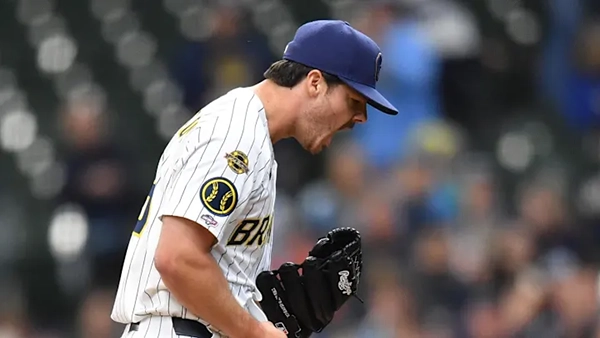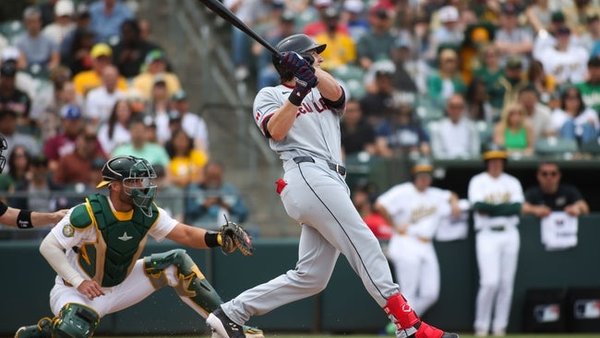
Williams’ 48% whiff rate with his sweeper creates a clear advantage over Morris’ command struggles — the market at -152 hasn’t caught up to the 1.68 ERA gap between these starters.
Gavin Williams vs Andrew Morris: Minnesota Twins at Cleveland Guardians Betting Preview
After yesterday’s extra-inning thriller that saw Minnesota escape with a 2-1 victory, the pitching matchup takes center stage in this AL Central divisional clash. The market has installed Cleveland as a moderate home favorite at -152, but that line feels light when you examine the substantial gap between Gavin Williams (3.28 ERA) and Andrew Morris (4.96 ERA).
The Twins showed they can manufacture runs in tight spots yesterday, but banking on another low-scoring escape against a significantly superior arm creates a challenging proposition. Williams brings both better stuff and better results to this matchup, and the 1.68 ERA differential represents more than just statistical noise in what should be another pitcher-friendly environment.
Game Info & Betting Lines
- Date/Time: Sunday, May 10, 2026 | 1:40 PM ET
- Venue: Progressive Field (0.98 park factor – slightly pitcher-friendly)
- Probable Starters: Andrew Morris (1-1, 4.96 ERA) vs Gavin Williams (5-2, 3.28 ERA)
- Moneyline: Minnesota Twins +128 / Cleveland Guardians -152
- Run Line: Cleveland Guardians -1.5 (+146) / Minnesota Twins +1.5 (-178)
- Total: 7.5 (Over -115 / Under -105)
Why This Number Is Close
The market is balancing legitimate concerns about Cleveland’s offensive consistency (.697 OPS) against what appears to be a clear pitching advantage. Minnesota’s recent 2-1 victory demonstrates they can win ugly against this Guardians lineup, and the Twins do carry slightly better offensive numbers with a .713 OPS and more power potential.
Cleveland’s price at -152 also reflects the reality that divisional games often play closer than talent gaps suggest. The Guardians have been just 6-4 in their last 10 games, hardly the dominant form that would justify heavy chalk. But the market seems to be underweighting the significance of the pitching mismatch here. Williams’ 10.9 K/9 compared to Morris’ 8.0 K/9 creates a meaningful gap in strikeout upside, while Williams’ superior 1.09 WHIP versus Morris’ 1.53 WHIP suggests much better command and control.
What Separates the Pitching
The Statcast data reveals the true depth of this mismatch. Williams deploys a devastating sweeper at 86.5 mph that generates a remarkable 48.0% whiff rate and holds hitters to just .246 xwOBA. That breaking ball represents 26.5% of his arsenal and gives him a legitimate out pitch that Morris simply lacks. Morris relies heavily on his four-seam fastball (36.7% usage) but sees hitters post a concerning .518 xwOBA against his cutter and .520 xwOBA against his sinker.
Williams’ four-seam fastball sits at 96.2 mph with solid command, creating an effective velocity ladder with his sweeper. Morris’ 95.2 mph heater lacks the same separation from his secondary offerings, and his sweeper generates only a 29.4% whiff rate — nearly 20 points below Williams’ mark. The Guardians’ lineup, led by Chase DeLauter’s .366 xwOBA and José Ramírez’s .378 xwOBA, should find more comfortable at-bats against Morris’ less consistent command. Meanwhile, Minnesota’s contact-oriented approach could struggle against Williams’ strikeout upside, particularly Byron Buxton’s 25.7% strikeout rate.
The Pushback
Yesterday’s result creates the biggest concern for this thesis. Minnesota proved they can execute in tight situations against Cleveland, manufacturing runs when opportunities presented themselves. Buxton’s clutch 11th-inning double demonstrates the type of individual moment that can overcome pitching advantages in low-scoring games.
The price at -152 also requires Cleveland to win 60.3% of the time to break even, which is meaningful juice for what amounts to a coinflip division rivalry. Minnesota’s bullpen showed resilience yesterday with Eric Orze escaping multiple bases-loaded jams, and their four bullpen arms on the IL might actually force them to rely more heavily on their better relievers. The Twins’ slightly superior offensive numbers (.713 OPS vs .697 OPS) aren’t just statistical noise — they represent real lineup depth that could matter in a tight game.
Run Environment & Game Shape
Progressive Field’s 0.98 park factor combined with the 7.5 total suggests the market expects another low-scoring affair similar to yesterday’s 2-1 result. Both teams have shown recent offensive struggles, and the pitching-friendly environment should amplify Williams’ advantage while potentially masking some of Morris’ command issues.
This setup creates a game where individual pitching moments matter more than sustained offensive production. Williams’ ability to miss bats in crucial situations gives Cleveland a meaningful edge in high-leverage spots, while Morris’ tendency to work around traffic could lead to costly mistakes in tight margins. The projected scoring range of 4-5 runs per team means every baserunner and every mistake gets magnified.
Joe Jensen’s Pick
JENSEN’S PICK: Cleveland Guardians Moneyline -152 — 2 Units
Cleveland Guardians 5, Minnesota Twins 4
I of course looked at laying the 1.5 with Cleveland at +146, but both offenses have shown too much inconsistency to bank on multi-run separation in this environment. The moneyline captures the pitching edge without requiring Cleveland to maintain a comfortable margin against a Twins lineup that has proven capable of late-inning rallies.
Williams’ Statcast profile shows the type of dominant stuff that travels well in pressure situations, while Morris’ command issues and weaker secondary offerings create too many opportunities for Cleveland’s contact hitters to capitalize. The 1.68 ERA gap reflects real performance differences, not just sample size variance. At -152, I’m getting reasonable value on the superior pitcher in a favorable spot without overthinking the margin.