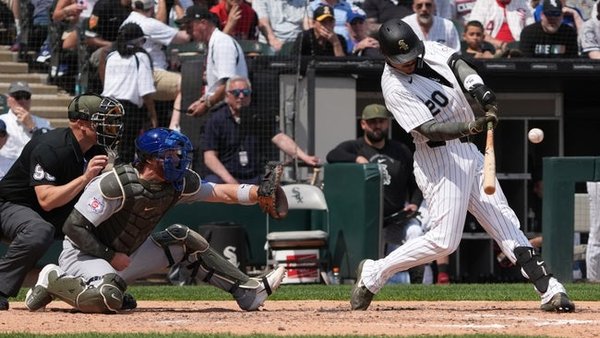
Zebby Matthews carries a 1.38 ERA and 0.77 WHIP into a matchup against Anthony Kay, who has issued 22 walks in 46.1 innings — a structural command problem tailor-made for a Minnesota lineup that draws walks at a .325 OBP clip. The moneyline opened at -110 and barely moved, treating a real starter gap as a near-even contest.
Zebby Matthews vs. Anthony Kay: Minnesota Twins at Chicago White Sox Betting Preview
After the under burned us yesterday in this same matchup — Minnesota 6, Boston 5 in a soggy Fenway finish — today’s game presents a fundamentally different puzzle. The pitching changes, the ballpark changes, and the market structure changes. What doesn’t change is the discipline required to find where the price diverges from the reality on the mound.
The reality here is a significant pitching gap the -110 moneyline isn’t fully pricing. Zebby Matthews carries a 1.38 ERA and 0.77 WHIP through 13 innings this season, posting elite suppression numbers against a White Sox team with genuine power but real contact quality issues against quality stuff. On the other side, Anthony Kay owns a 4.27 ERA and 1.45 WHIP over 46.1 innings, with walk problems that align perfectly with what Minnesota does at the plate. The Twins draw walks — 195 on the season, a .325 OBP — and Kay hands them out freely.
The market noise here is real: Chicago is at home, this is a near-.500 game between two division rivals sitting within a game of each other, and Matthews’ small sample creates genuine uncertainty. But the pitching gap, the price, and the matchup structure all point in the same direction.
Game Info & Betting Lines
- Date/Time: Monday, May 25, 2026 | 2:10 PM ET
- Venue: Guaranteed Rate Field (Park Factor: 0.98 — neutral, slight run suppression)
- TV: MLB.TV, Twins.TV, CHSN
- Probable Starters: Zebby Matthews (MIN) vs. Anthony Kay (CHW)
- Moneyline: Minnesota Twins -110 / Chicago White Sox -106
- Run Line: Minnesota Twins -1.5 (+150) / Chicago White Sox +1.5 (-182)
- Total: 8 (Over -112 / Under -108)
Why This Number Is Off
A -110/-106 moneyline says the market sees this as almost exactly 50/50 after juice. That’s the legitimate case for the other side: Anthony Kay is 3-1, he’s been getting outs, and Chicago is a .500 team at home with legitimate power in the middle of the order. The oddsmakers are balancing the Matthews sample-size concern against the Kay win-loss record and calling it even.
But here’s the problem — Kay’s 3-1 record is masking process-level issues that the scoreboard hasn’t fully punished yet. A 4.27 ERA and 22 walks in 46.1 innings represents a 4.27 BB/9 rate. That’s not a command hiccup; that’s a structural vulnerability. Against a Minnesota lineup that has drawn 195 walks this season and owns a .325 OBP, Kay’s tendency to miss the zone doesn’t just create baserunners — it creates crooked-inning potential without requiring hard contact.
The market is setting this line on Win-Loss records and name recognition. The underlying process data — walk rate, WHIP, xwOBA against — shows Minnesota’s pitcher is operating at a level Kay simply isn’t. A -110 price on the team with the dominant starter and the disciplined lineup represents genuine value. The implied probability at -110 is roughly 52.4%. The numbers put Minnesota’s win probability at 63.5%. That’s a 14.9% gap the market hasn’t closed.
What Separates the Pitching
The gap between these two starters is wider than the price suggests, and the Statcast data tells you exactly where it lives.
Zebby Matthews builds his arsenal around a 95.1 mph four-seam fastball that he throws 40.7% of the time, generating a .238 xwOBA against — genuinely elite suppression for a pitch that lives in the zone that often. His slider is the separator: thrown at 86.1 mph with a 27.0% whiff rate and .180 xwOBA, it’s a put-away offering that limits hard contact even when hitters make contact. The curveball adds another whiff dimension at 23.1%. What Matthews does differently from Kay is he doesn’t give away free baserunners — just 1 walk in 13 innings, compared to Kay’s 22. Matthews earns his outs through swing-and-miss sequences and soft contact; he doesn’t need defensive help to strand runners because he rarely puts them on.
Anthony Kay, by contrast, has a fastball problem. His four-seamer sits 95.7 mph — nearly identical velocity to Matthews — but gives up a .419 xwOBA against, which is a disaster-level number. His cutter posts a .406 xwOBA. The only pitch working reliably is his changeup at .271 xwOBA and 28.8% whiff. That means Kay is relying on his third-best pitch to generate outs while his primary weapons are getting hammered by expected metrics. The specific mismatch that concerns me most: Kody Clemens posts a .471 xwOBA against left-handed pitching, and Kay is a lefty. Clemens’ barrel rate (6.0%) and hard-hit rate (26.2%) give him legitimate damage potential against a pitcher whose fastball and cutter are already vulnerable.
The innings these two create look completely different. Matthews generates quick outs and low base traffic. Kay generates baserunner accumulation through walks and elevated contact quality, which means his innings tend to be longer, higher-leverage, and more likely to end in multi-run frames even without a string of hard hits.
The Pushback
The honest version of the case against Minnesota starts with Munetaka Murakami. His .527 xwOBA is not a fluke — a 10.6% barrel rate and 37.6% hard-hit rate back it up. Against right-handed pitching specifically, that xwOBA climbs to .537, which means Matthews isn’t getting a favorable platoon split here. Murakami has 17 home runs on the season and is batting second in the order, guaranteeing him the most plate appearances of any White Sox hitter. If Matthews leaves anything over the plate, Murakami has the profile to turn it into damage quickly.
Miguel Vargas compounds the concern. He posts a .416 xwOBA overall with a .530 mark against left-handers — but against right-handers, that drops to .367. So the platoon split actually works in Matthews’ favor with Vargas. The more concerning number is Colson Montgomery at .420 xwOBA with 6 prior plate appearances against Matthews’ type and a .426 mark versus right-handers. The middle of this Chicago order has genuine damage potential.
The Matthews sample is also legitimately small. Thirteen innings. One bad start could destroy that 1.38 ERA entirely, and we simply don’t have enough reps to know whether these suppression numbers reflect true ability or a favorable schedule. That’s a real risk embedded in this bet, not a footnote.
The run line is out. Minnesota at -1.5 (+150) would require covering against a team with legitimate middle-of-order pop and a pitcher in Kay who, despite his command issues, has been finishing games with a 3-1 record. The juice on the run line asks too much of Matthews’ small sample. The totals picture is similarly complicated — the projected total of 8.8 suggests some over lean, but Guaranteed Rate Field’s 0.98 park factor provides no meaningful boost, and Matthews’ suppression numbers work against a high-scoring environment. Both alternate bets require more conviction than the data supports.
Lineup & Injury Context
Ryan Jeffers (C) is on the 10-Day IL with a hand injury. Jeffers is carrying a .295/.949 OPS line with 7 home runs in 122 at-bats — Minnesota’s most productive hitter by OPS. His replacement, Victor Caratini, is a legitimate big-league backup but represents a real lineup downgrade at a position where Jeffers had been providing above-average production. This isn’t a minor absence.
Chicago’s injury situation is more diffuse but meaningful. Everson Pereira (CF, pectoral) and Austin Hays (LF, calf) are both out, forcing lineup shuffling in the outfield. Kyle Teel (C, hamstring) is on the 60-Day IL. The White Sox are also without Jordan Hicks from the bullpen. The net injury picture favors neither team cleanly, but Chicago’s depth concerns are more widespread.
Minnesota’s recent form is worth noting. The Twins just completed a three-game sweep of Boston, going 7-3 in their last 10 with a +4 run differential. Chicago went 2-4 on their West Coast trip, dropping the final two to San Francisco after a strong Friday showing.
Run Environment & Game Shape
The total is set at 8 with the over at -112 and the under at -108. The projected total of 8.8 runs suggests a slight lean toward the over, but the actual game shape depends heavily on how long Matthews lasts and whether Kay’s command issues surface early.
Guaranteed Rate Field’s park factor of 0.98 is effectively neutral — a tick below league average for run scoring but not meaningfully suppressive. This game won’t be shaped by the park; it’ll be shaped by the pitching gap and how quickly either team’s bullpen gets involved.
If Matthews is sharp and limits Chicago’s big boppers to their baseline contact quality — Murakami’s 31.8% strikeout rate gives Matthews a legitimate path to missing his bat — this game stays tight and low-scoring through the first five innings. If Kay’s walk issues materialize in the first or second time through Minnesota’s order, the game shape shifts toward a 5-3 or 6-3 range where the total clears but Minnesota controls the margin.
The scenario that breaks this bet is a short Matthews outing. If he exits before the fifth — possible given a 13-inning season sample — Minnesota’s bullpen carries a 4.19 team ERA, which is workable but not dominant. The Twins have genuine bullpen depth concerns with Cole Sands (forearm), Garrett Acton (strain), and Cody Laweryson (forearm) all on the IL. A short start forces the hand of a thinned-out relief corps against a White Sox lineup that just watched Murakami and Vargas combine for two home runs in the Friday win over San Francisco.
The run line at +150 for Minnesota to cover -1.5 is tempting given the pitching gap, but the uncertainty around Matthews’ workload capacity makes covering by multiple runs a harder ask than a straight moneyline win. That’s why the moneyline is the right vehicle for this edge — it captures the pitching advantage without requiring a dominant performance from a starter with 13 innings of 2026 evidence.
The Pick
The pitching gap here is real and the price hasn’t caught up to it. Matthews’ suppression numbers — .238 xwOBA on the fastball, .180 xwOBA on the slider, one walk in 13 innings — represent a level of process-level dominance Kay simply isn’t operating at. Kay’s fastball (.419 xwOBA) and cutter (.406 xwOBA) are both being punished by expected metrics, and his 4.27 BB/9 sets up free baserunners against a Minnesota lineup built to take walks and grind counts.
That said, this is a moderate-confidence play, not a lock. Matthews’ 13-inning sample is genuinely small — we can’t rule out regression, and the numbers may not hold as the league gets more looks at his stuff. Murakami’s .527 xwOBA and .537 mark against right-handers is a legitimate threat that could flip this game on a single at-bat. These aren’t factors to dismiss; they’re priced into the unit size. Minnesota’s -110 moneyline at a 63.5% win probability in the numbers represents a 14.9% implied probability edge, and that gap is worth 2 units at moderate confidence.
Bet: Minnesota Twins Moneyline (-110) — 2 units