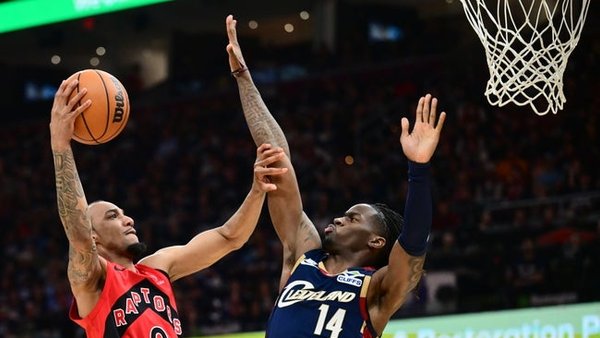
Bash sees a Game 2 total that doesn’t reflect the playoff reality on the floor — the scoring environment and matchup tempo suggest a different number than the one the market posted.
The Setup: Raptors at Cavaliers
Cleveland sits as an 8-point home favorite for Game 2 on Monday night after throttling Toronto 126-113 in the series opener. The Cavaliers got 32 from Donovan Mitchell, 24 off the bench from Max Strus, and 22-10 from James Harden in a game that never felt particularly close. The total for Game 2 is posted at 223.0, and that’s where the real conversation starts.
The projection I’m working with has this game landing around 230 points, and that’s a meaningful gap. Cleveland’s offensive rating sits at 118.3 against Toronto’s 112.1 defensive mark — that’s a strong mismatch on paper and one that showed up in Game 1. The Raptors pushed the pace to 99.2 possessions during the regular season, Cleveland ran at 100.7, and the expected blend here sits right at 100 possessions. That’s a deliberate game by playoff standards, but it’s not a grind-it-out slog either.
The market is pricing this like a tighter, lower-scoring affair than what the matchup suggests. Toronto’s defense got picked apart in the opener, and there’s no Immanuel Quickley again to help stabilize things. Cleveland’s offense is humming, the Raptors need to score to stay in this series, and the pace isn’t slowing down enough to justify a number in the low 220s.
Game Info & Betting Lines
Matchup: Toronto Raptors (46-36) at Cleveland Cavaliers (52-30)
Date: Monday, April 20, 2026
Time: 7:30 PM ET
TV: Peacock, NBCSN
Venue: TBD
Current Odds (MyBookie.ag):
Spread: Cavaliers -8.0 (-110)
Total: 223.0 (Over -110 / Under -110)
Moneyline: Cavaliers -345 / Raptors +267
Why This Line Exists
The total dropped from what you’d expect based on regular-season metrics because the market is assuming a Game 2 adjustment. Toronto got embarrassed in the opener, and the thinking goes that they’ll tighten up defensively, slow the game down, and make this more competitive. That’s a reasonable playoff narrative, but it doesn’t match what we saw Saturday or what the underlying numbers suggest.
Cleveland’s offense posted a 118.3 rating during the season, Toronto allowed 112.1, and that 6.2-point mismatch is classified as strong. The Cavaliers shot 59.4% true shooting as a team, the Raptors came in at 58.1%, and the 1.4-point edge in effective field goal percentage tilts Cleveland’s way as well. The offensive rebounding gap sits at 1.4 percentage points in the Cavaliers’ favor, which means more second-chance points in a game that’s already tilted toward scoring.
The pace blend at 100 possessions isn’t a crawl. It’s a measured playoff tempo, but it’s not a defensive war either. Toronto’s offense managed 114.5 expected points per 100 possessions during the regular season, Cleveland’s defense allowed 114.1, and that’s basically within noise. The Raptors can score — they put up 113 in Game 1 despite getting blown out. The issue is they can’t stop Cleveland, and nothing about the situational spot suggests that changes dramatically in Game 2.
The market is pricing in a tighter game, but the Cavaliers are at home, they’re rolling offensively, and Toronto doesn’t have the defensive personnel to slow this down without Quickley running the show.
Raptors Breakdown
Toronto’s offense isn’t the problem. Brandon Ingram averaged 21.5 points during the season on 47.7% shooting and 38.2% from three. RJ Barrett put up 24 in Game 1, Scottie Barnes added 21, and the Raptors got to 113 points despite playing from behind most of the night. The offensive rating of 115.0 is solid, and the 58.1% true shooting percentage means they’re getting quality looks.
The issue is on the other end. Toronto’s defensive rating sits at 112.1, and that number got exposed by Cleveland’s ball movement and shooting in the opener. The Raptors allowed Mitchell to get wherever he wanted, Strus torched them off the bench, and Harden ran the offense with 10 assists and no real resistance. Barnes is a versatile defender, but he can’t cover everyone, and without Quickley to pressure the ball and disrupt Cleveland’s rhythm, the Cavaliers are getting clean looks.
Toronto’s clutch stats show a 60% win rate in tight games, but this series isn’t going to be decided in the clutch if the Raptors can’t get stops. They’re going to have to score their way back into this game, and that pushes the total higher, not lower.
Cavaliers Breakdown
Cleveland’s offense is the story here. Mitchell is averaging 27.9 points per game and just dropped 32 in Game 1 while extending his record to nine straight series openers with at least 30 points. Harden is facilitating at an elite level with 8.0 assists per game during the season, and he had 22-10 in the opener. Evan Mobley provides interior scoring and rim protection, Jarrett Allen is shooting 63.8% from the field, and Strus gives them a legitimate scoring punch off the bench.
The Cavaliers’ offensive rating of 118.3 is elite, and their 59.4% true shooting percentage means they’re not just getting shots — they’re making them. The 56.1% effective field goal percentage is a full 1.4 points better than Toronto’s, and that gap showed up in Game 1 when Cleveland shot the ball with confidence and rhythm. The offensive rebounding edge at 26.8% compared to Toronto’s 25.5% gives them extra possessions, and those possessions turn into points against a Raptors defense that’s struggling to get stops.
Cleveland’s defensive rating sits at 114.1, which is solid but not dominant. They’re not going to shut Toronto down — they’re going to outscore them. The Cavaliers posted 126 in Game 1, and there’s no reason to think they can’t get to 115-120 again in Game 2 with the same offensive flow.
The Matchup
This game is going to be played at a deliberate pace, but it’s not going to be a defensive struggle. Cleveland’s offense matches up favorably against Toronto’s defense, and the 6.2-point mismatch is real. The Raptors are going to have to score to stay competitive, and they showed in Game 1 that they can get to 113-115 points even when things aren’t going their way.
The pace blend at 100 possessions means we’re looking at around 230 total points based on the efficiency numbers, and my model projects 229.7. That’s a 6.7-point edge over the posted total of 223.0, and that’s a strong gap. The market is pricing this like Toronto is going to tighten up defensively and slow the game down, but the Cavaliers are at home, they’re confident, and they’re not going to let the Raptors dictate tempo.
Cleveland’s shooting quality is better, their offensive rebounding gives them second chances, and Toronto’s defense doesn’t have the personnel to make this a grind. The Raptors are missing Quickley, who would have helped pressure Harden and Mitchell on the perimeter, and without him, Cleveland’s guards are getting clean looks and running the offense without resistance.
The clutch stats are basically even — Toronto won 60% of their clutch games, Cleveland won 57.1% — but this game isn’t likely to come down to the final possession. The Cavaliers are going to push the pace when they can, the Raptors are going to have to answer, and the scoring environment favors a higher total than what the market posted.
Bash’s Best Bet & The Play
I’m taking the Over 223.0. The projection sits at 229.7, and that’s a meaningful edge against a total that feels too low for this matchup. Cleveland’s offense is rolling, Toronto’s defense can’t slow them down, and the Raptors are going to have to score to stay in this series. The pace blend at 100 possessions isn’t a crawl, and the efficiency numbers suggest both teams can get to their scoring averages without much resistance.
The market is pricing in a Game 2 adjustment that doesn’t match the personnel or the matchup. Cleveland is at home, they’re confident after a dominant Game 1, and Toronto doesn’t have the defensive tools to make this a low-scoring affair. The shooting quality favors Cleveland, the offensive rebounding edge gives them extra possessions, and the Raptors are going to have to push tempo to get back in this series.
The risk is that Toronto comes out with a more deliberate game plan and forces Cleveland into a halfcourt battle, but even then, the Cavaliers are efficient enough to score in the halfcourt, and the Raptors need to keep pace. This total should be closer to 228-230, and I’ll take the 6.7-point edge over a number that feels too tight for what this game is likely to produce.