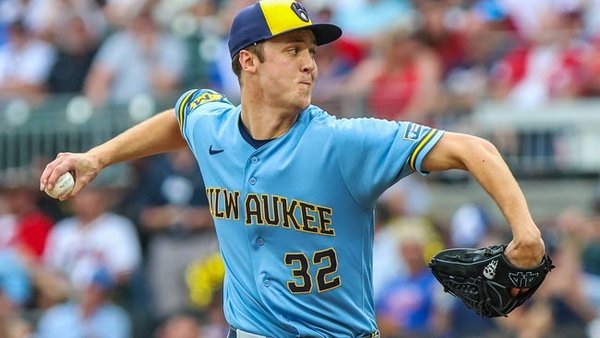
Both moneylines are sitting at -108 — a flat price that treats this as a coin flip despite a meaningful gap between the two starters on the mound. Fisher’s 0.932 WHIP and 2.92 K/BB ratio are not the profile of a pitcher priced identically to a starter carrying a 1.423 WHIP and 4.5 BB/9 walking rate. The number is lagging behind the pitcher profiles here.
Kyle Bradish vs Braydon Fisher: Baltimore Orioles at Toronto Blue Jays Betting Preview
The scoreboard from Friday night — Baltimore 13, Toronto 3 — is doing real damage to how sharp bettors see this game. The Orioles look hot. The Blue Jays look broken. And yet here we are, with both moneylines sitting at -108, implying the market sees a dead-even game. The noise from last night’s blowout is loud, but it belongs to Brandon Young’s efficient 6.1-inning outing and Adley Rutschman’s historic night at the plate — not to what happens when Kyle Bradish and Braydon Fisher take the mound today.
The betting tension is straightforward: Fisher has been quietly excellent through 34.1 innings, and the market is either ignoring that or deliberately pricing it flat because of Baltimore’s recent form. That -108 on Toronto represents genuine value for a team that owns a clear starter advantage.
The Blue Jays are one game under .500 in the AL East basement alongside a Baltimore team carrying a -27 run differential despite a 7-3 last-10 record. Both clubs are flawed. But in a single-game context, the pitcher who takes the ball matters more than anything else — and that gap is real today.
Game Info & Betting Lines
- Date/Time: Saturday, June 6, 2026 | 3:07 PM ET
- Venue: Rogers Centre, Toronto (Park Factor: 1.00 — neutral run environment, dome)
- Probable Starters: Kyle Bradish (BAL) vs Braydon Fisher (TOR)
- Moneyline: Baltimore Orioles -108 / Toronto Blue Jays -108
- Run Line: Toronto Blue Jays +1.5 (-184) / Baltimore Orioles -1.5 (+152)
- Total: 8 (Over -110 / Under -110)
Why This Number Is Off
A flat -108/-108 moneyline makes sense when you’re looking at two comparable starters — same pedigree, similar stuff, comparable results. That’s not what’s happening here. The market is weighing Baltimore’s hot recent stretch (7-3 last 10, back-to-back blowout wins over Boston and Toronto) against Toronto’s stumble, and it’s essentially calling it a push.
The legitimate case for Baltimore being priced here: Rutschman is scorching (.256/.799 season line, 4 hits and 5 RBI last night), Pete Alonso is posting a .440 xwOBA and a .771 OPS this season and leads the club with 12 home runs, and the Orioles have genuine offensive depth that punished Toronto’s shaky bullpen yesterday. Bradish’s 3.44 ERA over 65.1 innings is a real number — he’s not a soft fade.
But here’s the problem — Bradish’s 1.423 WHIP is a flashing warning light that his ERA is running on borrowed time. His strand rate has been doing heavy lifting, and a 4.5 BB/9 walk rate is a structural flaw, not a blip. Meanwhile, Fisher sits at a 0.932 WHIP — nearly half a base-runner per inning better than Bradish. The market is pricing them like equals. They are not equals right now. At -108, you’re getting what should arguably be a -120 or -125 side at a discount.
What Separates the Pitching
The gap between these two starters is more meaningful than the ERA difference suggests. Fisher’s 2.62 ERA across 34.1 innings comes with a 0.932 WHIP and 35 strikeouts against just 12 walks — that’s a 2.92 K/BB ratio that reflects genuine command, not strand-rate luck. His 3 home runs allowed in that span is clean in a neutral park environment like Rogers Centre where the 1.00 park factor doesn’t inflate fly-ball risk.
Bradish’s profile is more complicated. The 3.44 ERA reads solid, but his Statcast arsenal tells a story of vulnerability in specific spots. His four-seam fastball — used 20.1% of the time at 93.9 mph — is being punished to the tune of a .403 xwOBA against. That’s a hittable heater. His sinker (30.2% usage, 94.6 mph) generates a modest 8.3% whiff rate. The weapons that actually miss bats are his curveball (42.9% whiff rate, .202 xwOBA against) and slider (30.4% whiff). The concern is that those breaking balls get him through lineups, but when the command wavers — and with 33 walks in 65 innings it does waver — the fastballs and sinkers get exposed.
Against Bradish’s arsenal, the Toronto lineup has some legitimate matchup advantages. George Springer carries a .421 BvP average in 19 career plate appearances against Bradish — a small but notable sample. 19 PA isn’t definitive, but a .421 mark with a homer does suggest Bradish hasn’t found a consistent way to retire him. Vladimir Guerrero Jr. (.273 BvP in 25 PA, 1 HR) is dangerous against right-handed pitching despite his .330 xwOBA versus righties. The Blue Jays also put the ball in play more consistently — 455 team strikeouts versus Baltimore’s 562 — which matters against a pitcher whose secondary stuff is electric but whose primary pitches are hittable.
Fisher doesn’t face a lineup without threats. Alonso’s .440 xwOBA and 6.8% barrel rate represent genuine power danger, and Rutschman’s .394 xwOBA with a low 11.9% whiff rate means he’s a tough out who makes consistent contact. But Fisher’s underlying metrics suggest he handles contact well — the 0.932 WHIP across 34.1 innings isn’t a fluke of sequencing. His 35 strikeouts and 12 walks in that span reflect a pitcher who controls the strike zone and limits damage, even against lineups with legitimate power threats.
Angles to Avoid
The run line at Toronto +1.5 (-184) is a non-starter. You’re paying -184 to add a cushion in what the market is treating as a pick’em game. If you believe in the Blue Jays enough to lay -184, you believe in them enough to take the flat moneyline at -108 and pocket the difference. The juice makes this a trap, not an edge.
The total at 8 is interesting — the projected total on this matchup is closer to 8.8, which leans over. But with a dome, a neutral park factor, and two starters who control walks differently (Fisher does, Bradish doesn’t always), the over isn’t clean enough to chase. The moneyline is the cleaner play.
Injury Watch: Basallo
Samuel Basallo (abdomen, day-to-day) is the name to watch before first pitch. He’s been Baltimore’s most productive hitter by OPS (.842) and is one of the few players in that lineup who legitimately concerns me against Fisher. If Basallo is out, the middle of Baltimore’s order loses a real threat and the pitching edge widens further. Check the lineup before betting — this one could matter.
Pushback: Is Fisher for Real in 34.1 Innings?
Fair question, and I don’t want to wave it off. A 2.62 ERA in 34.1 innings is a small sample — we’re talking roughly six starts worth of data. There’s a real version of this where Fisher’s strand rate normalizes, a couple of fly balls find gaps, and the ERA climbs toward 3.50 by the end of June. The sample is genuinely thin enough that regression is a legitimate possibility, not just a theoretical concern. Pitchers with surface-level ERAs built on small samples get exposed in this league faster than you’d expect.
That said, the underlying numbers don’t read like a house of cards. A 0.932 WHIP and a 2.92 K/BB ratio aren’t ERA-propping peripherals — they’re the foundation of sustainable run prevention. Fisher isn’t walking people (12 BB in 34.1 IP) and he’s limiting hard contact. The profile holds up when you look past the ERA headline. Small sample, yes — but the supporting data doesn’t flash the warning signs you’d typically see from a pitcher on borrowed time.
Run Environment & Game Shape
Rogers Centre’s 1.00 park factor makes this a genuinely neutral run environment — no dome inflation to worry about, no wind quirks pushing balls out. The total is set at 8, which reflects the market’s respect for both starters. With Fisher’s 0.932 WHIP suppressing baserunners and Bradish’s curveball and slider capable of generating whiffs in bunches when the command is on, the early innings of this game figure to be tighter than Friday’s 13-3 blowout would suggest. That game belonged to a depleted Toronto bullpen, not to the starters taking the ball today. A lower-scoring, closer game is the shape that favors the side with the pitching edge — and that side is Toronto.
The Pick: Toronto Blue Jays moneyline at -108, 1 unit, lean confidence. The pitching gap between Fisher and Bradish is real and the market isn’t pricing it. In a neutral run environment where the starter matters most, you’re getting the better arm at a flat price. Take it.