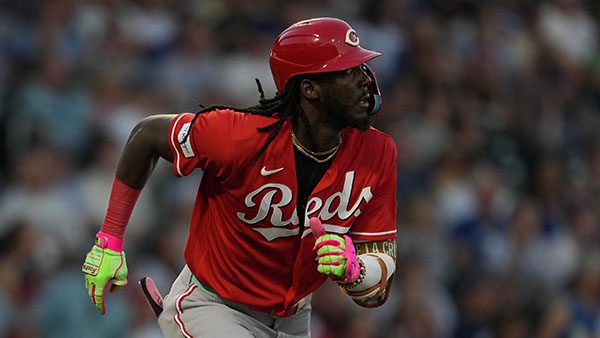
The market sees two sub-3.00 ERA starters and sets a cautious price, but I’m seeing a strikeout differential that creates a cleaner path to victory than this -156 suggests.
Garrett Crochet vs Andrew Abbott: Boston Red Sox at Cincinnati Reds Betting Preview
Opening Day brings the usual noise — fresh rosters, optimistic projections, and home crowds ready to believe. The market has priced this opener conservatively, with Boston at -156 against a Cincinnati team that surprised many by reaching the postseason last year. Both teams feature quality starters with impressive ERAs, creating what looks like a coin-flip matchup.
But when you dig past the surface numbers, a clear pitching hierarchy emerges. Garrett Crochet’s 2.586 ERA comes with an elite 11.18 K/9 rate that towers over Andrew Abbott’s 8.06 mark. That strikeout gap translates to fewer rallies, cleaner innings, and ultimately a more controlled game environment. Boston’s offensive improvements, highlighted by Willson Contreras joining as their new first baseman, give them better depth to capitalize when scoring chances arise.
Game Info & Betting Lines
- Date/Time: March 26, 4:10 PM ET
- Venue: Great American Ball Park (Park Factor: 1.10)
- Probable Starters: Garrett Crochet vs Andrew Abbott
- Moneyline: Boston Red Sox -156 / Cincinnati Reds +129
- Run Line: Cincinnati Reds +1.5 (-131) / Boston Red Sox -1.5 (+109)
- Total: 8 (Over -118 / Under -102)
Why This Number Is Close But Not Correct
The market is balancing legitimate factors here. Cincinnati returns home after a surprising playoff run with Elly De La Cruz emerging as a dynamic force and a young rotation that exceeded expectations. The Reds added veteran presence with Eugenio Suarez’s return, and Abbott posted a respectable 2.87 ERA across 166 innings last season. Home field advantage on Opening Day shouldn’t be dismissed lightly.
Where I think the line misses is in weighing pitcher dominance versus pitcher effectiveness. Abbott keeps runs off the board, but Crochet actively prevents baserunners from reaching in the first place. That 3.12 strikeout differential per nine innings represents the gap between good and elite. Boston’s .745 OPS compared to Cincinnati’s .706 mark means the Red Sox are better equipped to capitalize on the scoring opportunities that Abbott will allow. At -156, you’re not paying a premium for a powerhouse — you’re getting reasonable odds on the better team.
What Separates the Pitching
The fundamental difference between these starters lies in how they generate outs. Crochet dominated with a 2.586 ERA and that devastating 11.18 K/9 rate, attacking hitters with premium stuff that generates swings and misses. His 1.03 WHIP reflects consistent command, limiting traffic and keeping innings clean. When Crochet is on the mound, rallies die quickly.
Abbott takes a different approach, posting a solid 2.87 ERA but with more contact allowed. His 8.06 K/9 rate is respectable for a back-end starter, but it means more balls in play and more opportunities for sequences to snowball. Abbott’s 1.15 WHIP indicates he allows more baserunners, creating longer at-bats and higher stress situations. Against Boston’s improved lineup depth — featuring Roman Anthony (.859 OPS), Romy Gonzalez (.826), Contreras (.791), Wilyer Abreu (.786), and Jarren Duran (.774) — those extra baserunners become scoring threats.
The workload factor matters too. Crochet logged 205 innings compared to Abbott’s 166, suggesting the Red Sox starter has more stamina to work deeper into games. In a Great American Ball Park environment that slightly favors hitters with its 1.10 park factor, the pitcher who limits baserunners and extends his effectiveness holds a clear advantage.
The Pushback
Opening Day creates legitimate concerns about this read. Spring training doesn’t replicate regular season intensity, and both pitchers could struggle with early-season command. Crochet’s dominance might not translate immediately if he’s shaking off winter rust or dealing with expanded pitch counts after a long offseason.
Cincinnati’s home crowd and motivated young core present real obstacles. This Reds team punched above their weight last season, and players like De La Cruz and Noelvi Marte could elevate their performance in a charged Opening Day atmosphere. Abbott, despite his lower strikeout rate, has proven he can navigate tough lineups when his location is sharp.
The bigger worry is Boston’s own uncertainty. Contreras is adjusting to a new organization and position, and the Red Sox made enough roster changes to create chemistry questions. If the new pieces don’t mesh immediately, Cincinnati’s scrappy identity could steal a game that looks better on paper for the visitors. Still, talent gaps don’t disappear because of crowd noise, and Crochet’s strikeout ability represents a sustainable edge that transcends Opening Day variance.
Run Environment & Game Shape
The total of 8 reflects the market’s respect for both starters, projecting a pitcher-driven game in a moderately hitter-friendly park. Great American Ball Park’s 1.10 factor adds roughly half a run to the baseline, but with two sub-3.00 ERA arms, the expectation is for a tight, low-scoring affair.
This environment actually amplifies Crochet’s edge. In games where runs are scarce, the pitcher who prevents baserunners from reaching creates a decisive advantage. Boston’s bullpen, while not elite, should be able to protect a lead that Crochet helps establish. The Red Sox’s offensive depth means they’re more likely to capitalize on the few mistakes Abbott makes, while Crochet’s strikeout rate should limit Cincinnati’s ability to string together rally sequences.
Rejected Angle: The Run Line
At first glance, Boston -1.5 at +109 looks tempting given the pitching matchup advantage. But Opening Day is historically tight regardless of talent gaps, and Cincinnati’s playoff experience last year suggests they won’t fold easily at home. The run line requires not just a Boston win, but a comfortable one — something that’s asking too much from a team with new pieces still finding their rhythm. The moneyline captures the fundamental edge without demanding a blowout.
The Pick
The strikeout differential tells the story here. Crochet’s dominance creates fewer high-leverage situations for Cincinnati to exploit, while Abbott’s contact-heavy approach gives Boston multiple opportunities to break through. Both teams made the playoffs last year, but Boston’s superior starter and offensive depth make them the right side at -156. That’s a fair price for backing the better pitcher in what should be a pitcher’s duel. When elite stuff meets solid stuff, elite usually wins.
PICK: Boston Red Sox Moneyline -156