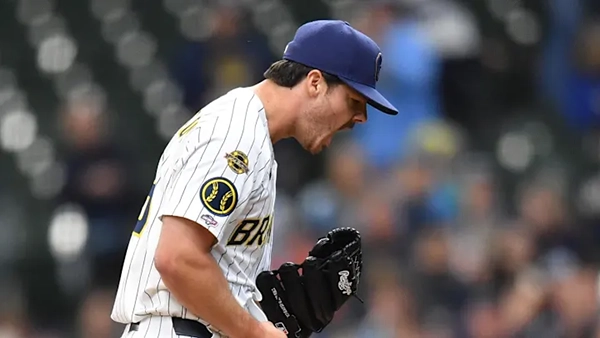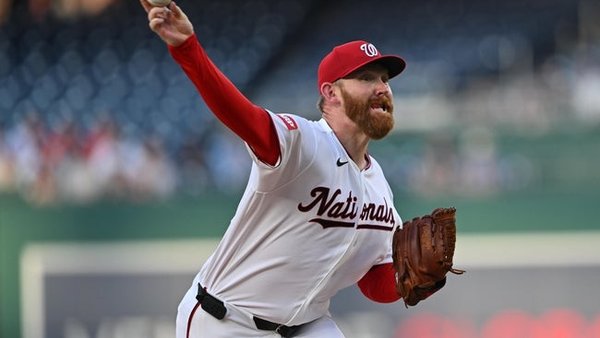
Baz’s 7.71 K/9 rate creates genuine swing-and-miss ability while Littell’s 14 homers allowed in 36 innings screams blow-up risk. The surface ERAs look equally bad — the underlying metrics tell a different story.
Shane Baz vs Zack Littell: Baltimore Orioles at Washington Nationals Betting Preview
The market sees two struggling starters with ugly ERAs north of 5.40 and assumes chaos, but that surface reading misses the critical difference in how these pitchers fail. Shane Baz strikes out nearly twice as many batters per nine innings (7.71 vs 4.21), giving Baltimore genuine swing-and-miss ability that Washington simply cannot match. While both pitchers have been hammered this season, Zack Littell’s home run problems represent a different level of vulnerability — 14 homers allowed in just 36.1 innings creates massive blow-up risk that the Orioles’ power lineup can exploit.
Baltimore just dominated the Yankees 7-0 behind Kyle Bradish’s dominant six-inning, one-hit performance, with Adley Rutschman homering and solid offensive contributions from Blaze Alexander and Coby Mayo. The Orioles get that same pitching advantage here with Baz’s superior stuff against a Nationals lineup that has struggled to generate consistent offense despite some recent power outbursts against Cincinnati.
Game Info & Betting Lines
- Date/Time: Friday, May 15, 2026 — 6:45 PM ET
- Venue: Nationals Park (Park Factor: 0.98 — slightly pitcher-friendly)
- Probable Starters: Shane Baz (1-4, 5.48 ERA) vs Zack Littell (1-4, 6.94 ERA)
- Moneyline: Baltimore Orioles -144 / Washington Nationals +122
- Run Line: Washington Nationals +1.5 (-140) / Baltimore Orioles -1.5 (+116)
- Total: 9 (Over -122 / Under +100)
Why This Number Is Close
The market is balancing Baltimore’s road struggles (20-24 record, -37 run differential) against Washington’s home-field advantage and recent offensive surge that included six home runs in a 10-4 win over Cincinnati. Both starters enter with terrible surface numbers — Baz at 5.48 ERA and 1.56 WHIP, Littell even worse at 6.94 ERA and 1.60 WHIP — creating legitimate uncertainty about which team can get consistent innings from the mound.
The Orioles’ -144 price reflects their talent edge on paper, but the market is rightfully skeptical given their inconsistent road performance and the fact that both teams have been underachieving expectations. Washington gets home-field value and the benefit of facing an Orioles team that has been outscored by 37 runs this season.
But here’s the problem with that surface analysis: it treats both pitching performances as equally bad when the underlying metrics reveal significant differences. Baz’s strikeout ability and Littell’s home run vulnerability create a specific mismatch that the current price doesn’t fully capture.
What Separates the Pitching
The strikeout differential tells the story of this matchup. Baz’s knuckle curve sits at 85.5 mph with a 28.9% whiff rate and generates a 20.0% put-away rate, giving him genuine swing-and-miss ability that shows up in his 7.71 K/9. His four-seam fastball at 96.6 mph pairs effectively with the breaking ball, creating a power repertoire that can dominate when located properly.
Littell’s arsenal lacks that same punch. His slider generates just 15.3% whiffs at 87.4 mph, and his four-seam fastball at 91.1 mph produces only 6.4% whiffs — numbers that explain his anemic 4.21 K/9 rate. When you can’t miss bats consistently, you’re dependent on weak contact and defensive execution, creating volatility that Baltimore’s power lineup can exploit.
The home run numbers reveal Littell’s most glaring weakness. Fourteen home runs allowed in 36.1 innings translates to 3.47 HR/9 — a rate that screams blow-up risk against an Orioles lineup featuring Adley Rutschman (.893 OPS, 6 HRs) and Taylor Ward (.803 OPS, 1 HR). Baz has allowed five homers in 44.1 innings (1.02 HR/9), showing better ability to keep the ball in the park despite his own control issues.
Both pitchers struggle with walks — Baz at 3.86 BB/9, Littell at 3.22 BB/9 — but Baz’s strikeout ability gives him escape routes that Littell simply doesn’t have. When you can’t miss bats and struggle with location, every baserunner becomes a potential disaster.
The Pushback
The concern is Baltimore’s road offense, which has been inconsistent all season and faces a Washington bullpen that showed resilience in their recent Cincinnati series. The Orioles are hitting just .231 as a team with a .693 OPS, numbers that suggest they might struggle to capitalize even if Baz gives them a lead to work with.
Washington’s recent power surge also creates legitimate worry about their ability to exploit Baz’s control issues. James Wood already has 12 home runs this season, and CJ Abrams brings legitimate pop with nine homers and a .923 OPS. If Baz falls behind in counts and has to challenge with his fastball, this Nationals lineup has shown the ability to punish mistakes.
That said, the strikeout differential and Littell’s home run problems represent more predictable patterns than hot-hitting streaks. Baz’s stuff creates margin for error that Littell doesn’t possess, and Baltimore’s power upside remains higher despite their recent offensive struggles.
Run Environment & Game Shape
The 9-run total reflects the market’s expectation of offensive output from two pitchers with ERAs above 5.40, and Nationals Park’s 0.98 park factor won’t suppress runs enough to change that fundamental dynamic. This projects as a game where the team that gets early leads and forces the opposing starter into high-leverage situations wins, and Baz’s superior strikeout ability gives Baltimore the edge in those crucial moments.
The model projects Baltimore to cover the run line by 1.6 runs, driven primarily by the massive starter differential (-1.596 component advantage for the away team). While the -144 moneyline price offers no actionable edge, the run line at +116 presents significant value given the model’s high confidence in Baltimore’s ability to win by multiple runs.
The Bet
Baltimore Orioles -1.5 (+116) — 3 units
The model’s strong run line edge aligns perfectly with the pitching matchup analysis. Baz’s strikeout ability creates the margin for error necessary to cover a run line on the road, while Littell’s home run vulnerability against Baltimore’s power lineup suggests potential for a multi-run victory. The +116 price provides excellent value on what projects as a high-confidence play based on predictable pitching patterns rather than volatile offensive hot streaks.