The numbers scream Milwaukee advantage — 3.35 ERA versus 4.49, +60 run differential versus -5. The market is betting against the Brewers’ rotation depth with a TBD starter creating artificial uncertainty.
Milwaukee opens at -102 on the road despite carrying a full run advantage in ERA — that’s the kind of market inefficiency that demands attention. The Brewers’ 3.35 ERA sits over a full run better than Minnesota’s 4.49, yet the price suggests a coin flip. Either the market is overweighting the TBD starter uncertainty, or I’m missing something fundamental about this matchup.
TBD vs Joe Ryan: Milwaukee Brewers at Minnesota Twins Betting Preview
The statistical foundation favors Milwaukee across multiple metrics. The Brewers arrive at 24-17 with a +60 run differential compared to Minnesota’s 20-24 record and -5 run differential. Milwaukee just completed a strong 5-1 homestand that included sweeping the Yankees and taking two of three from San Diego, while Minnesota split their recent series after getting blown out 9-1 in their latest win.
What’s creating this tight price is the combination of Minnesota’s home field advantage and Milwaukee’s TBD starter designation. The market is essentially asking whether the Brewers’ rotation depth can maintain their pitching edge without knowing the specific arm. Given their consistent staff performance this season, that uncertainty might be overpriced at -102.
Game Info & Betting Lines
- Date/Time: Friday, May 15, 2026 | 7:10 PM ET
- Venue: Target Field (Park Factor: 1.00)
- Probable Starters: TBD vs Joe Ryan
- Moneyline: Milwaukee Brewers -102 / Minnesota Twins -116
- Run Line: Minnesota Twins +1.5 (-192) / Milwaukee Brewers -1.5 (+158)
- Total: 8.5 (O -122 / U +100)
Why This Number Is Too Close
The Twins do carry legitimate strengths that justify some market hesitation. Their power numbers show 49 home runs versus Milwaukee’s 27, with Byron Buxton leading the charge at .899 OPS and 15 homers. Target Field’s neutral 1.00 park factor won’t suppress their offense, and home teams get the crucial last at-bat advantage in projected close games.
But the market appears to be overweighting the TBD starter risk relative to Milwaukee’s systematic advantages. The Brewers have maintained their 3.35 ERA across multiple pitchers this season, with a 1.229 WHIP that significantly outpaces Minnesota’s 1.357. Their 402 strikeouts in 41 games compared to Minnesota’s 332 in 44 games shows a higher-leverage approach throughout their staff. The price at -102 feels like worst-case scenario pricing rather than reflecting the most likely rotation outcome from a deep, consistent staff.
What Separates the Pitching
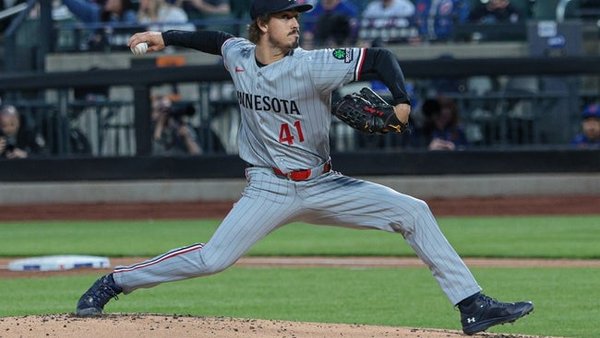
Joe Ryan brings a diverse six-pitch arsenal for Minnesota, with his four-seam fastball comprising 42.1% usage at 92.6 mph. His knuckle curve generates elite results at 27.1% whiff rate and .128 xwOBA, while his sweeper also shows effectiveness at 25.0% whiff rate. The vulnerability lies in his primary fastball, which surrenders .327 xwOBA — not disastrous, but exploitable when it dominates nearly half his pitch mix.
Milwaukee’s TBD starter creates genuine uncertainty, but their rotation infrastructure has delivered consistent results. Beyond the ERA gap, the Brewers show superior command metrics that should translate regardless of which pitcher takes the mound. Their systematic pitching advantages run deeper than individual matchups — it’s about approach, preparation, and depth that Minnesota’s power-dependent strategy can’t consistently match.
The Statcast data reveals clear exploit paths for Milwaukee’s lineup. Andrew Vaughn shows .412 xwOBA with 37.2% hard-hit rate, while Gary Sánchez sits at .373 xwOBA with 28.3% hard-hit rate. Against Ryan’s heavy fastball usage and occasional slider struggles (.368 xwOBA allowed), these power threats create multiple scoring opportunities through the middle innings.
The Pushback
The TBD starter designation creates real internal conflict about this bet. Milwaukee could deploy a lesser arm, someone on restricted pitch count, or even an opener strategy that would completely neutralize their pitching advantage. If that scenario unfolds, Minnesota’s power advantage with Buxton (.899 OPS) and Ryan Jeffers (.941 OPS) becomes the dominant factor. They can generate runs quickly against weaker pitching, and Target Field’s neutral environment won’t suppress their offensive upside.
Ryan’s steady approach also provides legitimate optimism for Minnesota backers. His 3.43 ERA and consistent secondary pitch usage suggest he can work effectively through Milwaukee’s lineup multiple times. The home field advantage in what projects as a close game could be decisive if the Brewers’ unknown starter struggles with command early.
But here’s what keeps pulling me back to Milwaukee: their rotation has shown remarkable consistency this season across multiple arms. The 5-1 homestand featured dominant pitching performances from different starters, indicating depth and systematic advantages that extend beyond individual names. Even with the TBD uncertainty, Milwaukee’s pitching infrastructure feels more sustainable than Minnesota’s boom-or-bust power approach. The question becomes whether that edge justifies the risk of not knowing the starter until game time.
Why the Run Line Doesn’t Work
I considered taking Milwaukee -1.5 at +158 for the enhanced payout, but the math doesn’t support it in this projected 4.5-4.4 environment. Minnesota’s power profile creates legitimate late-inning threat, particularly with Buxton’s 15 homers and Jeffers’ .941 OPS capable of changing game dynamics quickly. Target Field’s neutral park factor means those power numbers translate directly without environmental suppression.
Milwaukee’s recent games also show vulnerability to late rallies. Their bullpen allowed San Diego to mount a ninth-inning comeback attempt just two games ago, and while they’ve maintained strong overall numbers, the run line requires controlling games from start to finish. Against Minnesota’s power threats and with an unknown starting pitcher potentially limiting innings, the additional risk doesn’t justify the modest payout enhancement. The straight moneyline provides the cleaner path to profit in what should be a competitive, close game.
The Pick: Milwaukee Brewers -102