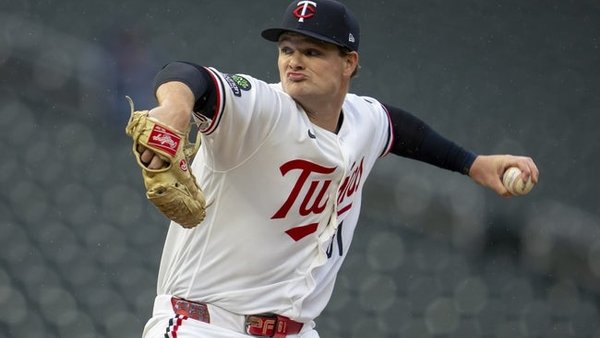
Prielipp’s individual ERA advantage suggests Minnesota has the edge — but Milwaukee’s team staff sits more than a full run better at 3.32 versus 4.43. The run line at +134 hasn’t moved with this systematic disparity.
Logan Henderson vs Connor Prielipp: Milwaukee Brewers at Minnesota Twins Betting Preview
After the Brewers escaped with a 3-2 victory yesterday on an interference call and late-inning heroics, the market has them as slight road favorites again at -124. The moneyline feels about right given the overnight adjustment, but the run line at +134 for Milwaukee -1.5 presents the cleaner edge. The market is balancing yesterday’s tight result against deeper quality indicators, and that tension creates value in the spread market.
While Logan Henderson (4.15 ERA) versus Connor Prielipp (3.32 ERA) suggests a modest edge for the Twins starter, the real story lives in the team pitching staffs. Milwaukee’s 3.32 team ERA sits more than a full run better than Minnesota’s 4.43 mark — a chasm that yesterday’s narrow margin temporarily obscured. The run line price doesn’t properly account for this systematic advantage.
Game Info & Betting Lines
- Date/Time: Saturday, May 16, 2026 | 7:10 PM ET
- Venue: Target Field (Park Factor: 1.00 — neutral)
- Probable Starters: Logan Henderson (0-1, 4.15) vs Connor Prielipp (1-1, 3.32)
- Moneyline: Milwaukee Brewers -124 / Minnesota Twins +106
- Run Line: Minnesota Twins +1.5 (-162) / Milwaukee Brewers -1.5 (+134)
- Total: 8.5 (Over -108 / Under -112)
Why the Run Line Offers Better Value
The moneyline at -124 feels fairly priced given the overnight market adjustment, but it doesn’t reward you for Milwaukee’s systematic edges. The run line at +134 creates a different risk-reward profile that better captures the gap between these teams. Minnesota has legitimate reasons to keep this close — Prielipp owns the better individual ERA, they’re at home, and their power advantage (49 home runs to Milwaukee’s 27) creates volatility.
But that surface-level analysis misses the broader team quality. The Brewers’ 25-17 record with a +61 run differential versus Minnesota’s 20-25 mark at -6 run differential reflects a fundamental gap. Milwaukee is 7-3 in their last 10 while the Twins sit 5-5, and when you factor in the staff ERA disparity, yesterday’s narrow result looks more like variance than predictive value.
Moneyline Safety vs Run Line Upside
The tension here is real — Milwaukee at -124 offers moneyline safety with modest return, while the run line at +134 requires a multi-run victory but pays significantly better. Henderson’s limited track record and road inexperience make the safer play appealing, especially after Minnesota showed offensive life in their recent 9-1 win over Miami.
But that’s exactly where the market inefficiency lives. The moneyline price already accounts for Henderson’s uncertainty and Minnesota’s home edge. The run line market, however, is still pricing this like a coin-flip series between comparable teams rather than recognizing Milwaukee’s systematic advantages. When the better team is getting plus-money to win by multiple runs, the value shifts toward the spread.
What Separates the Pitching
Henderson’s 11.08 K/9 rate gives him a strikeout advantage over Prielipp’s 9.95 mark, and his Statcast profile reveals why the ERA gap may be misleading. Henderson’s four-seam fastball sits at 93.2 mph with 46.8% usage, generating a solid 0.292 xwOBA that suggests better performance ahead. His changeup at 31.2% usage has been dominant with a 0.165 xwOBA, giving him a legitimate put-away pitch against this Minnesota lineup.
Prielipp counters with a slider-heavy approach at 38.4% usage, throwing it 88.0 mph with a 32.1% whiff rate. The pitch generates a 0.287 xwOBA, making it effective but not overwhelming. His four-seam fastball at 95.4 mph shows velocity advantage, but the 0.386 xwOBA allowed suggests command issues that Milwaukee’s patient lineup can exploit. Brice Turang’s 0.454 xwOBA and Jake Bauers’ 0.398 mark represent the biggest mismatches against Prielipp’s arsenal.
The deeper story lives in the bullpen and staff depth. Milwaukee’s run prevention advantage extends far beyond the starters, creating multiple innings where they can maintain or extend leads while Minnesota’s staff struggles suggest late-game vulnerability.
The Henderson Concerns
Henderson’s road performance creates legitimate worry — 13 total innings with an 0-1 record doesn’t inspire confidence for a crucial spread cover. His 4.15 ERA reflects real early-season struggles, and those issues could amplify in a hostile road environment against a Minnesota lineup hungry for revenge after yesterday’s controversial finish.
The bigger concern is execution under pressure. Henderson’s limited track record means we don’t know how he responds to adversity, and if Minnesota jumps ahead early, the run line bet faces immediate stress. Byron Buxton’s 15 home runs and Ryan Jeffers’ 0.922 OPS represent exactly the type of middle-order threats that can punish inexperienced road starters.
Target Field’s neutral park factor won’t suppress the long ball, and if Henderson’s command wavers against Minnesota’s power threats, this game could flip quickly. The Twins have won just 20 of 45 games, but they’ve shown the ability to explode offensively when they get favorable matchups.
Run Environment & Game Shape
The total sits at 8.5 with Target Field’s neutral park factor, suggesting the market expects a moderate scoring environment. This projection actually favors Milwaukee’s run line chances — they don’t need a blowout to cover 1.5 runs, just consistent offensive execution against Minnesota’s vulnerable staff.
Henderson’s strikeout rate and changeup effectiveness should limit Minnesota’s power threats through the middle innings. If he can navigate 5-6 innings around the 3-4 run range, Milwaukee’s superior bullpen depth can both maintain leads and extend them in the late innings. The game shape points toward a 5-3 or 6-4 type result where staff quality determines the margin.
The Pick
The moneyline offers safety, but the run line at +134 provides the better risk-adjusted return. Henderson’s inexperience creates uncertainty, but Milwaukee’s systematic advantages — better record, superior run differential, vastly better team ERA — suggest the market is undervaluing their ability to win decisively.
Yesterday’s narrow result was influenced by specific circumstances and late-inning randomness. Over a larger sample, the team with the 3.32 ERA beats the team with the 4.43 ERA by multiple runs more often than the current price suggests. When you can get plus-money on the better team laying 1.5 runs, the value is clear.
Take Milwaukee Brewers -1.5 (+134) for 2 units.