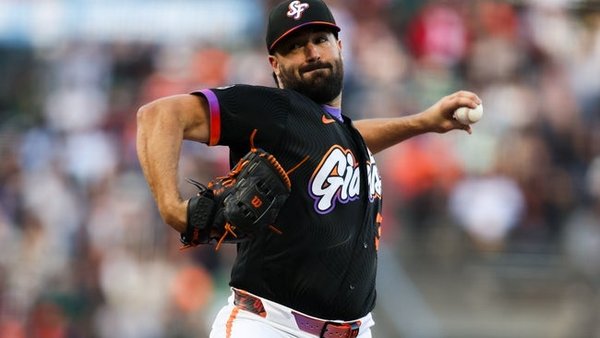
Mason Adams carries a 5.55 ERA and a 1.48 WHIP into Coors Field — the highest run-inflating park in baseball — against a Padres lineup locked into playoff intensity. The model projects 12.5 combined runs against a posted total of 11.0, and Colorado’s bullpen ERA of 5.57 means the damage doesn’t stop when Adams exits.
Robbie Ray vs. Mason Adams: San Diego Padres at Colorado Rockies Betting Preview
This series has been a run-scoring carnival from the jump. Monday went 15 combined runs, Tuesday went 12. Now we get Game 3, and the market has set the total at 11.0 — already elevated, yes, but perhaps not elevated enough given who is pitching for Colorado tonight. Mason Adams carries a 5.55 ERA and a 1.48 WHIP across 97.1 innings this season, making him one of the most hittable qualified starters in the National League. When you put that arm inside the most run-inflating park in baseball, the total has a clear direction.
The market noise here is real — the Rockies blew out the Padres 9-3 on Tuesday, which might tempt some bettors into a “reset” narrative where Colorado’s offense keeps rolling and San Diego’s bats stay quiet. But the pitching matchup flips completely today. Colorado’s bullpen ranks among the worst in baseball by ERA (team pitching ERA of 5.57), meaning even if Adams is chased early, the damage continues. This isn’t a fade-the-Rockies story. The total is the clean vehicle.
San Diego is fighting for a playoff spot, holding a 2.5-game lead over Arizona for the final NL wild card. These aren’t rested regulars going through the motions — this is a lineup locked in at full intensity, facing a starter who has allowed 18 home runs in fewer than 100 innings.
Game Info & Betting Lines
- Date/Time: Wednesday, September 16, 2026 | 8:40 PM ET
- Venue: Coors Field (Park Factor: 1.38 — highest in baseball, extreme hitter environment)
- Probable Starters: Robbie Ray (SD) vs. Mason Adams (COL)
- Moneyline: San Diego Padres -172 / Colorado Rockies +142
- Run Line: Colorado Rockies +1.5 (-108) / San Diego Padres -1.5 (-112)
- Total: 11.0 (Over -120 / Under +100)
Why This Number Is Close — But Leans Over
The market hasn’t been asleep at the wheel here. An 11.0 total at Coors Field already accounts for the park, and the juice on the over at -120 tells you oddsmakers and the betting public agree with the directional lean. So let me be honest: there’s no naive public number being exploited tonight. The edge isn’t enormous.
But here’s where I think the market is slightly wrong. The numbers project 12.5 combined runs — a full 1.5 runs above the posted total. That figure accounts for Robbie Ray’s real competence while still landing well above 11.0, because the drag on this total is Adams, not Ray. Adams’ four-seam fastball sits at 92.8 mph and carries a .345 xwOBA against — that’s a below-average heater he throws 42.1% of the time. His sinker, used sparingly at 2.8%, generates a .601 xwOBA against with a 0.0% put-away rate. That is not a pitch you want to throw in altitude.
The legitimate case for the under rests entirely on Ray suppressing the Rockies long enough for the total to stall. That’s plausible for three innings. But Ray himself has allowed 20 home runs in 175.0 innings this season, and Coors Field doesn’t forgive pitchers who give up fly balls. The market is balancing Ray’s competence against Adams’ vulnerability. I think it’s underweighting the Adams side — and the bullpen depth behind him.
What Separates the Pitching
The gap between these two starters is significant, and it matters to how the game scores out. Robbie Ray enters at 3.03 ERA, 1.15 WHIP — a genuinely solid season from a veteran left-hander who has recaptured command. His arsenal is legitimately diverse: his changeup generates a 25.4% whiff rate at 86.4 mph, his sweeper produces 25.7% whiffs, and he limits damage with a slider that holds hitters to a .251 xwOBA. Ray is a real pitcher who can manufacture soft innings.
But Ray’s exposure is the long ball, and Coors Field doesn’t forgive that. His 20 home runs allowed in 175.0 innings are the red flag at altitude. Hunter Goodman carries 38 home runs and a .440 xwOBA with a 6.9% barrel rate — the kind of hitter who turns Ray’s fly-ball tendencies into multi-run innings the moment a pitch catches too much plate. Jake McCarthy has a .373 xwOBA against left-handed pitching specifically, and Cole Carrigg — who just hit two homers Tuesday — sits at a .369 xwOBA against lefties as well.
Mason Adams is a different story entirely. His 5.55 ERA and 1.48 WHIP reflect genuine contact quality problems, not just bad luck. That four-seam at 92.8 mph is hittable at sea level; at 5,200 feet, it plays even flatter. Fernando Tatis Jr. owns a .429 xwOBA against right-handed pitching and a 36.4% hard-hit rate — he punishes this type of arm. Ty France at .385 xwOBA and Jase Bowen at .384 xwOBA against righties round out a lineup that projects to do real damage against Adams before he hits his pitch count. When Adams exits, Colorado’s bullpen — posting a team ERA of 5.57 — offers no relief.
The Pushback
The concern that gives me the most pause is Ray’s potential to keep this low-scoring through the first half. If Ray goes six innings of two-run ball, we need Adams to implode and the bullpens to leak. That’s a multi-step parlay of damage, and it doesn’t always materialize cleanly. The under has won in games like this before — starter A dominates, starter B gets two or three bad innings but the game stalls at 7 or 8 combined runs, and the total dies quietly. That risk is real.
The juice is also a factor. Paying -120 for this over means you need to be right more often than the implied 54.5% breakeven, and on a total this elevated, losing days hurt more. There’s also a blowout clustering concern: when Coors games get lopsided early, the trailing team sometimes plays differently late, and mercy-type offense can slow. Tuesday’s 9-3 final is a good example — the Padres scored three, but the game’s shape was decided by the sixth inning. A blowout in the wrong direction could leave this just under the number.
Finally, the Rockies’ recent offensive surge is worth contextualizing. Colorado is 5-21 since August 16 — Tuesday was their first win in nine games. One blowout against a taxed bullpen doesn’t erase three weeks of futility or validate their lineup against a competent pitcher. The “Rockies keep rolling” narrative collapses when you look at the pitching matchup flip.
Run Environment & Game Shape
The projected score of 6.3 Padres, 6.2 Rockies describes a game where both offenses produce — not a blowout, not a pitcher’s duel, but a sustained back-and-forth that accumulates runs across nine innings. That kind of game is exactly what Coors Field specializes in when neither staff is elite. Adams isn’t elite. His bullpen support isn’t elite. Ray is solid but pitches in a park that has historically eroded even above-average starters. The 1.38 park factor isn’t a generic reference here — it’s the environmental multiplier that turns a mediocre Adams start into a 5- or 6-run outing and turns Ray’s acceptable fly-ball rate into a potential two- or three-home-run night.
The numbers land at 12.5 combined, which is 1.5 runs above the posted line. That’s not a razor-thin edge — that’s a meaningful buffer, and it’s driven by the right variable: Adams at altitude, against a locked-in Padres lineup fighting for October. Both offenses have the quality-of-contact profiles to cash this. The Padres’ top of the order — Tatis, France, Bowen — are built to punish exactly the kind of mid-90s four-seam-heavy arm Adams is. The Rockies’ middle of the order — Goodman’s .440 xwOBA, McCarthy’s .373 vsLHP — gives Ray enough trouble to keep Colorado in the run column as well.
The Pick
My play is the Over 11.0 (-120) for 2 units at moderate confidence. The core thesis is simple: Adams at Coors, a projected total of 12.5, and a 1.5-run buffer above the line. That’s the margin. The juice is fair for the edge on offer, and the risk scenario — Ray shutting down the Rockies for six — is real but not likely enough to kill the over given what’s happening on the other side of the ledger.
Bet: Over 11.0 (-120) — 2 units — Moderate confidence