Angel Stadium’s 0.95 park factor and two offenses trending deep into negative run differential territory create a run environment the posted 7.5 total may not fully reflect. Bradley’s .174 xwOBA-against curveball and Urena’s fastball-heavy, hard-contact profile point to a game that leans quieter than the projected 8.6 combined runs — the number and the environment are not telling the same story.
Taj Bradley vs. Walbert Urena: Minnesota Twins at Los Angeles Angels Betting Preview
The Twins arrive in Anaheim having just escaped a series loss to the Yankees on a 13th-inning walk-off, while the Angels are stumbling out of a 7-2 thumping by Seattle. These are two sub-.500 clubs with nothing meaningful on the line in late September — and the market knows it, pricing this game at a relatively modest 7.5 total. The Twins are -131 moneyline favorites, and there’s a legitimate starter advantage baked into that number.
But the moneyline is blocked for me. The -131 price exceeds the hard juice ceiling I’m willing to pay on any single game. That structural constraint forces the conversation toward the total, and what I find there is a genuine lean — not a hammer — toward the under. The numbers project 8.6 combined runs, which is an over signal on paper. The under case, however, is built on park suppression, two genuinely fragile starters, and two offenses that have gone cold down the stretch of a meaningless season.
The question isn’t whether both starters could get blown up. They absolutely could. The question is whether the totality of the run environment — Angel Stadium’s 0.95 park factor, two bottom-tier offenses, and late-September disengagement — creates a credible path to staying under 7.5. I think it does, barely.
Game Info & Betting Lines
- Date/Time: Thursday, September 17, 2026 — 9:38 PM ET
- Venue: Angel Stadium | Park Factor: 0.95 (run-suppressing)
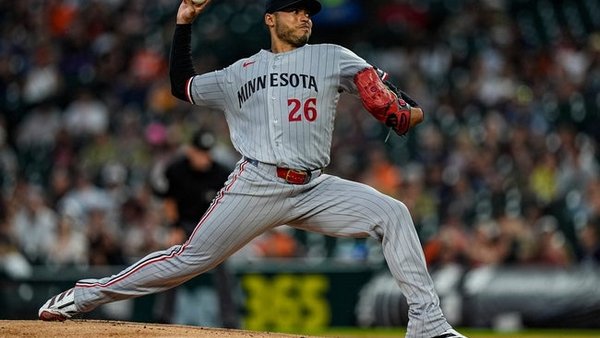
- Probable Starters: Taj Bradley (MIN) vs. Walbert Urena (LAA)
- Moneyline: Minnesota Twins -131 / Los Angeles Angels +109
- Run Line: Twins -1.5 (+136) / Angels +1.5 (-165)
- Total: 7.5 — Over -110 / Under -109
Why This Number Is Close
The market is doing something reasonable here. It knows both starters are volatile — Urena’s ESPN-listed ERA of 2.88 is a mirage when his real season ERA sits at 6.10 with a WHIP of 1.56. Bradley’s ESPN profile shows 3.81, but his actual numbers are 5.24 ERA and 1.34 WHIP over 113.1 innings. The books aren’t naive. They’re pricing a middle ground: two starters who eat innings inconsistently, moderately sized offenses, and a park that plays slightly below average for scoring. That equilibrium lands at 7.5.
The case for the over is straightforward: both starters are fragile, and if either gets shelled early, you’re chasing runs fast. The Twins’ power core — Kody Clemens (26 HR, xwOBA .402) and Ryan Jeffers (xwOBA .371) — can punish weak contact-limiting starters. On the other side, Mike Trout’s .459 xwOBA is a genuine explosion threat even against a starter with good peripherals.
Where I think the market is slightly wrong is in not fully weighting the park and the late-season context together. Angel Stadium suppresses run scoring relative to league average, and these two offenses — Angels OPS .680, Twins OPS .720 — aren’t overcoming that suppression with sheer firepower. The numbers project 8.6 runs using season-long data; the real number in this specific environment, with this specific level of September disengagement, probably comes in lower.
What Separates the Pitching
Taj Bradley enters with the cleaner arsenal of the two, even if his results haven’t matched the repertoire. His slider is his best weapon — 30.8% usage, 88.0 mph, 27.9% whiff rate, and an xwOBA-against of just .285. He complements it with a curveball that hitters genuinely struggle against: 34.1% whiff rate and an elite .174 xwOBA-against. That breaking ball is the pitch that can neutralize a lineup top-to-bottom. The concern is his four-seam fastball, which sits at 95.6 mph but carries a .409 xwOBA-against — hitters are barreling it when they connect. For the Angels’ lineup, Trout’s .465 xwOBA vs. right-handers is the matchup that matters most. If Bradley leans too heavily on that four-seamer early, Trout doesn’t miss it.
Walbert Urena presents the bigger risk factor for the under. He throws his four-seam fastball over 51% of the time at 96.0 mph, but the pitch allows a .387 xwOBA-against — hitters are making loud contact when they’re sitting on it. His best secondary is his changeup (24.4% usage, 30.8% whiff, .278 xwOBA-against), which is the one pitch that gives him a genuine out option. But a starter who lives on a fastball that gets hit hard, with a WHIP of 1.56, is not someone who controls innings efficiently. Clemens’ .415 xwOBA vs. right-handers and Jeffers’ .378 xwOBA vs. right-handers are the Twins bats most equipped to exploit Urena’s fastball dependency.
The gap between the two arms is real but narrower than a 5.24-to-6.10 ERA comparison suggests. Bradley has a genuine put-away weapon in his curveball; Urena doesn’t. That’s the meaningful difference — and it’s one reason the Twins are modestly favored.
The Pushback
The honest version of this article has to confront what the numbers are actually telling me: 8.6 projected runs on a 7.5 total is an over signal. I’m not ignoring that. A 1.1-run projected overage is meaningful, and I’m betting against it based on contextual factors that may not be fully priced in. The legitimate threats to the under are specific: Kody Clemens has a .415 xwOBA vs. right-handers and has been one of the more dangerous mid-order bats in the American League this year with 26 home runs. Mike Trout’s xwOBA of .459 is elite regardless of matchup context, and his .465 split vs. right-handers means Bradley cannot afford a mistake in the middle of the zone. Zach Neto sits at a .392 xwOBA vs. right-handers as well — the top of the Angels order isn’t helpless. Any one of those three getting a hittable pitch in a high-leverage spot can turn this game over in a single inning. I’m not pretending otherwise.
Run Environment & Game Shape
Angel Stadium’s 0.95 park factor is the starting point, not the whole argument. A park that suppresses runs by 5% relative to league average is meaningful but not dominant — it won’t save a bad pitching performance. What it does is shift the margin. In games where the offense is already operating below capacity, a slightly suppressive park is the factor that pushes a 7.5-run game to a 6.5-run game rather than an 8.5-run game.
Both offenses qualify as operating below capacity right now. The Twins are 3-7 over their last 10 games and own a -73 run differential on the season. The Angels are 4-6 in their last 10 with a -78 run differential. These aren’t lineups grinding toward playoff positioning — they’re two organizations playing out the string in mid-September with nothing to protect and no reason to push through fatigue or minor injuries. That late-September disengagement is real and it compounds the park suppression rather than canceling it out.
The game shape argument for the under is cumulative: a pitcher-friendly park, two offenses trending downward in a meaningless series, and two starters whose real ERAs are elevated but whose arsenals — Bradley’s .174 xwOBA curveball in particular — are capable of generating quiet innings when the opposing lineup isn’t locked in. None of those factors alone closes the case. All of them together make the under the right side of this total at near-even juice. The under needs that environment to hold, and in late September in Anaheim between two clubs already mentally checked out, I think it does.
Bet: Total Under 7.5 — 2 units, moderate confidence. The park suppresses, the offenses are running on fumes, and the starters — however volatile — each carry a legitimate swing-and-miss weapon that can keep innings short when the lineup in front of them isn’t dialed in. The over signal in the raw numbers is real, but this specific environment discounts it. Take the under.