Coors Field’s 1.38 park factor is already a known quantity — what the posted total of 10.5 hasn’t fully absorbed is Gabriel Hughes sitting at 0-8 with a 6.37 ERA and a changeup opponents are mauling at a .396 xwOBA. The projected combined run total lands 2.2 runs above the number, and both bullpens are structurally broken enough to keep the scoring engine running past the sixth inning.
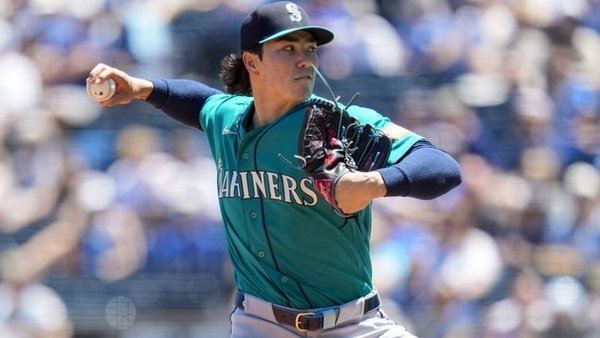
Bryan Woo vs. Gabriel Hughes: Seattle Mariners at Colorado Rockies Betting Preview
The market has set this total at 10.5, which implies a controlled, somewhat pitcher-influenced game at Coors Field. That framing ignores reality on almost every level. Gabriel Hughes is 0-8 with a 6.37 ERA and 1.45 WHIP this season — one of the worst starting pitching profiles in baseball — and he’s pitching in the most run-inflated environment in the sport. Bryan Woo is a legitimate arm at 12-9, but his road ERA sits at 4.19 and he’s surrendered 20 home runs on the season. At altitude, fly balls don’t fall the same way they do in Seattle.
The numbers have this game landing at a combined 12.7 runs — a 2.2-run gap over the posted total. That’s not noise. That’s a structural mismatch between what the market is offering and what the park, the pitchers, and both bullpens are pointing toward.
Both clubs arrive here with recent turbulence. The Rockies just absorbed a 9-2 loss to San Diego to open a new series after taking three of four beatings from the Padres. Seattle comes in off a 7-2 win in Anaheim but carries a losing record and a season-long .692 OPS — this is not a lineup that dominates. The bet here is the environment eating both pitching staffs alive, not a Seattle steamroll.
Game Info & Betting Lines
- Date/Time: Friday, September 18, 2026 — 8:10 PM ET
- Venue: Coors Field | Park Factor: 1.38 (most extreme run-inflating park in MLB)
- Probable Starters: Bryan Woo (SEA) vs. Gabriel Hughes (COL)
- Moneyline: Seattle Mariners -186 / Colorado Rockies +153
- Run Line: Colorado Rockies +1.5 (-102) / Seattle Mariners -1.5 (-118)
- Total: 10.5 (Over -110 / Under -110)
Why This Number Is Off
Books know Coors. That’s the strongest counterargument here — they’ve been adjusting totals upward at this park for decades, and 10.5 already reflects the altitude, the thin air, and the park’s 1.38 run factor. The market isn’t blind to where this game is being played. There’s a legitimate school of thought that says the public always hammers Coors overs and the books have already priced in the park premium.
But here’s the problem: the adjustment only goes so far when the starting pitcher on one side is historically broken. Gabriel Hughes isn’t a mediocre Rockies starter struggling in a tough environment. He’s 0-8 with a 6.37 ERA — that ranks among the worst qualifying starter lines in baseball. His changeup generates a .396 xwOBA against, his sweeper sits at .366 xwOBA, and his four-seamer at 92.4 mph isn’t generating the whiff rates you need to survive in a lineup with legitimate pop. The market may have priced Coors correctly, but it hasn’t fully priced in how catastrophic Hughes has been as a unit.
Where the 10.5 is slightly wrong: it assumes Hughes will eat enough innings to prevent a scoring explosion before the bullpen takes over. Colorado’s team ERA is 5.62. Both relievers and starters are being shelled. The scoring ceiling here isn’t just elevated — it’s structurally compromised from the first pitch.
What Separates the Pitching
These are not comparable arms, and the gap matters enormously in this run environment. Bryan Woo’s four-seamer sits at 96.0 mph with a 16.7% whiff rate and a .327 xwOBA against — functional, not dominant. His best weapon is the split-finger at 84.7 mph, which generates a 28.6% whiff rate and just .218 xwOBA against. That’s a legitimate put-away pitch. His slider adds 30.1% whiff rate. Woo is a mid-rotation starter who can manufacture strikeouts and limit hard contact — but he’s not a shutdown arm, and his 20 home runs allowed reflect a fly-ball-friendly profile that Coors will amplify.
Gabriel Hughes is in a different category entirely. His four-seamer is 50.7% of his pitch mix at 92.4 mph — below average velocity generating only 15.4% whiff rate and a .300 xwOBA. His best offering is arguably the curveball at 26.9% whiff rate and .232 xwOBA, but he throws it only 11.2% of the time. The changeup — his most-used secondary pitch at 11.9% — sits at a .396 xwOBA against, which means hitters are doing real damage on it consistently. Dominic Canzone (.416 xwOBA, 6.9% barrel rate, .425 xwOBA vs. right-handed pitching) and Randy Arozarena (.386 xwOBA, .395 vs. RHP) are built to punish exactly that profile. Julio Rodríguez’s .404 xwOBA adds another legitimate threat from the middle of the order.
The innings shape is the critical distinction. Woo creates moderate-contact innings where the Rockies can score but probably not explode. Hughes creates high-damage innings — he won’t make it deep into this game, which means Colorado’s 5.62 team ERA bullpen absorbs a heavy workload while Seattle’s depleted relief corps (three relievers and a starting pitcher on IL: Matt Brash, Cole Wilcox, and Nick Davila as RPs, plus Emerson Hancock as a SP) faces the Rockies’ home lineup in the late innings. That’s a two-sided scoring engine, not a one-sided advantage.
The Pushback
The strongest case against this over is Bryan Woo having a legitimately good start. He’s 12-9 with 106 strikeouts and a 3.88 ERA by ESPN’s measure — he’s capable of a six-inning, two-run outing that keeps the game in check regardless of what Hughes does on the other side. His split-finger is a genuine weapon, and if Colorado’s lineup — which struck out 1,330 times on the season — gets passive early, Woo can manufacture a low-scoring first half.
The moneyline at -186 is not the play. Seattle winning doesn’t require the total to stay under, and the price is too steep for what’s essentially a coin flip in terms of game script. The run line is tempting — the numbers project a 12.7-run combined total with Seattle winning by a slim margin — but the way this game is constructed, the scoring could easily be distributed in a way that doesn’t give Seattle a clean 1.5-run cushion. Hughes imploding early could mean a 6-3 Seattle lead through five, then the bullpen gives it back in chunks. That’s an over result, not necessarily a run line result.
The cold-lineup concern is real but overstated. Seattle’s .692 team OPS looks ugly, but Arozarena (.851 OPS), Canzone (.808 OPS), and Cal Raleigh (.392 xwOBA, 6.0% barrel rate) are legitimate hitters, and they’re facing a pitcher who has allowed hard contact all season. The Rockies’ home lineup — Jordan Beck, Connor Norby, Cole Carrigg — isn’t a powerhouse, but their .741 team OPS against a Woo who has surrendered 20 home runs means runs are coming from both sides.
The Bet
This is an over built on three converging arguments: a historically bad starting pitcher in the most run-inflating park in baseball, a combined projected total of 12.7 that sits 2.2 runs clear of the posted line, and two bullpens that are structurally incapable of holding leads once the starters exit. The market at 10.5 is respectable given Coors’ existing premium, but it hasn’t fully accounted for how broken Hughes is as a pitcher independent of the environment. At -110, this is value.
Bet: Over 10.5 (-110) — 3 Units