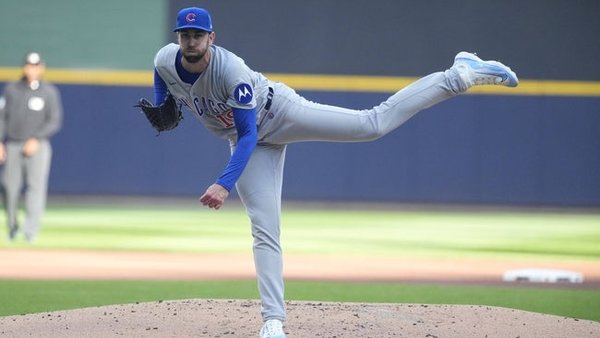
David Peterson’s 5.28 ERA and 1.58 WHIP over 131-plus innings is not a rough patch — it’s a documented pattern meeting a Braves lineup with real barrel threats. Wrigley’s 1.02 park factor is a nudge rather than a neutralizer, and with bullpens gutted on both sides, the late-inning math is harder to contain than the 9.5 total implies.
Reynaldo Lopez vs David Peterson: Atlanta Braves at Chicago Cubs Betting Preview
The market has priced this game at 9.5 combined runs, which tells you the books already know what they’re looking at: two rotation arms with real vulnerabilities, two offenses capable of doing damage, and enough bullpen carnage on both sides to make late innings messy. The question isn’t whether this game could go over — it’s whether the case is strong enough to act on a number that’s already baking in the chaos.
The answer leans yes. David Peterson carries a 5.28 ERA and 1.58 WHIP over 131.1 innings — that’s not a small sample, that’s a pitcher who has consistently allowed runs at a high rate across a full season’s worth of work. Reynaldo Lopez looks better on the surface at 4.13 ERA, but his 1.39 WHIP in 76.1 innings signals baserunner trouble that ERA alone doesn’t capture. Two leaky starters at a hitter-neutral-to-friendly Wrigley Field, with thin relief support on both sides, creates a credible runway to 10-plus combined runs.
The Braves arrive from a 9-4 loss to Philadelphia on Sunday. The Cubs dropped a 4-3 game to Pittsburgh in their finale. Neither team is carrying momentum into this series opener, but the identity of the starters matters far more than last week’s results.
Game Info & Betting Lines
- Date/Time: Monday, September 14, 2026 | 7:40 PM ET
- Venue: Wrigley Field | Park Factor: 1.02 (slight hitter lean)
- Probable Starters: Reynaldo Lopez (ATL) vs David Peterson (CHC)
- Moneyline: Atlanta Braves +113 / Chicago Cubs -136
- Run Line: Chicago Cubs -1.5 (+144) / Atlanta Braves +1.5 (-175)
- Total: 9.5 (Over -105 / Under -115)
Why This Number Is Close But Slightly Off
The 9.5 total is not an accident. Books see two compromised starters and two offenses with real run-scoring ability — the Cubs average 5.33 runs per game on the season, the Braves 4.62. Add the park factor and the bullpen craters on both sides, and 9.5 is a defensible number that earns the market’s respect.
The case for the under is real: Lopez’s ERA of 4.13 is workable, and if he pitches to that ERA rather than his WHIP, Atlanta’s half of the projection shrinks. There’s also the fact that Wrigley is only marginally hitter-friendly — a 1.02 park factor is a nudge, not a launch pad. And the under is priced at -115, meaning the market slightly favors fewer than 9.5 runs when you account for juice.
But the gap between the under-pricing and the over-pricing (-115 vs -105) is telling. The market is essentially saying the under is the sharper play at current juice, which means the over at -105 is near-even money with a thin but legitimate edge. The numbers project 9.7 combined runs, a narrow margin above 9.5. This isn’t a blowout call — it’s a confluence of factors that nudges the number just enough to act on it at favorable pricing.
What Separates the Pitching
Peterson and Lopez represent two different flavors of vulnerability, and understanding the difference is where the betting edge lives.
Peterson’s problems are structural. A 5.28 ERA and 1.58 WHIP over 131 innings means his struggles aren’t noise — they’re signal. His sinker is his most-used pitch at 30.7% and 92.0 mph, but it generates an alarming .429 xwOBA against — hitters are squaring it up. His four-seam fastball (.328 xwOBA against) plays better, but neither offering generates consistent swing-and-miss at the top of the zone. His slider (27.8% whiff, .253 xwOBA) and curveball (31.0% whiff, .318 xwOBA) are his best weapons, but they’re being used to pitch out of holes created by the fastballs. Against a Cubs lineup featuring Pete Crow-Armstrong (.465 xwOBA, 41 HR) and Seiya Suzuki (.394 xwOBA, .846 OPS), those flat fastballs are going to find barrels.
Lopez is a different problem. His four-seam fastball leads at 53.4% usage and 93.8 mph, but it’s holding hitters to a .363 xwOBA against — not elite, not terrible. His slider (30.6% usage, 32.4% whiff, .322 xwOBA) is his best strikeout weapon. The concern is the secondary metrics: 32 walks in 76.1 innings and an optics-bad 1.39 WHIP mean Lopez is regularly putting runners on base, and the Cubs’ lineup is built to punish that. Matt Olson carries a .208 average in 28 PA against Peterson with 4 home runs and 11 strikeouts — a volatile profile that screams boom-or-bust, and the boom has come four times. Ronald Acuña Jr. is hitting .350 in 24 BvP PA against Peterson with a HR. That history matters.
The gap between these two arms isn’t massive, but it tilts toward a game where neither starter creates comfortable stretches. Peterson is the bigger liability; Lopez is more volatile than his ERA suggests. Neither is built to hold a lineup down for seven innings without incident.
The Pushback
Here’s where I slow down, because there are real reasons this over could fail and I want to be honest about each of them.
Wind direction at Wrigley is the single biggest X-factor. If the wind is blowing in off Lake Michigan — even moderately — this is a different game. Wrigley’s park factor of 1.02 assumes neutral conditions; a stiff wind in can compress the run environment by a full run or more and turn a would-be double into a warning track out. This isn’t a throwaway caveat. Check the wind before placing this bet. If it’s blowing in at 10+ mph, the over gets significantly harder to trust.
Lopez’s slider could execute cleanly against this Cubs lineup. His 32.4% whiff rate on the slider is legitimate, and if he’s locating it well early in counts, he can limit the damage from Chicago’s middle-order hitters. The Cubs’ lineup is loaded at the top — Crow-Armstrong’s .490 xwOBA vs. right-handers is elite — but if Lopez gets ahead in counts and leans on the slider, he can suppress scoring long enough to keep Atlanta’s side of the ledger from compensating.
Both starters going deeper than expected would hurt the over. The under-the-surface assumption for the over is that thin bullpens get exposed in the sixth, seventh, and eighth innings. But if Peterson and Lopez are both pitching into the sixth or seventh — even inefficiently — managers may ride them longer than usual precisely because the bullpen options are so thin. The Cubs have six relievers on the IL. The Braves’ bullpen has its own absences. If skippers let starters absorb innings out of necessity rather than pulling early, the late-inning chaos that fuels overs doesn’t materialize the same way.
I’m also not interested in the Cubs moneyline at -136 or the run line at +144. The juice on Chicago ML is too steep for a game with genuine two-way vulnerability, and the run line’s plus-money feels like a trap given how close the projected scoring is. The Braves ML at +113 has surface appeal, but Atlanta’s bullpen situation after Sunday’s ugly loss doesn’t inspire confidence in backing them to win outright as a road underdog either.
Run Environment & Game Shape
The bullpen depth charts for both teams tell a damning story. The Cubs are missing Porter Hodge, Ben Brown, Riley Martin, Hunter Harvey, Phil Maton, Gavin Hollowell, and Trent Thornton — seven relievers on the IL. The Braves are without Robert Suarez and Joey Wentz. When Peterson exits — and given his 5.28 ERA, he won’t be pulling deep starts out of a hat — the Cubs will be asking from a short, depleted deck. Same story in the eighth and ninth for Atlanta. Late-inning leverage situations with tired or inexperienced arms on both sides is exactly the environment where totals clear.
The projected combined score of 9.7 runs isn’t a dramatic overage, but it doesn’t need to be. At -105 on the over, you’re essentially getting near-even money on a number that the full picture — vulnerable starters, depleted bullpens, two legitimate offenses — supports clearing. The Cubs score 5.33 runs per game. The Braves score 4.62. Even if both starters outperform their surface numbers by half a run, you’re still in the conversation.
The wind caveat is real and it is the primary reason to pause before clicking confirm. Check the Wrigley forecast within two hours of first pitch. If it’s neutral or blowing out, this is a confident play. If it’s blowing in at 10 mph or more, pass and revisit.
Everything else points the same direction: two pitchers who allow baserunners at a high clip, two offenses built to exploit exactly that, and a price on the over that doesn’t ask you to pay a premium for the privilege.
Bet: Over 9.5 (-105) — 2 units. Wind check required before placing — neutral or out conditions only.