Andrew Abbott’s four-seam fastball is generating a .404 xwOBA against and being fed to a Brewers lineup built to punish exactly that pitch — inside Great American Ball Park, a venue with a 1.10 park factor that turned yesterday’s matchup into a 10-7 final. The posted total of 9.0 sits 1.3 runs below the projected run environment, and neither starter’s ERA-north-of-4.49 profile supports the under.
Dustin May vs Andrew Abbott: Milwaukee Brewers at Cincinnati Reds Betting Preview
After last night’s 10-7 Milwaukee win at Great American Ball Park, the series shifts to a new pitching matchup — but not a better one. Dustin May (6-9, 4.69 ERA) takes the ball for the Brewers against Andrew Abbott (6-10, 4.49 ERA) for the Reds, and neither arm inspires confidence in a run-suppression outcome. The market has set the total at 9.0, a number that requires meaningful regression from a park and a pair of starters who have consistently created run-scoring environments all season.
The core thesis here isn’t complicated: two ERA-north-of-4.49 starters, a park factor of 1.10, two lineups with genuine power threats, and the numbers projecting 10.3 combined runs. The posted total of 9.0 is a full 1.3 runs below that projection. That’s not a razor-thin edge — that’s a measurable gap worth attacking.
The market is pricing in some regression after yesterday’s offensive eruption. That’s a reasonable adjustment. But regression to what? These starters haven’t been suppressing runs all year. The 9.0 feels like a reflexive pullback rather than a number grounded in what these arms actually do.
Game Info & Betting Lines
- Date/Time: Saturday, September 5, 2026 | 6:40 PM ET
- Venue: Great American Ball Park | Park Factor: 1.10 (hitter-friendly)
- TV: MLB.TV, Reds.TV, Brewers.TV
- Probable Starters: Dustin May (MIL) vs. Andrew Abbott (CIN)
- Moneyline: Milwaukee Brewers -167 / Cincinnati Reds +138
- Run Line: Milwaukee Brewers -1.5 (-105) / Cincinnati Reds +1.5 (-115)
- Total: 9.0 (Over -123 / Under +102)
Why This Number Is Off
The market’s logic is visible: yesterday was a high-scoring blowout, and totals often compress the day after an offensive eruption as oddsmakers anticipate a pendulum swing. There’s also a legitimate case that Dustin May’s strikeout upside — an 8.53 K/9 — can suppress scoring in patches, and that the Reds’ lineup, while carrying real home run power, has been inconsistent (.229 team average, .704 OPS) when opponents throw quality stuff.
But here’s the problem: the pendulum-swing correction works when you’re dropping in a legitimate run-suppressor. May’s 4.69 ERA and 1.32 WHIP are not the profile of a pitcher who slams a high-scoring environment shut. Abbott’s 4.49 ERA and 1.44 WHIP are worse. These aren’t aces absorbing yesterday’s offensive hangover — they’re the starters who create these situations in the first place.
The numbers project 10.3 combined runs against a posted 9.0. The park inflates that further. For the under to cash, you need both starters to significantly outperform their season-long profiles in a 1.10 run-environment park. That’s a lot to ask simultaneously. The market is close, but it’s leaning the wrong direction on a night where the conditions favor the over.
What Separates the Pitching
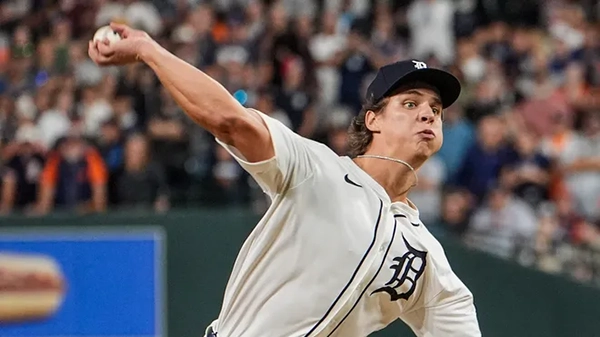
May and Abbott are close in overall ERA, but they get there through very different — and both exploitable — routes. May’s arsenal is genuinely diverse: a 96.9 mph four-seam fastball (25.2% usage), a cutter at 93.3 mph generating 20.4% whiff rate, and a sweeper at 86.0 mph with a 26.6% whiff rate. His curveball produces a 27.8% whiff rate. The swing-and-miss is real, and his 8.53 K/9 reflects it. What the K rate doesn’t hide is the 45 walks in 128.2 innings — 3.1 BB/9 — and 10 home runs allowed. His sinker generates a .344 xwOBA against, meaning contact against his heavy pitches tends to be loud.
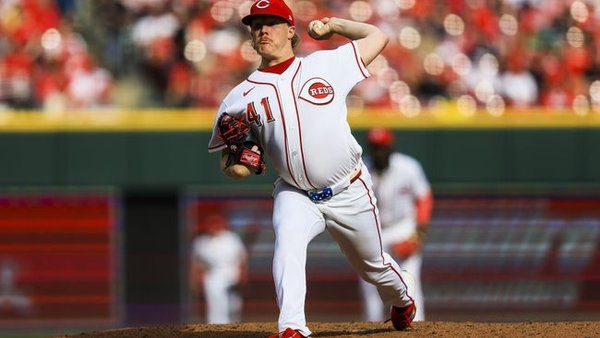
Abbott’s vulnerabilities are more acute and more directly threatened by the matchup environment. He leans heavily on a 92.5 mph four-seam fastball at 45.1% usage — and that pitch is getting punished, generating a .404 xwOBA against with only a 10.2% whiff rate. His offspeed mix is genuinely good: the changeup sits at a 35.2% whiff rate (.281 xwOBA) and the sweeper generates 25.7% whiff. But Abbott’s primary weapon is his most hittable, and the Brewers’ power-heavy lineup is built to punish fastballs.
Jake Bauers carries an xwOBA of .448 with an 8.0% barrel rate — he’s a right-handed hitter facing a left-handed pitcher, and his vsLHP xwOBA of .393 still puts him in dangerous territory against a starter whose fastball generates a .404 xwOBA against. Jackson Chourio is at .413 xwOBA overall and has already gone deep twice against Abbott in 11 plate appearances. Chourio’s .423 xwOBA against lefties makes him a direct threat to Abbott’s four-seam-heavy approach. The 21 home runs Abbott has allowed in 148.1 innings is the single most important number in this matchup — Great American Ball Park is not the place to be pitching to guys with Bauers’ and Chourio’s exit velocity profiles.
On the other side, Elly De La Cruz (.462 xwOBA, 8.3% barrel rate) is the most dangerous matchup May faces. De La Cruz hits righties even harder (.465 xwOBA) than lefties and has shown the kind of raw power that can turn any pitch in the zone into a damaging event. Sal Stewart’s 31 home runs and .414 xwOBA put him in the same conversation — May’s sinker-heavy approach risks giving up loud contact to a lineup that has among the NL’s highest home run totals this season at 188.
Run Environment & Game Shape
Great American Ball Park’s 1.10 park factor isn’t a minor footnote — it’s a structural advantage for the over that compounds everything else in this matchup. When you’re running out two starters with ERAs north of 4.49, the park doesn’t just add a run at the margins; it amplifies every mistake, every loud contact event, every walk that puts a runner in scoring position. Last night’s 10-7 final wasn’t an aberration — it was a reasonable outcome for the environment these teams are playing in.
The game shape also favors a higher-scoring contest. The Brewers’ bullpen is dealing with September roster considerations and has already been stretched in a high-leverage situation last night. The Reds’ bullpen — a 4.68 team ERA suggests this isn’t an elite group either — will likely see action by the fifth or sixth inning given Abbott’s 70 walks in 148.1 innings and his tendency to work deep counts. Bullpen transitions in a 1.10 park, with lineups that carry this much raw power on both sides, typically don’t tighten a game — they open it up.
The Brewers project as the superior team here — 88-54 versus Cincinnati’s 67-74 — and the run differential gap (Milwaukee +174, Cincinnati -111) tells a complete story. But this isn’t a moneyline play for me at -167. The juice is too heavy for the payout, and the game engine’s projected margin doesn’t justify laying that price. The run line at -1.5 is tempting, but a 1.3-run projected edge doesn’t give enough cushion to take the chalk at -105 either. The total is where the value lives. Two flawed starters, a hitter-friendly park, lineups with real power on both sides, and a posted number that sits 1.3 runs below where the run environment and starter profiles say this game should land. That gap is what I’m betting.
Play the Over 9.0 at 2 units.
Pushback: What Could Beat This
The -123 juice on the over is real friction. You’re laying $123 to win $100, which means the break-even win rate is roughly 55%. That’s not insurmountable given the edge, but it shrinks the margin for error on what is ultimately a moderate-confidence play. If this number were priced at -110, it’d be an easier decision.
May’s strikeout upside is a legitimate pushback. An 8.53 K/9 means he can manufacture outs without contact, and if his sweeper (26.6% whiff) and curveball (27.8% whiff) are landing for strikes early, the Reds’ free-swinging lineup (.1340 team strikeouts) could get punched out in bunches. The Reds strike out more than almost anyone in the NL — that’s a real path to a lower-scoring first five innings.
September bullpen depth is also worth acknowledging. Both teams have injury-depleted relief corps — Milwaukee is missing three bullpen arms to the IL — but September call-ups can introduce unpredictable arms that sometimes suppress scoring in short stints simply because hitters haven’t seen them. That’s a real but unquantifiable risk. Ultimately, the structural case — park, starters, power lineups, run environment — outweighs the pushback. The over at 9.0 is the right side.
The Bet
Bet: Over 9.0 | 2 Units | Moderate Confidence
Two starters with ERA’s north of 4.49, a 1.10 park factor, lineups with genuine home run power on both sides, and a run environment that projects 10.3 combined runs. The posted 9.0 is a full 1.3 runs below where the conditions say this game should land. The juice at -123 is the one real cost — account for it in your sizing — but the structural edge is clear. Over 9.0, 2 units.