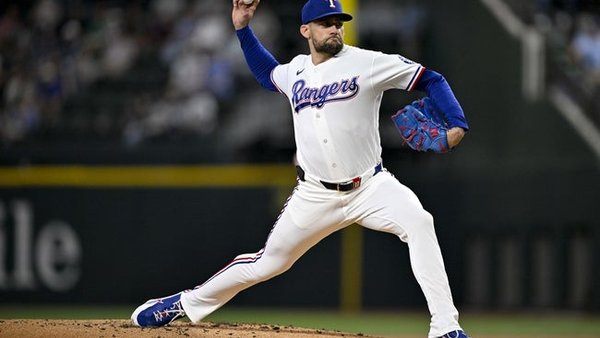
Two struggling offenses meet in what appears to be a coin-flip game, but the pitching staff differential favors the home side. Texas carries a team ERA nearly a full run better than Arizona’s 4.50 mark.
Michael Soroka vs Nathan Eovaldi: Arizona Diamondbacks at Texas Rangers Betting Preview
The market has priced this as a virtual coin flip between two teams limping into Sunday night, with the Rangers getting modest home chalk at -138. Both clubs are scuffling — Arizona at 3-7 in their last 10 games with a brutal -22 run differential, Texas marginally better at 5-5 but still sitting below .500 at 19-21. The noise around Opening Week rust and early-season variance is real, but this game comes down to a simple truth: Nathan Eovaldi offers superior command in what should be a tight, low-scoring affair at Globe Life Field.
The Rangers hold a meaningful pitching staff advantage that the price doesn’t fully capture. Texas enters with a team ERA of 3.65 compared to Arizona’s 4.50 — nearly a full run difference that becomes magnified in close games. While both starters carry ERAs over 4.00, the underlying metrics suggest Eovaldi has been the more reliable arm, and that edge gets amplified by home field in a pitcher-friendly matchup.
Game Info & Betting Lines
- Date/Time: Sunday, May 11, 2026, 8:05 PM ET
- Venue: Globe Life Field (Park Factor: 1.05)
- Probable Starters: Michael Soroka (4-2, 4.14) vs Nathan Eovaldi (4-4, 4.15)
- Moneyline: Arizona Diamondbacks +118 / Texas Rangers -138
- Run Line: Texas Rangers -1.5 (+152) / Arizona Diamondbacks +1.5 (-184)
- Total: 7.5 (O -115 / U -105)
Why This Number Is Close But Tilted
The market is balancing two teams with nearly identical recent struggles, and the moneyline reflects that uncertainty. Arizona’s recent 5-1 win over the Mets suggests life in their bats, while Texas just completed back-to-back shutouts against Chicago. The line accounts for home field advantage and gives Texas the nod, but at -138, it’s pricing this as a modest lean rather than a confident backing.
The concern is that both offenses have been anemic — Arizona averaging 4.33 runs per game (169 runs in 39 games), Texas even worse at 3.73 (149 runs in 40 games). The Rangers have scored 20 fewer runs than Arizona despite playing one additional game, highlighting their offensive struggles. That offensive struggle makes the -138 price feel steep for a team that’s had trouble pushing runs across, though I’m wondering if I’m overthinking what should be a straightforward home favorite play.
But the market is missing the pitching staff differential. Texas carries a team WHIP of 1.227 compared to Arizona’s 1.313, and that run prevention edge becomes crucial when both lineups are struggling to generate consistent offense. The Rangers are getting the right side of a coinflip game at a reasonable price — or at least that’s what I keep telling myself as I wrestle with backing an offense that’s averaging under four runs per game.
What Separates the Pitching
The Statcast data reveals why Eovaldi has the edge despite similar surface numbers. His four-seam fastball sits at 95.6 mph with 43.6% usage, generating a 20.7% whiff rate and holding hitters to a .324 xwOBA. Compare that to Soroka’s softer approach — his four-seamer averages just 93.7 mph with only a 4.4% whiff rate and a much higher .385 xwOBA against. Eovaldi’s velocity and swing-and-miss ability give him a clear advantage.
The command story is equally telling. Eovaldi has issued just 10 walks in 47.2 innings compared to Soroka’s 11 walks in 37 innings — nearly a full inning less work. That control becomes magnified against lineups that struggle to create offense organically. Soroka’s slider has been his best pitch (.294 xwOBA), but his knuckle curve has been hammered (.462 xwOBA), giving hitters a clear pitch to hunt when he falls behind in counts.
Texas faces a Diamondbacks lineup that struck out 310 times in 39 games, making them vulnerable to Eovaldi’s four-seam/curveball combination. Meanwhile, Arizona gets a Rangers offense that’s been equally strikeout-prone (350 Ks in 40 games) but faces a pitcher who’s been more hittable in Soroka. The gap isn’t massive, but it’s real — and it favors the home side.
The Pushback
The strongest case against Texas centers on recent offensive production. Despite similar batting averages (.234 vs .236), the Rangers have been outscored by Arizona 169-149 this season. Soroka actually carries the better WAR (0.45 vs 0.26) and higher strikeout rate (10.22 K/9 vs 8.87), suggesting he’s been the more effective pitcher despite the surface metrics.
Arizona’s lineup also features more proven offensive threats. Ildemaro Vargas is hitting .341 with a .938 OPS, and Corbin Carroll provides speed and power at the top of the order. Texas counters with Josh Jung’s .907 OPS, but their lineup lacks consistent run producers beyond the third baseman. The concern is that one bad inning from Eovaldi could be enough if the Rangers can’t answer against a pitcher who’s shown better stuff recently.
This is where I start second-guessing the whole play. Are we really backing a Texas offense that’s averaging fewer runs than a struggling Arizona team? The Rangers’ recent shutout wins were built on pitching, not hitting, and that approach only works if Eovaldi can match what Jacob deGrom did over the weekend. There’s real risk here that we’re paying premium price for home field advantage while ignoring offensive red flags.
That said, I keep coming back to the pitching staff differential and home field advantage. Arizona’s bullpen has been shaky (team ERA of 4.50), and if this game stays close into the middle innings, Texas has the better collection of arms to hold a lead. The Rangers’ recent defensive play — back-to-back shutouts — suggests they’re finding their identity as a run prevention team.
Why I Passed on the Run Line
The run line at Rangers -1.5 (+152) caught my attention initially, especially with the model projecting Texas to win by 1.6 runs. But digging deeper into the matchup dynamics, I couldn’t shake the feeling that this sets up as a one-run game either way. Both offenses have been too inconsistent to trust for multiple-run margins, and while Texas has the pitching edge, that advantage is more about game control than dominant performance.
Looking at the recent results, Arizona just lost two tight games to the Mets (2-1 and 3-1) before exploding for five runs Sunday. Texas needed shutout pitching to beat Chicago twice, managing just three runs combined in their last two wins. These aren’t offenses built for blowouts — they’re grinding out results, which typically means final margins of one or two runs.
The +152 price on Rangers -1.5 reflects the market’s skepticism about Texas pulling away, and I think that skepticism is warranted. Even if Eovaldi outpitches Soroka significantly, the Rangers still need to score multiple runs against a pitcher who’s held opponents to a .294 xwOBA with his slider. That’s asking a lot from a lineup that’s managed just 3.73 runs per game. The straight moneyline feels like the cleaner path to profit.
Run Environment & Game Shape
Globe Life Field’s 1.05 park factor is essentially neutral, which means this game comes down to pitching and defensive execution rather than environmental advantages. The total sits at 7.5, suggesting the market expects a relatively low-scoring affair — exactly the type of game where pitching staff depth and home field advantage become decisive factors.
Both teams have struggled to score consistently, making this likely to be decided by which starter can navigate five or six innings without major damage. The Rangers’ bullpen advantage becomes crucial in that scenario, as they can turn the game over to fresher arms while Arizona relies on a relief corps that’s allowed 4.50 runs per nine innings.
The Play: Texas Rangers -138
Despite the offensive concerns and internal debate about the price, the pitching matchup and home field advantage create enough edge to justify the investment. Eovaldi’s superior velocity and command give him the tools to contain an Arizona lineup that’s been feast-or-famine, while the Rangers’ bullpen provides insurance if this stays close into the late innings. It’s not a confident backing, but it’s the right side of a close game.