A Mets offense posting a .687 OPS and a .383 slugging percentage is doing little to justify a posted total of 9 — yet the number sits there, pricing in Dodgers firepower while ignoring a structural run-suppression case. Citi Field, two strikeout-capable starters, and New York’s league-bottom production all point in the same direction — one the price has not fully absorbed.
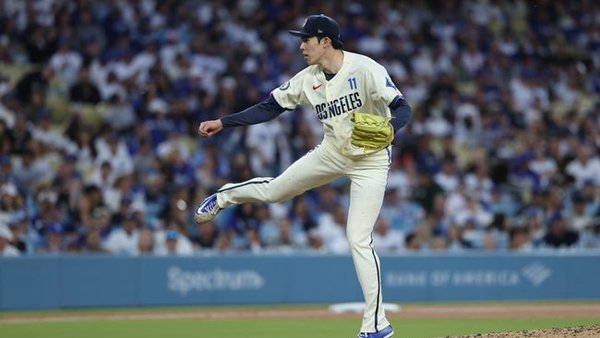
Roki Sasaki vs Sean Manaea: Los Angeles Dodgers at New York Mets Betting Preview
The market has priced this game at 9 total runs. The numbers land at 8.9. That gap is slim — but directionally consistent, and the structural environment around this game reinforces the lean toward suppression. Citi Field plays at a 0.97 park factor, slightly below league average. The Mets rank among the worst offenses in the majors. And while neither starter here is dominant, both carry enough strikeout upside to manage early innings.
The narrative pressure in this game runs toward the over: the Dodgers just torched the Phillies for 9 runs Wednesday, Tommy Edman and Freddie Freeman are hitting well, and Shohei Ohtani’s presence in any lineup demands respect. But recent offensive eruptions don’t rewrite the underlying math, and a Mets offense posting a .234 average and .383 slugging doesn’t threaten to carry this total on its own.
The Dodgers’ moneyline at -148 blows past the juice ceiling I’m willing to absorb. The run line requires a separation the underlying numbers simply don’t support. What’s left is the total, and the Under at -114 aligns with where the environment points.
Game Info & Betting Lines
- Date/Time: Friday, July 24, 2026 | 7:10 PM ET
- Venue: Citi Field | Park Factor: 0.97 (slight run-suppressor)
- TV: ESPN Unlmtd, MLB.TV, Sportsnet LA, WPIX
- Probable Starters: Roki Sasaki (LAD, 3-5, 4.98 ERA) vs Sean Manaea (NYM, 2-5, 4.74 ERA)
- Moneyline: Dodgers -148 / Mets +126
- Run Line: Dodgers -1.5 (+112) / Mets +1.5 (-134)
- Total: 9 (Over -106 / Under -114)
Why This Number Is Close
The market knows what it’s doing here. A 9-run total for a game featuring two sub-5.00 ERA starters and the Dodgers’ elite lineup is not an overreaction — it’s a reasonable equilibrium. The Dodgers average 5.19 runs per game, and their offense is legitimately capable of hanging 5 or 6 on a mediocre pitcher on any given night. The Mets, despite their collective struggles, do have Juan Soto (.944 OPS) and Francisco Alvarez capable of doing damage against a homer-prone arm.
The case for the over isn’t crazy. Sasaki has surrendered 19 home runs in just 86.2 innings — that’s roughly 2.0 HR/9 — and the Dodgers don’t suddenly forget how to hit when they travel. The over at -106 is actually the cheaper side here, which tells you the market sees value leaning that way.
Where I think the market is slightly wrong: it’s pricing in Dodgers firepower without adequately discounting the Mets’ offensive limitations and the ballpark. New York’s .687 OPS is a structural drag on this total. Manaea’s 9.15 K/9 gives him a real path to keeping the Dodgers lineup in check for five or six innings. The gap — 8.9 projected versus a 9.0 posted total — is modest but consistent. The Under at -114 isn’t a screaming value, but it’s directionally correct.
What Separates the Pitching
Neither starter here is going to dominate a box score, but the gap between them matters in ways the raw ERA numbers don’t fully capture.
Sasaki works with a four-pitch arsenal led by a 97.7 mph four-seam fastball (43.1% usage) that holds hitters to a .409 xwOBA — elevated, which explains the home run issues. His real weapons are the secondary offerings: a split-finger at 90.2 mph generating a 31.9% whiff rate and a .282 xwOBA, a slider with a 37.7% whiff rate and .246 xwOBA, and a forkball at 39.3% whiff with a .235 xwOBA. When Sasaki is locating those breaking balls, he misses bats at a high rate. The problem is hitters who catch his fastball elevated in the zone — and the Mets’ lineup, despite its collective weakness, does have enough right-handed pop from Alvarez (11 HR) and Soto (21 HR, .944 OPS) to punish a hanger.
Manaea operates differently — lower velocity (90.4 mph four-seam), more deception, and a sweeper at 75.4 mph that generates a 29.7% whiff rate and a .258 xwOBA. His 9.15 K/9 is genuine. The concern is his sinker (.357 xwOBA against) and cutter (.410 xwOBA against), which can get punished when location slips. Facing a Dodgers lineup featuring Ohtani (.522 xwOBA vs right-handed pitching this season), Freeman (24 PA lifetime against Manaea, .273 AVG, 1 HR), and Muncy (.437 xwOBA vs RHP), Manaea needs his sweeper to function. When it does, he can suppress quality contact. When it doesn’t, that lineup will make him pay.
The pitching gap here isn’t dramatic — both are negative-WAR starters with WHIPs in the 1.33-1.36 range. What matters for the total is that both can generate strikeouts and neither is likely to cruise deep into the game, which brings volatile middle relief into play earlier than ideal for under bettors.
The Pushback
Here’s the problem: Sasaki’s home run rate is a genuine concern that shouldn’t be minimized. Nineteen home runs in 86.2 innings is not a small-sample anomaly — it’s a pattern. And while Citi Field’s 0.97 park factor provides mild suppression, it doesn’t transform fly balls into outs. Soto is hitting .283 with 21 homers and a .944 OPS. Alvarez has 11 HR. Against a fastball-heavy pitcher with an elevated four-seam xwOBA of .409, those bats are a real threat to go deep.
The Dodgers’ recent offensive output also cuts against the under narrative. Nine runs on Wednesday, two runs on Tuesday — that’s an average that skews the number up. Edman is hitting .360 with a .974 OPS. Freeman is at .289. Ohtani sits at .283 with 22 home runs and a .917 OPS. This lineup doesn’t need a perfect night to clear 4.5 runs on its own.
I’m not dismissing those risks. I’m just not convinced they override the structural case. The Mets are 43-60. Their offense is generating a .304 OBP and a .383 slugging percentage. Manaea’s sweeper, when it’s working, genuinely limits hard contact — the pitch carries a .258 xwOBA against. And while Sasaki is homer-prone, his secondary stuff (forkball at .235 xwOBA, slider at .246 xwOBA) gives him a realistic path to limiting damage in stretches.
My Take
This is a moderate-conviction lean, not a hammer. The structural case for the under is real — below-average park, a Mets offense that ranks near the bottom of the league, and two starters who miss enough bats to contain early-inning damage. The 0.1-run gap between the posted total and the underlying numbers is slim, but it’s pointed in the right direction.
At -114, the Under on this game is a 2-unit play for me. Not because it’s a lock, but because the environment, the matchup, and the numbers all point the same way — and in sports betting, that’s usually enough to act.
Bet: Under 9 (-114) — 2 units