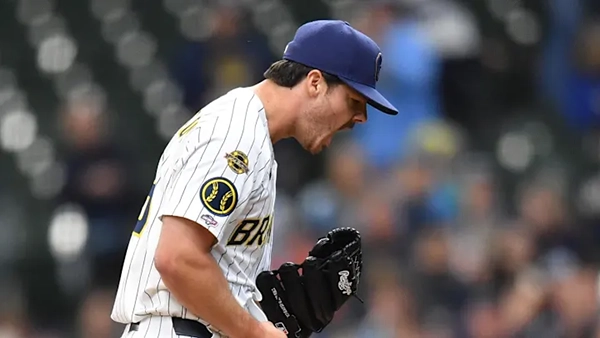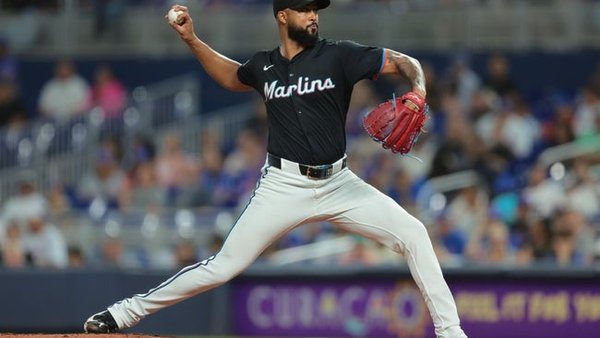
Sandy Alcantara (3.46 ERA, 189.2 IP) and Michael Wacha (1.10 WHIP) represent a genuine starter upgrade over last night’s chaos — yet the 9.0 total is still sitting at flat -110/-110 juice with no meaningful steam. Kauffman Stadium’s 0.95 park factor and two modest offenses (Miami .725 OPS, Kansas City .717 OPS) tell a different story than the number on the board.
Sandy Alcantara vs. Michael Wacha: Miami Marlins at Kansas City Royals Betting Preview
Yesterday’s blowup was a Eury Pérez problem, not a matchup problem. Pérez surrendered six runs on nine hits, and the Royals bullpen — carrying a team ERA of 4.72 — couldn’t contain the Marlins’ comeback. The pitching environment tonight is fundamentally different, and that difference is precisely where the betting edge lives.
Sandy Alcantara and Michael Wacha represent two of the more reliable arms in the National and American League respectively. Both are legitimate innings-eaters posting sub-3.50 ERAs deep into September. When you layer that starter quality onto a park that suppresses run scoring — Kauffman Stadium sits at a 0.95 park factor — and pair it against two offenses carrying modest profiles (Miami at .725 OPS, Kansas City at .717 OPS), the market’s 9.0 total starts to look like a number anchored to yesterday rather than tonight.
The numbers project a combined 8.6 runs. That’s a half-run gap against the posted total — not enormous, but consistent with what the pitching matchup and park environment signal. The market set this at -110/-110, meaning no sharp steam has moved the number. The value is still sitting there.
Game Info & Betting Lines
- Date/Time: Thursday, September 3, 2026 | 7:40 PM ET
- Venue: Kauffman Stadium | Park Factor: 0.95 (pitcher-friendly)
- Probable Starters: Sandy Alcantara (MIA) vs. Michael Wacha (KC)
- Moneyline: Miami Marlins -117 / Kansas City Royals -103
- Run Line: Kansas City Royals +1.5 (-163) / Miami Marlins -1.5 (+135)
- Total: 9.0 (Over -110 / Under -110)
Why This Number Is Slightly Off
The market has legitimate reasons to set this at 9.0. Yesterday’s game went to 15 combined runs, and back-to-back series games can carry offensive momentum. Both lineups are largely healthy, and the Royals’ top hitters — Jac Caglianone (.464 xwOBA) and Bobby Witt Jr. (.433 xwOBA) — are genuine threats, not pushovers. The market is respecting the possibility that these offenses can put up crooked numbers again.
But here’s where the market overweights yesterday: the starter upgrade tonight is significant. Pérez was the problem yesterday, not the Kansas City lineup being suddenly elite. Alcantara has thrown 189.2 innings at a 3.46 ERA — this is a durable, proven arm. Wacha’s 1.10 WHIP is tighter than Alcantara’s, and both men limit free passes (Alcantara 50 BB, Wacha 42 BB across their respective workloads).
I looked at the moneyline and run line as well. The win probability sits at essentially a coin flip — 50.9% Miami, 49.1% Kansas City — so there’s no credible edge on either side of the moneyline at those prices. The run line is similarly unworkable: with both teams projecting at 4.3 runs apiece, there’s no legitimate margin path that justifies chasing the spread. Those angles were considered and passed on. The total is where the edge actually lives.
A half-run projection gap at flat juice is actionable. The 9.0 is a market compromise between yesterday’s chaos and tonight’s legitimate pitching matchup. It’s priced half a run too high.
What Separates the Pitching
This matchup doesn’t have a dramatic gap between the two starters — it has two competent arms with slightly different profiles and one meaningful vulnerability apiece.
Alcantara operates with a heavy sinker at 97.3 mph (26.8% usage) that generates weak contact, posting a .294 xwOBA against. His primary strikeout complement is the changeup at 90.8 mph — at 19.8% usage it’s his most-deployed secondary pitch, producing a 25.7% whiff rate and holding hitters to a .270 xwOBA. The sweeper (8.8% usage, 26.8% whiff, .265 xwOBA) is the other secondary worth noting. He also carries a slider at just 7.3% usage — low-volume but remarkably efficient, posting a 26.4% whiff rate and a microscopic .166 xwOBA against, the best of any pitch in his arsenal. Against a Royals lineup that projects to see plenty of right-on-right matchups, Caglianone’s .497 xwOBA vs. RHP is the number worth watching — he’s the one bat in Kansas City’s order with a realistic chance to do damage off Alcantara’s heavier stuff.
Wacha works differently. His four-seam sits at 93.1 mph (27.0% usage) — not electric velocity, but his slider generates a 30.1% whiff rate and his changeup (.228 xwOBA against, 26.9% whiff) is the pitch that makes him dangerous against contact-oriented lineups. The concern with Wacha is the home run rate: 22 HR allowed in 170.2 IP is elevated relative to his ERA, meaning he’s been getting some results that may not fully reflect the ball-in-play risk. Stowers (.482 xwOBA vs. RHP) and Hernández (.425 xwOBA vs. RHP) represent the most credible Marlins threats against Wacha’s arsenal.
Taken together, both starters profile as quality-innings types who should reach the sixth or seventh inning. Neither is a true strikeout artist — Alcantara’s K/9 of 6.64 and Wacha’s 7.17 are solid but not dominant. The game shape this creates: low walk rates, moderate strikeout counts, and ground ball outs that keep scoring opportunities contained.
The Pushback
The honest version of the counterargument starts with what happened 24 hours ago. This same Kansas City lineup scored six runs, and the Marlins put up nine. Offensive momentum is real, and hitters don’t forget what they saw the night before. There’s a reasonable argument that both lineups are locked in right now — Hernández is on a 19-game on-base streak, Lopez has hit safely in nine straight, and the Royals’ own bats have some life with Caglianone and Witt Jr. anchoring the order.
The Marlins’ bullpen situation is a genuine concern for the Under. Nardi, Bender, Fairbanks, and Kempner are all on the IL. If Alcantara exits before the seventh, the back of that bullpen is thinner than you’d want when protecting a low total. The Royals’ pen carries a team ERA of 4.72 — not inspiring on that side either, but the injury depth issue is more acute for Miami.
And Wacha’s HR rate (22 in 170.2 IP) is a structural flag I can’t ignore. Hernández’s vsRHP xwOBA of .425 means he’s a legitimate threat to make Wacha pay if he catches one of those elevated fastballs. That said, Wacha’s .228 xwOBA on the changeup suggests his best weapon plays well against a lineup that isn’t particularly disciplined — Miami strikes out at a 1,150-per-season clip.
These are real risks. I don’t dismiss them. But a game between two sub-3.50 ERA starters at a pitcher-friendly park, with both offenses posting sub-.730 OPS on the season, projects closer to 8-9 combined runs than 10-11. The pushback is noted; it doesn’t change the read.
The Play
Both starters are legitimate, the park suppresses runs, and the 9.0 is carrying residual juice from yesterday’s messy game. The numbers land at 8.6 combined — half a run of clear air at flat -110. That’s the edge.
The play: Under 9.0 (-110), 2 units, moderate confidence.