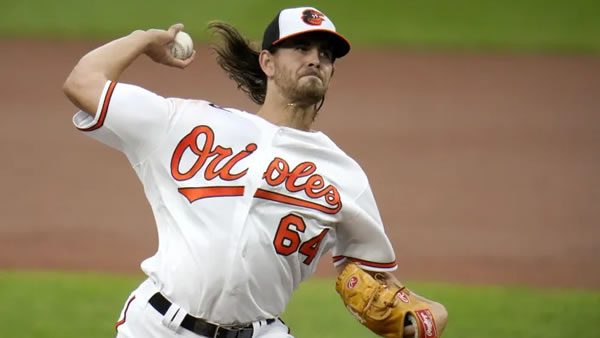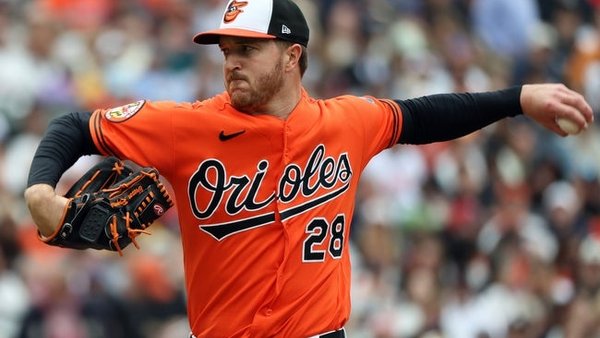
Tomoyuki Sugano has surrendered 27 home runs in 125.2 innings, and he’s walking into Coors Field — a park with a 1.38 factor — against Pete Alonso’s .483 xwOBA. The market is pricing the Under at -120 juice while handing out the Over at even money, a gap that doesn’t survive contact with this specific pitching pairing.
Trevor Rogers vs. Tomoyuki Sugano: Baltimore Orioles at Colorado Rockies Betting Preview
After the Rockies snapped their 10-game home losing streak Tuesday night with a 4-2 win — TJ Rumfield delivering the knockout blow off Baltimore’s bullpen — the series shifts to a Wednesday afternoon matchup that looks dramatically different on the mound. Gabriel Hughes held the Orioles in check long enough for Colorado to steal that game. Today, Colorado sends out Tomoyuki Sugano, a right-hander who has surrendered 27 home runs in just 125.2 innings this season. Baltimore counters with Trevor Rogers, a left-hander sitting at a 4.38 ERA with 16 HR allowed in 137.2 innings. Neither arm belongs in a conversation about run suppression.
The market is shading toward the Under at -120 juice, while the Over is available at +100 — even money. That pricing gap is the betting tension here. When two of the most homer-prone starters in their respective rotations meet at the most run-inflating park in baseball on a sunny September afternoon, the market giving you a free swing on the Over is an opportunity worth examining carefully.
The numbers project 12.9 combined runs — Baltimore 6.6, Colorado 6.3 — against a posted total of 11.5. That’s a gap of nearly 1.4 runs, and it’s not noise. It reflects two starters who create the kind of innings where hitters do damage, a park factor of 1.38, and bullpens on both sides that are stretched thin by injury.
Game Info & Betting Lines
- Date/Time: Wednesday, September 2, 2026 — 3:10 PM ET
- Venue: Coors Field | Park Factor: 1.38 (elite hitter-friendly)
- Probable Starters: Trevor Rogers (BAL, 9-9, 4.38 ERA) vs. Tomoyuki Sugano (COL, 12-8, 5.23 ERA)
- Moneyline: Baltimore -162 / Colorado +134
- Run Line: Baltimore -1.5 (-107) / Colorado +1.5 (-113)
- Total: 11.5 (Over +100 / Under -120)
Why This Number Is Off
The market’s logic is defensible on the surface. The first two games of this series finished 2-1 and 4-2 — both comfortably under 11.5. There’s pattern-recognition baked into the line. Bettors see Coors, they see 11.5, and they assume the market has already priced in the altitude. The Under at -120 reflects the recency of those low-scoring games and the belief that today follows the same script.
But here’s the problem: those two games featured Gabriel Hughes and Cade Povich — starters with meaningfully better profiles than what’s on the mound today. Hughes kept Baltimore’s lineup in check. Povich pitched five solid innings. The narrative that “this series plays low” doesn’t survive contact with the fact that the pitching matchup has changed substantially.
Where the market is slightly wrong is in the juice distribution. Pricing the Over at +100 while holding the Under at -120 suggests the book sees roughly a 55% chance this game goes under. Given a park factor of 1.38 — historically adding 20 to 40 percent more runs versus neutral venues — and two starters with documented homer problems, that implied probability feels mispriced. The Coors altitude effect on a warm September afternoon, combined with this specific pitching pairing, pushes the true probability of going over meaningfully above 50%. Getting paid at even money on that edge is the angle.
What Separates the Pitching
The gap between these two starters is real, but not in a direction that favors the Under — it favors scoring from both sides.
Tomoyuki Sugano is the more alarming arm. His 1.93 HR/9 rate — 27 home runs allowed in 125.2 innings — is a number that becomes genuinely dangerous at altitude. Statcast confirms what the traditional stats suggest: his four-seam fastball generates an xwOBA of .416 against, and his sinker is even worse at .447 xwOBA. Those are not pitches that play at any park, let alone Coors. His 5.37 K/9 offers no margin for error — he needs weak contact to survive, and his contact metrics suggest he’s not getting it. His split-finger is his best offering at a .317 xwOBA with 28.8% whiff rate, but at 21.1% usage it’s not enough to carry a start. Baltimore’s Pete Alonso, posting a .483 xwOBA with 32 home runs on the season and a .490 xwOBA against right-handed pitching, is a nightmare matchup against Sugano’s flat sinker. Christian Encarnacion-Strand (.456 xwOBA overall) also slots in at cleanup, though his vsRHP xwOBA of .351 moderates the threat against Sugano — he’s dangerous overall but not the most punishing matchup for a righty today.
Trevor Rogers doesn’t offer much separation on the suppression side. His 4.38 ERA and 1.25 WHIP reflect a starter who keeps the game playable but rarely controls it. His four-seam sits at 93.7 mph with a 20.6% whiff rate and .319 xwOBA against — serviceable contact management on that pitch specifically. His sweeper is his best weapon at a .214 xwOBA and 30.0% whiff, and Colorado’s right-heavy lineup will see plenty of it. Hunter Goodman — 36 home runs, .457 xwOBA, 7.5% barrel rate — is the focal point of this lineup against Rogers. As a lefty, Rogers actually draws a slightly worse split on Goodman: his vsLHP xwOBA sits at .475 compared to .449 against right-handers. That’s a real but modest disadvantage, and the four-seam’s .319 xwOBA means Rogers can work that pitch effectively if he’s locating it. Still, Goodman is a legitimate power threat who hits the ball hard and has 36 home runs in a lineup built around Coors. Mickey Moniak (.357 xwOBA) and Jake McCarthy (.359 xwOBA) are hitters who make contact and have shown pop at altitude. The Rockies will get their swings. The question isn’t whether they score — it’s how many times the ball carries out of here before the final out.
Pushback: The Case Against the Over
There are real reasons to hesitate. Baltimore strikes out at a high clip — 1,281 punchouts on the season — and Sugano, despite his pedestrian 5.37 K/9 overall, could find a rhythm against a lineup that swings through pitches. Colorado has gone 3-7 in their last 10, including a stretch where their offense has looked cold even at home. Sugano’s 12-8 record suggests he’s found ways to get through lineups without dominant stuff, and day games at Coors occasionally play flatter than the altitude narrative implies — hitters can get lazy with their approach in afternoon heat, and pitchers who work quickly sometimes benefit from the rhythm. Rogers has the kind of sweeper-changeup combination that can neutralize a right-handed lineup in short stretches.
The Baltimore bullpen is also shredded. Ryan Helsley and Keegan Akin are both on the 60-day IL. If Rogers exits early, the Orioles are burning arms they can’t replace. That cuts both ways — a short start accelerates run-scoring, but it also means Colorado could tack on runs in the late innings against a fatigued bullpen. The framing works for the Over either way, which is part of why I’m comfortable here.
The Rejected Angle
The Baltimore moneyline at -162 is the obvious directional play — the numbers favor the Orioles by a meaningful margin, and their 7-3 record over the last 10 games reflects a team that’s locked in. But laying -162 at Coors Field introduces a volatility tax I’m not willing to pay. One bad inning from Rogers, one Rumfield shot into the Colorado bullpen, and a -162 ticket is toast. The park doesn’t care about implied probabilities. The Over at +100 gives me the same directional read — this game will produce runs — without the exposure to a single swing flipping a chalk ticket into a loss. That’s the smarter vehicle for this specific environment.
Run Environment & Game Shape
Coors Field carries a park factor of 1.38, which means it historically inflates run-scoring by 38% relative to a neutral venue. On a warm September afternoon — mid-afternoon start, thin air baking in the sun — that effect compounds. Exit velocities jump. Balls that die at the warning track in Camden Yards carry into the gap or over the fence here. Sugano’s sinker at .447 xwOBA is already a liability at sea level; at altitude, ground balls that don’t get all the way down become extra-base hits, and balls that get slightly elevated carry distances that don’t exist in most other parks.
Rogers faces the same physics. His four-seam at 93.7 mph plays differently when hitters are working at 5,280 feet. His sweeper — his best pitch — should still generate whiffs because breaking balls don’t behave as dramatically differently at altitude as fastballs do. But any mistake with his four-seam or changeup is magnified, and Colorado’s lineup — particularly Goodman at .457 xwOBA with 36 home runs — punishes mistakes.
The game shape here points to a moderate-to-high scoring affair. Both starters project to labor through five or six innings, handing things to bullpens that are overextended on both sides. Baltimore’s bullpen has lost Helsley and Akin; Colorado has lost Welinton Herrera. Neither closer group is functioning at full strength. When the starters exit, runs tend to follow — and the thin air and afternoon heat at Coors amplify exit velocity on every ball put in play, turning outs into hits and singles into doubles at a rate no other park can match. This environment was built for an over, and the number — 11.5 — is one that two mediocre starters in this park on this kind of day have every reason to blow past.
You can shop this line at Bovada, where the Over 11.5 is currently available at +100.
The Pick
The market is leaning on two low-scoring games that featured better pitching. Today’s arms don’t support the same conclusion. Sugano’s sinker is a liability at altitude, Rogers faces a real power threat in Goodman, and the park factor of 1.38 on a warm September afternoon is not a backdrop — it’s an active ingredient. The numbers project 12.9 combined runs. The line sits at 11.5. The Over is priced at +100 while the Under costs -120, which tells you where the square money is sitting. I’m going the other direction.
The play is the Over 11.5 at +100 for 2 units.