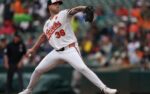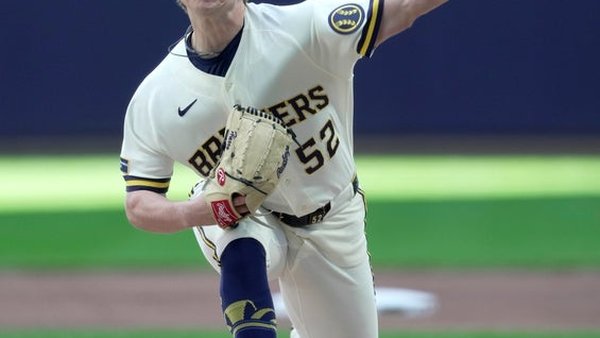
Brady Singer’s 5.03 ERA and 1.66 HR/9 rate line up directly against a Brewers lineup built to punish flat cutters and elevated sinkers — while Kyle Harrison faces a Cincinnati order that posts a .703 OPS and starts a catcher with a .190 xwOBA. The moneyline ceiling shuts the door on one number, but the market left a different price open at +109.
Brady Singer vs. Kyle Harrison: Cincinnati Reds at Milwaukee Brewers Betting Preview
After Friday night’s 20-0 obliteration — Milwaukee’s season-high 23 hits, four home runs, and a grand slam from Garrett Mitchell — the framing for Game 2 of this series is almost too clean. The Brewers are the dominant team, the better-staffed team, and tonight they send their better pitcher. None of that is in dispute. What is in dispute is how the price reflects it.
Milwaukee’s moneyline at -193 is off the table. That’s not a close call — it exceeds the juice ceiling where the math stops working for a single-game bet. But Milwaukee -1.5 at +109 is a different conversation entirely. You’re getting paid to back the better side, not paying a premium for the privilege. That’s the vehicle the market has inadvertently offered, and the pitching matchup is the engine that makes it worth considering.
The core argument is simple: Kyle Harrison (10-4, 3.66 ERA) versus Brady Singer (6-13, 5.03 ERA, 1.47 WHIP) is one of the cleaner starter gaps on today’s board. Combine that with a Milwaukee lineup that is materially superior by every offensive measure, a Cincinnati club that just got shut out 20-0, and a plus-money run line price — and there’s a real betting case here that the moneyline number obscures.
Game Info & Betting Lines
- Date/Time: Saturday, September 12, 2026 | 7:10 PM ET
- Venue: American Family Field (Dome) | Park Factor: 1.00 (neutral run environment)
- Probable Starters: Brady Singer (CIN) vs. Kyle Harrison (MIL)
- Moneyline: Cincinnati Reds +159 / Milwaukee Brewers -193
- Run Line: Milwaukee Brewers -1.5 (+109) / Cincinnati Reds +1.5 (-131)
- Total: 8.5 (Over -105 / Under -115)
Why This Number Is Off
The market is doing something rational here: it’s priced Milwaukee as a heavy favorite because they are one, and it’s baked Singer’s ERA and the previous night’s result into a number that reflects the talent gap accurately. There’s no obvious error in setting the Brewers at -193. They’re 92-56. They have a +192 run differential. Cincinnati is 69-78 with a -142 differential. The 34-game gap in the standings is real.
Where the market becomes exploitable is in the run line price. At +109, you’re being paid to back the better team with the better pitcher to win by two or more runs. The implied probability on that outcome at +109 is roughly 48% — meaning the market essentially thinks a multi-run Milwaukee win is a coin flip. Given the starter disparity and the offensive talent gap, that feels light.
The concern, and it’s a legitimate one, is that the numbers project only a 1-run Milwaukee win (5.1 to 4.1). A one-run Brewers victory doesn’t cash the run line. The market knows this, and the +109 price reflects some skepticism about margin. But the flip side is that you’re getting plus money on a team with an 85.9% win probability — that structural inefficiency is the edge, even if it’s not a slam dunk.
What Separates the Pitching
Harrison and Singer aren’t close, and the Statcast data makes that concrete. Singer operates primarily off a sinker (50.3% usage, 91.3 mph) that generates modest whiff rates at just 14.4%. His sweeper is his best weapon — 37.6% whiff rate, .284 xwOBA against — but his cutter is a liability, posting a .470 xwOBA against and a 0.0% put-away rate. When Singer goes to the cutter, he’s giving hitters something to damage.
The deeper problem for Singer is the home run exposure. He’s allowed 27 HR in 146.2 innings — 1.66 HR/9 — and the Brewers lineup is full of threats. Jake Bauers (.451 xwOBA, 8.0% barrel rate, 25 HR) and Jackson Chourio (.417 xwOBA, 6.7% barrel rate, 23 HR) are exactly the type of hitters who can punish elevated sinkers and flat cutters. The BvP sample shows Chourio hitting just .188 in 17 PA against Singer with 9 strikeouts, but his .421 xwOBA vs RHP shows the underlying talent is there — Singer can’t count on that history holding when the contact quality is this good.
Harrison’s numbers tell a cleaner story. A 3.66 ERA against a Cincinnati lineup that hits .229 with a .703 OPS is a mismatch that compounds quickly. The top of Cincinnati’s order tonight is not their normal lineup — this is a rotated group with real voids built into it. Will Banfield is catching (.190 xwOBA, zero barrels, .140 vsLHP xwOBA) — he’s essentially a black hole in the order against a left-hander. TJ Friedl slots fourth and manages only a .287 vsLHP xwOBA, and leadoff man Héctor Rodríguez isn’t much better at .322 vsLHP xwOBA. The one genuine wildcard is Juan Brito hitting second — his overall numbers are modest (.325 xwOBA, 1.7% barrel rate), but his vsLHP xwOBA is actually .531, which means Harrison can’t sleepwalk through that matchup. Brito punishes left-handers. The Reds’ most reliable bat, Sal Stewart, is capable (.412 xwOBA, .431 vsLHP), but the lineup around him — particularly Banfield, Friedl, and Rodríguez — doesn’t create enough run-scoring infrastructure to threaten Harrison consistently once he pitches around the dangerous spots.
The innings these two create are structurally different. Harrison generates weak contact and limits the damage when he does give up hits. Singer’s sinker-heavy approach gets ground balls, but his inability to miss bats at the critical moment — combined with 1.66 HR/9 against a power-heavy Brewers lineup — means he’s always one mistake away from a multi-run inning.
The Pushback
The strongest case against this play starts with the run projection: the numbers have Milwaukee winning by one run. A one-run Brewers win is a loss on -1.5. That’s not a minor footnote — that’s the central tension of this bet. The run line needs Milwaukee to win by two or more, and the projected margin doesn’t get there.
The secondary pushback is the Milwaukee lineup itself. After clinching a playoff spot Friday night, the Brewers are running out a lineup that includes Bo Naylor, Cooper Pratt, and Joey Ortiz in the bottom third. That’s not a playoff-caliber bottom of the order — that’s a team playing its depth with the division lead already secured. If Singer manages to work through the top of the Milwaukee order without catastrophic damage, the bottom of this lineup could let him breathe.
And there’s the recency factor. Friday’s 20-0 result already dragged in a lot of public money on Milwaukee’s side for Game 2. Sharp bettors are aware of this — overreaction to blowouts is one of the most documented inefficiencies in game-to-game betting. The line may already be pricing in some of that public lean.
Run Environment & Game Shape
American Family Field’s dome eliminates weather as a variable entirely — no wind, no temperature, no humidity to manipulate the run environment in either direction. The park factor sits at a dead-neutral 1.00. The total is set at 8.5, with the over priced at -105 and the under at -115, suggesting the books lean slightly toward a lower-scoring game.
In a neutral park with a projected 9-run total, neither team is suppressed by environment. What that means for the run line argument is that the margin question lives entirely in the pitching and lineup matchup — it won’t be bailed out or buried by park effects. That’s actually good for this bet. Harrison versus a Cincinnati lineup full of vsLHP liabilities is a favorable matchup in any context, and the dome ensures it plays out in a controlled environment where quality contact is the only variable that matters. Singer’s home run problem doesn’t get a tailwind to bail him out, but Harrison’s contact-suppression approach doesn’t need one.
The structural case here is straightforward: the better pitcher, the better lineup, the playoff-clinched home team, all at plus money. The one-run projected margin is the honest friction in this bet — I’m not hiding from it. But the 85.9% win probability paired with +109 on the run line is an inefficiency worth two units of exposure. When you can get paid to back an overwhelming favorite to simply win by multiple runs, and the market is essentially calling it a coin flip, you take that edge.
Bet: Milwaukee Brewers -1.5 (+109) — 2 units, moderate confidence.