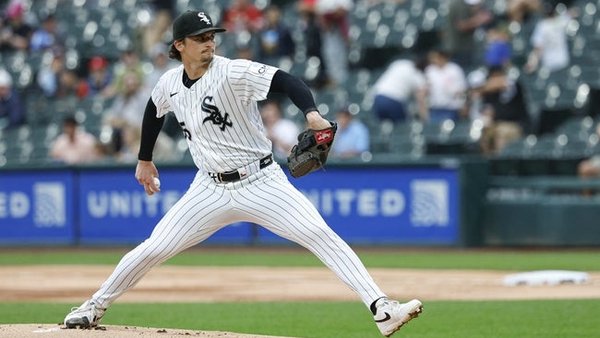
Hayden Wesneski’s 3.33 ERA and 9.56 K/9 land against a White Sox lineup that leads the league in strikeouts — and Davis Martin’s finger injury clouds whatever modest resistance Chicago might have offered on the mound. Daikin Park’s 0.96 run factor reinforces the same direction the pitching profiles already point, yet the total at 8.5 (-105 under) hasn’t moved far enough to reflect the full gap between these two starters.
Davis Martin vs. Hayden Wesneski: Chicago White Sox at Houston Astros Betting Preview
After Tuesday night’s 5-1 White Sox win cut this series to one game apiece, the focus shifts to a pitching matchup that is far less balanced than the total of 8.5 implies. Hayden Wesneski takes the ball for Houston with a legitimate 3.33 ERA and a 9.56 K/9 — numbers that belong on a different tier than what Chicago is sending out. The concern on the other side is real: Davis Martin is listed on the 15-Day IL with a finger injury, and his readiness to eat innings is genuinely uncertain.
Yesterday’s White Sox output came against a struggling Ronel Blanco, not a pitcher with Wesneski’s arsenal and strikeout ability — I’m not giving that five-run game much weight here. The recent series scoring — 5-1 Tuesday, 6-3 Monday — averages out to 7.5 total runs over the last two games in this exact building. That number already sits under the posted total.
The edge here is not enormous. This is a moderate lean, not a sledgehammer. But Daikin Park’s run factor of 0.96, a pitcher-friendly dome environment, and a genuine starter gap make the under at 8.5 the cleanest available market on this slate.
Game Info & Betting Lines
- Date/Time: Wednesday, September 2, 2026 | 8:10 PM ET
- Venue: Daikin Park (formerly Minute Maid Park) | Dome | Park Factor: 0.96 (pitcher-friendly)
- Probable Starters: Davis Martin (CWS) vs. Hayden Wesneski (HOU)
- Moneyline: Chicago White Sox +118 / Houston Astros -142
- Run Line: Houston Astros -1.5 (+150) / Chicago White Sox +1.5 (-182)
- Total: 8.5 (Over -115 / Under -105)
Why This Number Is Close
The market is not wrong to set this at 8.5. The numbers project exactly 9.0 combined runs — a half-run over the line — and both offenses are genuinely mediocre when you strip away individual stars. Houston’s team OPS sits at .724 with a -44 run differential on the season. Chicago checks in at .727 OPS with a lineup that has racked up 1,256 strikeouts — the most exposure to a pitcher who punches people out at a high clip.
The legitimate case for the over rests on Martin’s IL status. If he can’t go deep into this game, Houston’s bullpen inherits innings against a White Sox lineup that has legitimate power threats. The market is accounting for that possibility, which is exactly why the total is not already sitting at 7.5. There’s real uncertainty baked into the 8.5 number.
But here’s the problem: even accounting for Martin’s risk, the scoring backdrop does not support a comfortable over. The two most recent games in this series produced 6 and 9 total runs respectively — a 7.5 average. Wesneski’s stuff suppresses contact at a level Martin simply does not match. The under at -105 offers the cleanest juice on this board given that Houston’s moneyline at -142 exceeds the ceiling where the price makes sense to me.
What Separates the Pitching
The gap between these two arms is the core reason I’m writing this piece. Hayden Wesneski works with a five-pitch arsenal anchored by two primary offerings: a 96.3 mph four-seamer (32.5% usage) that holds hitters to a .244 xwOBA, and a 96.1 mph sinker (29.3% usage) that generates a .305 xwOBA against — genuinely elite contact suppression from both. Together those pitches account for nearly two-thirds of his looks, and the sinker’s groundball inducement actually strengthens the contact-suppression argument further. His knuckle-curve at 83.4 mph generates a 35.7% whiff rate with a .258 xwOBA against, making it a legitimate put-away weapon. His changeup whiffs bats at 36.8%, though it carries a .431 xwOBA against — meaning it’s a swing-and-miss pitch but one hitters do damage on when they make contact, so it’s not a pure out pitch. The strikeout rate of 9.56 K/9 is not a fluke — it’s built on a diverse arsenal that attacks hitters at multiple velocities and shapes.
Against a White Sox lineup that strikes out at a league-heavy clip, this is a meaningful mismatch. The most dangerous bat in this Chicago order is Munetaka Murakami, who carries the highest xwOBA on the roster at .497 — and that number climbs to .510 against right-handed pitchers like Wesneski. He’s also the biggest strikeout risk: a 32.9% K-rate and a 39.3% whiff rate season-wide make him exactly the type of hitter Wesneski’s knuckle-curve was designed to eat. Miguel Vargas is the second-most dangerous Sox bat at a .425 xwOBA, though he actually sees a drop to .403 against righties and carries a modest six-PA sample against Wesneski showing a .200 average and one strikeout. Murakami is the matchup concern here, not Vargas — but Wesneski’s arsenal is built to handle both.
Davis Martin presents a starkly different profile. His 5.31 ERA and 1.44 WHIP in 122 innings reflect genuine underlying vulnerability — 23 home runs allowed in that stretch translates to a legitimate blowup risk. His sinker sits at 95.4 mph but generates a concerning .412 xwOBA against. Against Yordan Alvarez — who carries a .523 xwOBA and has gone .524 with five home runs in 24 lifetime plate appearances against Martin — the danger is concentrated and real. Martin’s four-seamer holds a .340 xwOBA against, which is passable, but his overall command issues (38 walks in 122 innings) compound the exposure. And that’s before accounting for the finger injury’s direct mechanical effect: a compromised grip affects sinker movement, which is exactly the pitch Martin leans on most heavily.
The innings each pitcher creates are fundamentally different. Wesneski creates weak contact and strikeouts. Martin creates traffic and hard contact. That gap is what drives the under thesis even in a game where the projected total sits marginally above the line.
The Pushback
The case against the under is not trivial, and I want to be direct about where this bet almost falls apart.
The biggest single threat to the under is Yordan Alvarez. The .524 average and five home runs in 24 plate appearances against Martin are not noise — that’s a sample large enough to reflect a genuine stylistic mismatch, and a single Alvarez at-bat can swing a low-scoring game’s total in one swing. If Martin gets through three innings and hands the ball to the bullpen early, Houston has the lineup depth to pile on.
The other honest admission: the numbers project 9.0 combined runs here. That’s a half-run over the line, and a half-run margin means this is genuinely close. I’m not pretending there’s a large structural edge — there isn’t. The under at -105 is the play precisely because it’s efficient juice on a moderate lean, not because the case is airtight.
Martin’s IL designation also adds real variance. A healthy Martin with his sinker working is a different pitcher than one dealing with a finger issue that affects grip and movement. If he’s scratched or shortened significantly, the calculus shifts. I’m pricing in a shortened start as a meaningful risk, not dismissing it.
Run Environment & Game Shape
Daikin Park’s 0.96 park factor is a modest but consistent lean toward pitchers. It’s a dome, so weather is off the table as a variable. The environment doesn’t dramatically reshape the total on its own, but it nudges the needle in the direction I’m already leaning given the pitching mismatch.
Game shape matters here too. When Wesneski is expected to go five-plus innings and is working with his full arsenal against a strikeout-heavy lineup, the innings he controls tend to be low-traffic. That puts pressure on Martin — or whoever follows him out of Chicago’s bullpen — to keep Houston off the board. Given Alvarez’s BvP history and Nelson Velázquez’s .489 xwOBA lurking in the five-hole, Chicago’s pitching staff has real exposure even if Martin exits early and the bullpen inherits the damage.
The series average of 7.5 runs over the two most recent games in this building isn’t cherry-picked context — it’s the most relevant recent benchmark for what this specific environment and these specific rosters produce against each other. The 8.5 total asks you to project a meaningful step up from that baseline. I’m not buying it.
Pick: Under 8.5 | 2 Units | Moderate Confidence | -105