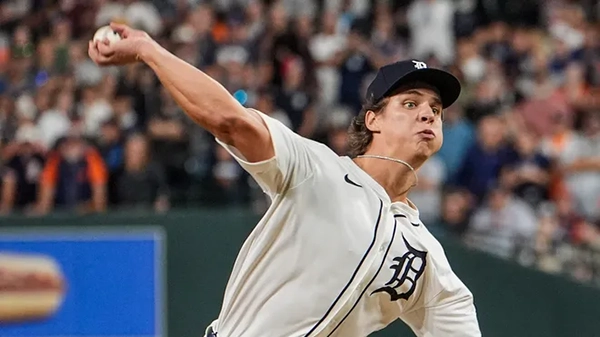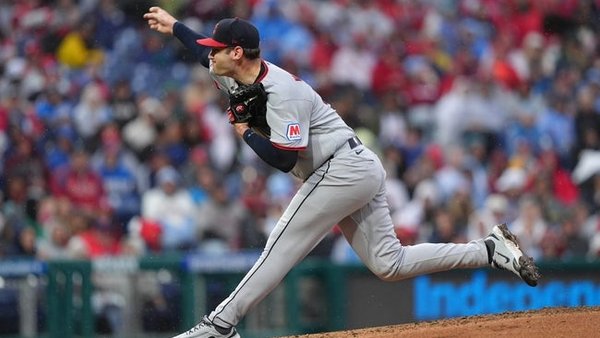
Gavin Williams is striking out batters at a 12.14 K/9 clip and Sean Newcomb has surrendered just two home runs across 84.1 innings — yet the total sits at 7.0, priced as though two average starters are taking the ball. The run environment here points in one direction; the question is whether the posted number has fully accounted for what these two arms actually do.
Sean Newcomb vs Gavin Williams: Chicago White Sox at Cleveland Guardians Betting Preview
The market has set this total at 7.0, and on the surface that looks like a reasonable number for a game between two middle-of-the-pack AL Central clubs. But the surface reading misses the pitching. Gavin Williams is one of the most dominant strikeout arms in the American League, and Sean Newcomb has been quietly suppressing runs all season with a 2.77 ERA and only 2 home runs allowed in 84.1 innings. The market is pricing this like an average game. It isn’t.
Chicago arrives having just dropped a series finale to St. Louis, 3-1, while Cleveland rolled into this series fresh off a 9-2 dismantling of Minnesota. Neither offense is running hot on paper — the Guardians carry a team OPS of .689 and the White Sox sit at .721. Both clubs are built more around contact and situational offense than power explosions. That context matters enormously when two quality starters are taking the ball.
The -118 juice on the under is the entry point that makes this worth acting on. It’s not a heavy price to pay for a two-starter game in a pitcher-friendly environment. The edge here isn’t dramatic, but it’s real — and the bet type fits the game shape better than anything else on the board.
Game Info & Betting Lines
- Date/Time: Monday, September 14, 2026 | 6:40 PM ET
- Venue: Progressive Field | Park Factor: 0.98 (slightly pitcher-friendly)
- TV: ESPN Unlmtd, MLB.TV, CLEGuardians.TV, CHSN
- Probable Starters: Sean Newcomb (CWS) vs Gavin Williams (CLE)
- Moneyline: Chicago White Sox +128 / Cleveland Guardians -155
- Run Line: Cleveland Guardians -1.5 (+152) / Chicago White Sox +1.5 (-185)
- Total: 7.0 (Over -102 / Under -118)
Why This Number Is Close
The 7.0 total is not a lazy number. The market understands that both starting pitchers have legitimate run-suppression profiles, and it’s also accounting for two offenses that aren’t exactly dangerous. But the numbers output 8.6 combined runs — marginally above the posted number — which tells you the market is roughly fair. The question is where you find the lean.
There’s a legitimate case for the over. The White Sox do have real offensive weapons in the projected lineup. Miguel Vargas (30 HR, .825 OPS) bats third and has genuine power. Andrew Benintendi (.368 xwOBA) bats fifth and has a .300 average in 12 limited plate appearances against Williams. Tristan Peters (.279 AVG, .806 OPS) hits sixth and adds contact depth in the middle of the order. Notably, Murakami and Grichuk — two of Chicago’s bigger offensive names — are not in the projected lineup tonight, which removes a chunk of the White Sox’s upside ceiling. Williams has still allowed 27 home runs this season, and one crooked inning from either side can blow through a 7.0 number with room to spare. The over at -102 is nearly even-money access to that scenario.
But here’s where the market slightly underweights the downside: the 8.6 average accounts for average outings. When both starters pitch to their ceiling — which their season-long profiles suggest they’re capable of — you’re looking at a game that lands comfortably under. Newcomb’s ability to keep the ball in the yard — just 2 HR allowed across 84.1 innings — and Williams’ elite swing-and-miss rate create compounding pressure on the total. The -118 price is a small tax for what figures to be a pitcher-controlled environment.
What Separates the Pitching
Gavin Williams is the headliner here, and his arsenal explains why. His sweeper sits at 87.4 mph with a 43.2% whiff rate and an xwOBA-against of .223 — one of the nastiest put-away pitches in the league. He pairs it with a four-seamer at 97.4 mph (26.8% whiff) and a curveball generating a 30.0% whiff rate. The result is a pitcher who generates strikeouts at a 12.14 K/9 rate across 169 innings. Against a White Sox lineup that has punched out 1,366 times on the season, Williams’ arsenal is a genuine mismatch. With Murakami out of the projected lineup tonight, the strikeout damage shifts toward hitters like Kyle Teel, batting second, who carries a 34.9% whiff rate against right-handed pitchers — Williams’ BvP data against this lineup is thin but trending his way (Teel is 0-for-7 with 4 strikeouts in limited looks).
Sean Newcomb operates differently. His four-seam fastball sits at 94.6 mph with a 24.1% whiff rate and an xwOBA of .274 against. His slurve — thrown 30.5% of the time — generates a 28.9% whiff and holds hitters to a .273 xwOBA. The critical number is the 2 home runs allowed in 84.1 innings — that’s a rate of roughly one homer every 42 innings, which tells you this is a pitcher who simply doesn’t give up the big blow. Against Cleveland’s lineup, which relies on contact and speed (136 stolen bases) rather than power (142 HR as a team), Newcomb’s ability to keep the ball in the yard is a near-perfect fit. The Guardians’ top hitters — Kwan (.299 xwOBA), Bazzana (.324 xwOBA), and Halpin (.194 xwOBA vs left-handers) — are not the type to punish Newcomb’s pitch mix. Nathaniel Lowe’s .267 xwOBA against left-handed pitching further limits Cleveland’s damage potential. The gap between what Williams gives Cleveland and what Newcomb gives Chicago is narrower than the moneyline suggests — both are legitimate run-suppressors operating in different ways.
The Pushback
The honest friction here is that the numbers favor the over by 1.6 runs — and I’m not going to paper over that gap. An 8.6 projected total against a 7.0 posted number is a real signal, not noise. The over at -102 is priced attractively. So why am I on the under?
Two reasons. First, projected totals are built on average outcomes. Newcomb’s season-long profile — 2.77 ERA, 2 HR in 84.1 IP — isn’t average. Williams’ 43.2% sweeper whiff rate and 12.14 K/9 over 169 innings aren’t average either. When both starters perform near their actual demonstrated ceilings rather than regressing toward the mean, the run environment collapses well below 7.0. Second, the White Sox lineup tonight is missing some of its biggest bats. With Murakami and Grichuk out of the projected order, Chicago’s offensive upside is meaningfully reduced. Vargas (30 HR, .417 xwOBA) is the biggest threat in that lineup, and his 14 plate appearances against Williams — a .455 average and 1 HR, though with 3 strikeouts in a small sample that shouldn’t be over-read — represent the most legitimate BvP concern on either side. But one hitter with a thin sample doesn’t flip a pitcher-dominated game.
Meanwhile, note that Vargas bats third and hits .475 xwOBA against left-handers but .394 against right-handers — and Williams throws from the right side. The matchup is less threatening than the raw BvP line suggests. The over case leans heavily on outlier scenarios: both starters have bad nights simultaneously, or the bullpens get exposed early. That’s possible. It’s not probable.
Vargas BvP & the Power Threat Reality
The clearest offensive threat to the under is Miguel Vargas. His 14 plate appearances against Williams (.455, 1 HR, 3K) represent the most relevant BvP data in this game — but that’s 14 plate appearances, which is a limited sample where noise matters as much as signal. His overall profile is legitimate: 30 homers, .417 xwOBA, 6.8% barrel rate. He’s a real power bat who can hurt you.
On the Cleveland side, the run-threat picture is flatter. Jo Adell hits fourth with a .397 xwOBA and a .492 xwOBA against left-handers — he’s the Guardians’ biggest potential damage dealer against Newcomb. Nathaniel Lowe (.267 xwOBA vs LHP) and Travis Bazzana (.282 xwOBA vs LHP) are not the hitters who blow up a lefty with Newcomb’s profile. The Guardians are dangerous in a different way — contact, manufacturing runs, stolen bases — and that style of offense runs into a wall when the opposing pitcher limits walks and suppresses hard contact the way Newcomb does.
The power threat to this under lives almost entirely with Vargas. That’s a manageable risk.
Run Environment & Game Shape
Progressive Field plays at a 0.98 park factor — slightly below neutral, which nudges the run environment marginally in the pitcher’s favor. It’s not a dramatic edge, but in a game where you’re already paying -118 for the under, every push in the right direction matters.
The game shape I’m pricing in: Newcomb goes six innings, allows two or three runs on contact-based damage with minimal walks. Williams goes seven or more, sits double-digit strikeouts, and holds a depleted White Sox lineup to one or two runs. Both bullpens are functional — Cleveland’s pen has been solid and Chicago’s has been adequate. There’s no obvious late-game collapse vector.
The scoring range that threatens the bet (8+ combined runs) requires either both starters getting knocked out early — which would demand Newcomb giving up three or four runs AND Williams cratering in the same game — or a bullpen implosion that turns a tight game into an open-inning blowup. Either scenario is possible, but both require multiple things to go wrong simultaneously. That’s not the base case here.
I’m playing the base case. Under 7.0 at -118, 2 units, moderate confidence. The pitching in this game is better than the market is fully pricing in, the projected lineup construction removes Chicago’s biggest power bats from the equation, and the park isn’t doing the offense any favors. At -118, I’m comfortable taking the field-goal-length tax to back two starters who have demonstrated all season long that they keep runs off the board. This is the right number and the right price — take the under.