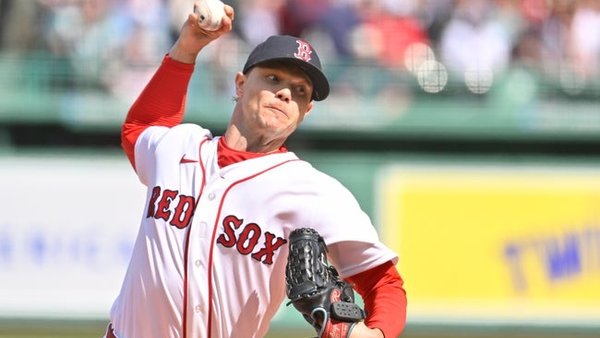
Sonny Gray’s 2.76 ERA and 17 wins set up a stark pitching mismatch against Tyler Alexander, yet the total is posted at 8.0 — a number that prices in run production neither below-average offense has consistently delivered. The over is juiced to -115 while the under sits at -104, and Joc Pederson’s day-to-day hand injury quietly dents Texas’s already limited ceiling against an elite arm.
Sonny Gray vs. Tyler Alexander: Boston Red Sox at Texas Rangers Betting Preview
Texas came out of Tuesday and Wednesday’s games on fire — Jacob deGrom, Nathan Eovaldi, a four-game winning streak, and a first-place tie in the AL West. The market has noticed. The Rangers are riding genuine momentum, and there’s legitimate buzz around this club entering the final 10 games of the season. But momentum doesn’t take the mound Thursday. Pitchers do.
The pitching gap in this game is real and significant. Sonny Gray is one of the best starters in the American League this season. Tyler Alexander is a serviceable lefty finesse arm — fine, competent, nothing more. When the total sits at 8.0, the market is pricing in a reasonable amount of offense. The question is whether these two lineups can actually generate it against the arms they’re facing.
Boston’s moneyline at -142 exceeds the hard cap I use (-130), so the cleanest expression of the pitching-edge thesis is blocked. That forces the hand toward the total. And the more I look at the run environment — below-average offenses, Gray’s suppressive profile, Alexander’s soft-contact approach — the more the under at -104 feels like the cleanest number available.
Game Info & Betting Lines
- Date/Time: Thursday, September 17, 2026 | 8:05 PM ET
- Venue: Globe Life Field (Dome) | Park Factor: 1.05 (slightly hitter-friendly)
- TV: MLB.TV, Rangers Sports Network, NESN
- Probable Starters: Sonny Gray (BOS) vs. Tyler Alexander (TEX)
- Moneyline: Boston Red Sox -142 / Texas Rangers +118
- Run Line: Boston Red Sox -1.5 (+123) / Texas Rangers +1.5 (-149)
- Total: 8.0 (Over -115 / Under -104)
Why This Number Is Close
The market has set this total at 8.0, and honestly, that’s not an unreasonable number on paper. Globe Life Field has a park factor of 1.05 — a dome environment that neutralizes weather entirely but plays slightly above neutral for run scoring. Texas has won four straight and is tied for first in the AL West, so the oddsmakers are pricing in some offensive energy from a motivated Rangers lineup. The over at -115 suggests the market leans ever so slightly toward run production.
Here’s where I think the market is slightly wrong: it’s pricing in the Rangers’ recent offensive output without fully accounting for who’s pitching against them. The Rangers scored seven Wednesday, but that came largely off a shaky Boston bullpen after MacKenzie Gore walked three without a strikeout. Thursday’s equation is different. Gray has held opponents to a 2.76 ERA across 17 wins — that’s not a number you dismiss because Texas is hot.
The legitimate case for the over rests on Texas’s bullpen situation and Boston’s own injury-depleted relief corps. If Gray exits before the seventh, we’re in a different game. But the under at -104 is a palatable price relative to the over at -115. The numbers put the combined projected run total at 8.8 — which technically leans toward the over side of 8.0 — and the Edge Engine flags a moderate over edge of 0.8 runs. I’m fading that lean. Gray’s 2.76 ERA creates genuine downward pressure that raw run-environment estimates don’t fully capture, and both lineups are grinding along with sub-.725 OPS. When you can get the under at -104 juice with an elite starter on the mound against a below-average offense, the contrarian position has value even against a number that the raw totals slightly favor.
What Separates the Pitching
The gap between these two starters is the core of the betting thesis. Sonny Gray at 17-5 with a 2.76 ERA is operating at an elite level — he’s not just winning games, he’s suppressing run environments. Against a Boston team ERA of 3.61 and WHIP of 1.240, we’re looking at a pitching staff that is genuinely built to keep games low-scoring. Gray anchors that rotation as the type of arm who consistently manufactures early outs and limits traffic.
Tyler Alexander at 5-2 with a 3.38 ERA is a quality matchup-dependent lefty. He’s a soft-contact inducer rather than a swing-and-miss pitcher — his strikeout profile limits blowup ceilings but also limits the kind of dominant run-prevention that Gray provides. Alexander works through weak contact, which means his effectiveness is highly dependent on the quality of contact the Boston lineup generates against him.
That’s where the matchup gets interesting. Willson Contreras (.905 OPS, xwOBA .449) is Boston’s most dangerous bat, and he profiles as the type of hitter who can punish a finesse lefty. Contreras’s 6.7% barrel rate and 28.8% hard-hit rate aren’t elite power metrics, but his contact quality and plate discipline — 10.7% walk rate — make him the most likely source of early-inning damage against Alexander. On the Rangers’ side, Corey Seager carries an xwOBA of .416 with an 8.2% barrel rate — the highest among Texas regulars — and he’s been on a tear lately, homering for the fourth time in seven games in Sunday’s win over Arizona. Gray will need to handle Seager carefully.
Texas’s staff ERA of 4.30 compared to Boston’s 3.61 underscores the staff-wide gap. Alexander is better than the Texas average, but he’s pitching in a significantly different tier than Gray. That separation — not just between the two starters but between the two entire pitching staffs — is what makes the total more compelling than the side.
The Joc Pederson Factor
Pederson is listed day-to-day with a hand injury, and his status for Thursday is uncertain. He’s the Rangers’ second-most dangerous power bat at 26 home runs and an .816 OPS, and his .402 xwOBA with a 5.7% barrel rate and 31.1% hard-hit rate makes him exactly the type of hitter who can derail a low-scoring environment in a single at-bat. If he’s out, that’s a quiet but meaningful reduction in Texas’s ceiling against Gray. This isn’t a headline injury — the market may not fully price it — but it’s the kind of edge that compounds quietly over nine innings.
The Rejected Angle
The Rangers moneyline at +118 is genuinely interesting given the pitching matchup, but I’m not playing it. The issue isn’t the price — +118 on a home team with a winning pitcher in a game with legitimate variance is not offensive. The issue is that Boston’s moneyline at -142 is where the real edge exists, and -142 blows through my -130 ceiling for road favorites in the regular season. I don’t chase the opposite side of a capped favorite just to get action. If I can’t take Boston at -142, I’m not taking Texas at +118 as a fallback — that’s not handicapping, that’s rationalization. The total is where this game’s edge lives.
Run Environment & Game Shape
Both offenses sit below league-average. Boston’s .723 OPS and Texas’s .717 OPS are not lineups that bully opposing pitching — they’re grind-it-out clubs that generate runs in bunches when they get traffic, but struggle to manufacture sustained output against quality arms. Gray is a quality arm. Alexander, while lesser, keeps the ball in the park and limits free passes.
The Globe Life Field dome eliminates weather variance entirely, and the 1.05 park factor is a marginal bump — not enough to meaningfully inflate a game where the top starter carries a sub-3.00 ERA. The raw numbers put the combined projected run total at 8.8, which sits 0.8 runs above the posted 8.0 and technically favors the over. I acknowledge that. The Edge Engine sees a moderate over edge here, and I’m not pretending otherwise. But I’m overriding that lean based on the full pitching picture: Gray’s 2.76 ERA is the most suppressive individual factor in this game, both lineups are below-average offensive units, and the under is available at -104 — a comfortable price for a contrarian position that doesn’t require the total to miss by much. Under 8.0 at -104, 2 units, moderate confidence.
The Pushback
Here’s the honest version of the argument against this play: Boston’s bullpen is a mess. Garrett Crochet is on the 60-day IL, Justin Slaten is hurt, Zack Kelly is out, and Tyron Guerrero is on the shelf. Wednesday night was a preview — MacKenzie Gore walked three without a strikeout, Erik Miller couldn’t hold the lead in the seventh, and Texas scored three times off a depleted relief corps. If Gray doesn’t make it through six innings Thursday, Boston is going to the same bullpen that just got carved up, against a Rangers lineup that has scored 11 runs in the last two games combined.
That’s real risk. The numbers put the combined projected run total at 8.8, which is above the posted 8.0 — and if you believe in that lean, you’re playing the over and feeling good about it. The case for the under lives and dies with Gray going deep into the game and Texas’s offense not catching lightning in a bottle two nights in a row. I think that’s more likely than not. But if Gray exits before the sixth with any kind of traffic on the bases, this ticket is probably torn up by the seventh inning.
The Pick: Under 8.0 (-104) | 2 units | Moderate confidence