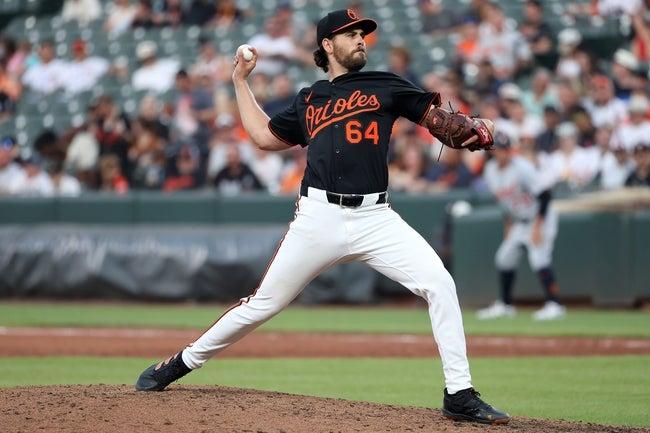
Minnesota enters Wednesday at -118 on the back of a 26-run two-game demolition, but the market is pricing a hot streak — not tonight’s pitching matchup. Drew Anderson’s 3.87 ERA against Dean Kremer’s 5.60 ERA is not a coin-flip gap, and Detroit’s team ERA of 3.71 sitting nearly a full run better than Minnesota’s 4.61 makes the near-pick’em moneyline a number worth examining closely.
Drew Anderson vs. Dean Kremer: Detroit Tigers at Minnesota Twins Betting Preview
Minnesota has put up 26 runs in two games against Detroit this week, and the market has rewarded them accordingly. The Twins sit at -118 heading into Wednesday’s finale, a price that fully reflects the hot streak, the wild card motivation, and two convincing wins. What it doesn’t fully reflect is the pitching gap sitting on the mound tonight.
Drew Anderson (4-5, 3.87 ERA) versus Dean Kremer (2-5, 5.60 ERA) is not a coin-flip matchup. It’s a nearly two-run gap in ERA between starters, and when you pair that with Detroit’s team ERA of 3.71 — meaningfully better than Minnesota’s 4.61 — the Tigers represent genuine pitching value the market is discounting because of recent score lines.
The projected score in this game is Detroit 4.7, Minnesota 4.5. The numbers give the Tigers a 58.8% win probability. Yet the price has Minnesota as the slight favorite. That inefficiency — small but real — is the entire argument for backing Detroit at -102.
Game Info & Betting Lines
- Date/Time: Wednesday, September 2, 2026 | 7:40 PM ET
- Venue: Target Field | Park Factor: 1.00 (neutral)
- Probable Starters: Drew Anderson (DET) vs. Dean Kremer (MIN)
- Moneyline: Detroit Tigers -102 / Minnesota Twins -118
- Run Line: Detroit Tigers -1.5 (+157) / Minnesota Twins +1.5 (-191)
- Total: 9.0 (Over -103 / Under -117)
Why This Number Is Off
The market is doing exactly what markets do after blowouts — it’s pricing recency. Minnesota has scored 26 runs in two games, Kody Clemens has homered in back-to-back nights, and the Twins’ lineup looks like the second-best run-scoring unit in the American League that it actually is, ranked behind only Chicago in runs scored. The -118 price is defensible on the surface.
But here’s the problem: the market is pricing Minnesota’s offensive ceiling against Detroit’s worst-case relief appearances, not against the starter who takes the ball tonight. In the first two games of this series, the Tigers sent Troy Melton and Jackson Jobe to the mound — pitchers who gave way quickly and left a depleted bullpen exposed. Tonight the equation is different.
Anderson’s 3.87 ERA represents a genuine quality arm, and Kremer’s 5.60 ERA over 62.2 innings isn’t a small-sample fluke — it’s an established pattern of getting hit hard. The market has moved to reflect Minnesota’s momentum without adequately adjusting for the pitching swap. Detroit at -102 is near pick’em pricing on a game where they have the starter edge, the staff ERA edge, and the numbers projecting them to score more runs. That’s the inefficiency.
What Separates the Pitching
The gap between these two starters is substantial, and it shows up most clearly in how they create — or fail to prevent — damage.
Anderson works with a three-pitch mix anchored by a 95.6 mph four-seamer at 39.9% usage (xwOBA .312 against, whiff 18.9%) and a changeup at 30.0% that is genuinely plus — 35.0% whiff rate with an xwOBA of just .276. His curveball at 23.3% usage generates 32.5% whiffs with an xwOBA of .264, making it his best swing-and-miss offering. The profile is a contact-management starter who generates weak contact when his changeup and curve land — and the Minnesota top-of-order isn’t an overwhelming threat against it. Luke Keaschall carries a vsRHP xwOBA of .301, making him a manageable matchup for Anderson’s right-handed arsenal, and Alex Jackson at cleanup carries an xwOBA of just .303 with a 30.3% strikeout rate. The Twins can run-score with their lineup, but this particular group projects as a manageable matchup for Anderson.
Kremer is a different story. His split-finger at 26.9% usage is legitimately dangerous — 37.7% whiff, xwOBA of .245 — but his four-seamer (25.4% usage) is getting hit hard at an xwOBA of .388, and his sinker (15.5% usage) is even more concerning at .468. The underlying issue is the 15 home runs he’s allowed in only 62.2 innings, a rate of 2.16 HR/9. Anderson, by comparison, has allowed 13 HR in 86.0 innings — a rate of 1.36 HR/9. That’s not a minor difference. Detroit has genuine power threats in Dillon Dingler (26 HR, xwOBA .415, .432 against right-handers) and Brett Callahan (vsRHP xwOBA .415 leading off), and Kremer’s home run exposure makes them legitimate threats to do damage tonight.
The Pushback
The case against Detroit is real, and I’m not going to pretend otherwise. This Tigers team has lost 14 of their last 17 games. They’ve been outscored 26-3 in the first two games of this very series. Their offense has been ice cold — nine runs over six games entering this trip — and the lineup projected to face Kremer tonight doesn’t feature many of the names that drive their season numbers. Valencia, Greene, and McGonigle are all absent from the projected lineup. And if you needed any further evidence of how depleted this roster is, Jacob Waguespack — a pitcher — is slotted into Detroit’s 4th batting position tonight. When a pitching arm is penciled into the heart of your order, you’re working with a skeleton crew.
The concern is that Detroit’s bullpen is threadbare. Verlander, Flaherty, Smith, Hurter, and Vest are all on the injured list. If Anderson doesn’t give them six quality innings, the relief corps behind him is genuinely patchwork — and Minnesota’s lineup has shown this week exactly what it can do to a leaky bullpen.
The flip side of that concern, though, is that the WHIP numbers tell a more nuanced story than the ERA gap alone. Kremer’s WHIP of 1.26 actually edges Anderson’s 1.33, meaning Kremer has been better at preventing baserunners per inning than his ERA suggests. If his ERA is partially strand-rate bad luck rather than pure run-prevention failure, tonight’s line could be more accurate than I’m giving it credit for. I’m acknowledging that. It doesn’t flip the pick, but it’s real friction.
Run Environment & Game Shape
The total sits at 9.0, with the over priced at -103 and the under at -117. The projected 9.2 combined runs sitting right at the total suggests this game could go either direction — no strong lean on the over or under from a pitching standpoint. Both starters have enough swing-and-miss in their arsenals to suppress run-scoring in the early innings, but both bullpens are susceptible to crooked numbers once the starters exit. The under juice at -117 reflects the market’s view that the starters will do enough damage-control work, but with Detroit’s bullpen in the shape it’s in, I’m not willing to chase that number. This is a game I’m comfortable leaving the total alone entirely and focusing on the side.
Angles Rejected
I looked hard at the run line in both directions and passed on both. Minnesota +1.5 at -191 is a juice trap — you’re laying nearly two to one to get a one-run cushion on a game where the Tigers have the pitching edge. The implied breakeven on that price requires the Twins to cover at a rate that just isn’t justified by the numbers here.
Detroit -1.5 at +157 is interesting on paper — that’s a genuine return for a team I expect to win — but it’s a number I can’t back given how this series has gone and what this Tigers roster looks like right now. They’ve lost 14 of 17, they were outscored by a combined 24 runs in the first two games of this very series, and the bullpen that would need to protect a multi-run lead is the same patchwork group that got shredded in games one and two. Asking this version of the Tigers to win by two or more against a motivated Minnesota team at Target Field is asking too much. The moneyline is the play — take the win probability without the spread risk.
Joe Jensen’s Pick
Detroit at -102 is the number. Anderson versus Kremer is a genuine pitching mismatch the market is ignoring because of two blowout losses that were built on Melton and Jobe getting rocked, not on Anderson. The Tigers’ staff ERA of 3.71 against Minnesota’s 4.61 is a real edge, the HR/9 gap between these starters is real, and the price is essentially a coin flip on a game where the numbers favor Detroit by a meaningful margin.
I looked at the run line here, and while Detroit’s win probability supports the idea of a multi-run victory in a vacuum, the reality of this series makes it a non-starter. They’ve lost 14 of their last 17 games, they were outscored 26-3 in the previous two games of this series, and the bullpen propping up any late lead is threadbare — Verlander, Flaherty, Smith, Hurter, and Vest are all unavailable. Covering -1.5 requires this gutted Tigers roster to not only win but win convincingly, and there’s too much that can go sideways in the final three innings for me to lay the spread. The moneyline at -102 gets me on the right side of the pitching mismatch without asking for more than this team can reasonably deliver.
Bet: Detroit Tigers Moneyline (-102) — 1 unit (lean)