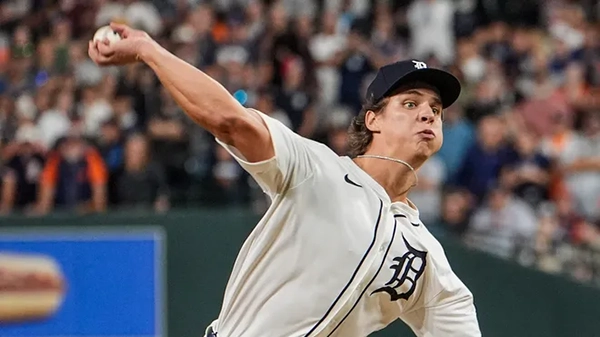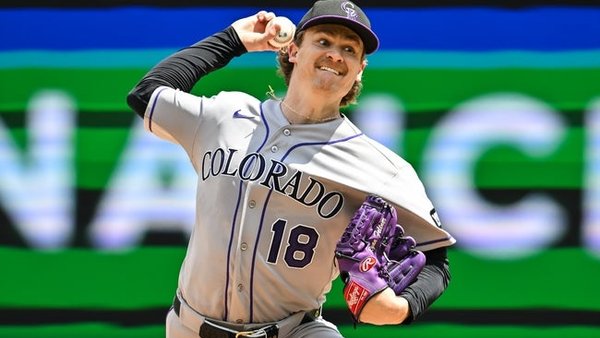
Two starters with ERAs north of 4.80 converge at the most run-inflated park in baseball, yet the posted total sits at 12 — a number the combined pitcher profiles and Coors Field’s 1.38 park factor both challenge. Feltner has surrendered 15 home runs in 70.2 innings at a neutral venue; Avila’s 1.574 WHIP signals free passes at an alarming clip. The number and the matchup are pointing in different directions.
Luinder Avila vs Ryan Feltner: Kansas City Royals at Colorado Rockies Betting Preview
Forget the Sugano illusion from Friday night. That 3-1 final was a function of one elite pitcher having a vintage outing — it has no predictive bearing on Saturday’s game, where two struggling starters will take the mound at the highest-scoring park in baseball. The market has posted a total of 12, which already acknowledges the Coors Field environment, but the numbers see 13.1 combined runs, and the ingredients on the field support that gap.
The core argument is simple: Luinder Avila carries a 4.81 ERA and 1.574 WHIP with 39 walks in 67.1 innings, and Ryan Feltner has surrendered 15 home runs in just 70.2 innings — a 1.91 HR/9 rate that becomes genuinely alarming when you factor in the altitude. Neither pitcher profiles as a run-suppressor. Both bullpens are short-handed. And the lineups, despite some recent offensive cold stretches, carry legitimate power threats in a venue that turns warning-track fly balls into souvenirs.
The over at -104 is essentially even money in a spot where the environmental and personnel signals align. That price isn’t screaming value, but the edge is real — and the under at -118 is asking you to pay a premium to fade two leaky starters at Coors Field.
Game Info & Betting Lines
- Date/Time: Saturday, August 1, 2026 | 8:10 PM ET
- Venue: Coors Field | Park Factor: 1.38 (highest in MLB)
- Probable Starters: Luinder Avila (KC, 5-3, 4.95 ERA) vs Ryan Feltner (COL, 3-5, 5.73 ERA)
- Moneyline: Kansas City Royals +106 / Colorado Rockies -114
- Run Line: Colorado Rockies +1.5 (-182) / Kansas City Royals -1.5 (+150)
- Total: 12 (Over -104 / Under -118)
Why This Number Is Off
The market isn’t ignoring Coors — a posted total of 12 is elevated by any standard. And the juice discrepancy is worth acknowledging honestly: the under is priced at -118 while the over sits at -104, which means the sharp-money lean in vig terms is technically toward the under. That’s a legitimate counterpoint, and it’s the kind of thing that should slow you down before clicking confirm.
But here’s the problem with the under at this number: it requires both starters to significantly outperform their season lines in the single most hitter-friendly environment in baseball. Avila’s 1.574 WHIP tells you hitters are reaching base at an alarming rate — 39 walks in 67.1 innings means free passes are baked into his innings. Feltner’s 1.91 HR/9 is the more terrifying number. Home runs are the single most reliable run-scoring event, and at Coors, where the thin air carries fly balls further, a pitcher who already surrenders nearly two per nine innings is a run-environment disaster waiting to happen.
Where the market is slightly wrong: a total of 12 may be pricing in some regression to the park mean after Friday’s 3-1 result, but that result was driven by an outlier pitching performance — not a sign that Coors has changed its character. The projection gap of 1.1 runs above the posted total is real, even if it’s not enormous. At near-even juice, that gap is enough.
What Separates the Pitching
Comparing Avila and Feltner head-to-head, this is not a matchup with a clear ace on either side — it’s two pitchers with different flavors of vulnerability converging at the worst possible venue for their respective weaknesses.
Avila works off a diverse arsenal but without elite velocity or swing-and-miss stuff to bail him out. His sinker sits at 91.4 mph and generates an xwOBA of .423 against — batters are making quality contact on his primary offering. His 4-seam fastball (91.7 mph, .372 xwOBA) and sweeper (.399 xwOBA) compound the contact problem. His best pitch by results is his curveball (.281 xwOBA, 18.2% whiff), but it’s only deployed 15% of the time. The walk rate — 39 free passes in 67.1 innings — means Colorado’s lineup doesn’t even need to beat him; they just need to be patient. Hunter Goodman (.469 xwOBA, 7.7% barrel rate) is the nightmare matchup here — his .455 xwOBA against right-handed pitching signals legitimate danger against Avila’s right-handed profile.
Feltner’s problem is different but equally damaging for the total. His four-seam fastball (91.6 mph, .409 xwOBA against, just 9.4% put-away rate) gets hit hard with almost no chase consequence. His knuckle curve is his best weapon — a 31.2% whiff rate and .351 xwOBA — but when his primary pitch is getting tattooed at a .409 clip, the strikeout tool alone won’t keep him out of trouble. Jac Caglianone (.461 xwOBA, 7.3% barrel, 33.6% hard-hit rate) is the most dangerous bat Kansas City deploys against Feltner, and that number projects significant damage potential even without Bobby Witt Jr. in the lineup.
The gap between these two arms isn’t dramatic — both project as run-allowing starters. But Feltner’s 15 home runs in 70.2 innings at a pitcher’s park is a number that transforms at altitude. At Coors, his fly-ball vulnerability isn’t just a liability; it’s a multiplier.
Run Environment & Game Shape
The structural case for the over comes down to three converging factors. First, the park: Coors Field’s 1.38 run factor is not an abstraction — it is the most run-inflating environment in baseball, and Friday’s low-scoring game was a product of Sugano’s excellence, not a park-level shift. Second, the pitching: two starters with ERA’s north of 4.80, combined walk and home run rates that fuel crooked innings, and bullpens already stretched by recent workloads. Third, the price: at -104, the over is near even money on a game where the numbers project 13.1 total runs against a posted line of 12. That 1.1-run gap at near-even money captures a real edge — and the over at -104 is the right side to be on.
Bet: Over 12 (-104) — 2 units.