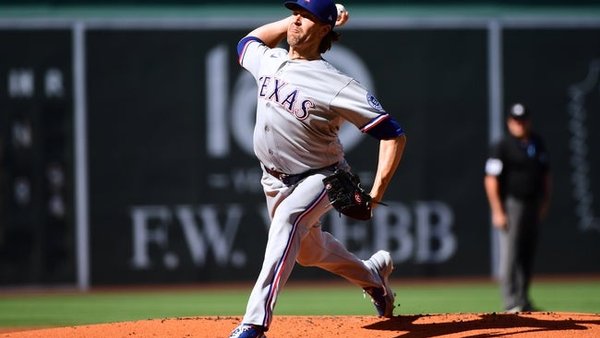
Jacob deGrom’s 29 walks in 113.2 innings is one of the cleanest command profiles in baseball — and he’s facing an Orioles lineup already missing Blaze Alexander and Samuel Basallo to injury. The combined run environment points to 9.2 runs, barely clearing a 7.5 total that demands real suppression to crack — and one elite arm may be enough to deliver it.
Kyle Bradish vs. Jacob deGrom: Baltimore Orioles at Texas Rangers Betting Preview
Yesterday’s 2-1 game in this same park, same series, sets the table perfectly. Texas won on a Joc Pederson two-run homer — one swing, one big inning, and that was the ballgame. Tonight, the pitching matchup shifts significantly, with deGrom taking the ball for the Rangers and Bradish answering for Baltimore. The market has set this total at 7.5, which on paper feels like a nod toward pitcher-driven baseball. What the market may not fully account for is just how compromised the Orioles’ lineup is and how dominant deGrom’s command profile actually is.
Baltimore is playing without Blaze Alexander (.807 OPS) and Samuel Basallo (.756 OPS) — both on the IL. Those aren’t peripheral pieces. That’s meaningful production stripped from a lineup that already posts just a .709 team OPS, the thinner of the two offenses in this game. When you factor in that the numbers point to a combined 9.2-run environment — barely clearing the 7.5 total — that slim margin is where the under becomes the lean. Even modest suppression from a pitcher of deGrom’s caliber tips the scales.
This isn’t a hammer spot. It’s a measured lean grounded in pitching quality, a depleted lineup, and a dome environment that removes weather as a scoring wildcard. Two sub-.500 teams, one elite arm, and a price of -110 on the under. That framing does the work here.
Game Info & Betting Lines
- Date/Time: Saturday, August 8, 2026 | 7:15 PM ET
- Venue: Globe Life Field (Dome) | Park Factor: 1.05 (marginally hitter-friendly)
- TV: MLB.TV, FOX
- Probable Starters: Kyle Bradish (BAL) vs. Jacob deGrom (TEX)
- Moneyline: Baltimore Orioles +128 / Texas Rangers -138
- Run Line: Texas Rangers -1.5 (+150) / Baltimore Orioles +1.5 (-182)
- Total: 7.5 (Over -110 / Under -110)
Why This Number Is Close
The oddsmakers know what they’re doing here. A 7.5 total with -110 juice on both sides tells you the market already expects a low-scoring game. deGrom is on the mound for Texas, Bradish is a legitimate mid-rotation arm, and neither offense is setting the league on fire. Baltimore’s run differential sits at -34, Texas at -32. These are not teams manufacturing crooked numbers on a nightly basis.
The legitimate case for the over is real: deGrom has allowed 16 home runs in 113.2 innings, an elevated rate that matters against any lineup with power threats. The Rangers themselves have legitimate bats — Pederson (.840 OPS, 20 HR), Langford (.806 OPS), and Duran (.787 OPS) can do damage. Bradish’s WHIP of 1.36 means he puts runners on base, and a team like Texas has the lineup depth to cash those opportunities. The over at -110 is a fair bet in a vacuum.
But here’s where I think the market is slightly off: the run-environment numbers assume a scoring context that deGrom’s actual command profile may not allow. His walk rate — just 29 walks in 113.2 innings — is one of the cleanest profiles in baseball. Fewer baserunners means fewer scoring chances, and against a Baltimore lineup missing two of its better hitters, the under side of that 9.2 combined-run estimate is the more credible landing spot.
What Separates the Pitching
The gap between these two starters is real, and it matters for how this game scores.
Jacob deGrom is operating at a different level of command. His four-seam fastball sits at 97.3 mph and accounts for 41.3% of his pitches, generating a 23.1% whiff rate. What makes that pitch work is what follows it — his slider at 91.2 mph draws whiffs on 36.6% of swings with an xwOBA against of just .251. The changeup is arguably even nastier in put-away situations, posting a 43.5% whiff rate and .246 xwOBA. When you look at how Baltimore’s top hitters profile against him, the matchup signals are telling: Tyler O’Neill carries an xwOBA of just .296 against right-handed pitching — deGrom’s handedness — while Jackson Holliday is 0-for-6 lifetime with three strikeouts in their head-to-head sample. Gunnar Henderson has the best BvP clip of the bunch, but his .306 xwOBA against lefties flips to .381 against righties — deGrom will attack that aggressively. The elite 10.69 K/9 means deGrom creates low-traffic innings, and low-traffic innings mean fewer runs.
Kyle Bradish is a credible arm but a different animal. His best weapon is the curveball at 84.6 mph, which generates a 40.6% whiff rate and holds hitters to a .253 xwOBA — legitimately elite. His sinker (33.7% usage, 94.7 mph) limits hard contact at a .303 xwOBA. The issue is traffic: a 1.36 WHIP means Bradish is putting baserunners on regularly. Corey Seager’s xwOBA against right-handed pitching sits at .425, and Brandon Nimmo — a left-handed bat facing a right-handed Bradish — carries a .463 xwOBA against RHP. Those are matchup vulnerabilities that could produce Texas runs. The pitching gap favors deGrom, but Bradish is good enough to keep the Rangers’ contribution honest.
The Pushback
The strongest case against the under starts with deGrom’s home run tendency. Sixteen home runs in 113.2 innings is an elevated rate, and the Globe Life Field park factor of 1.05 — marginally hitter-friendly even in a dome — doesn’t help. Pete Alonso is 5-for-5 with a home run in just five plate appearances against deGrom, and his .466 xwOBA with a 32.7% hard-hit rate makes him the most dangerous matchup in Baltimore’s lineup. One well-placed swing changes the calculus entirely. Bradish’s WHIP also points toward Rangers baserunners accumulating, and Texas’s lineup depth — Pederson, Langford, Seager, Nimmo across the top four spots — means those opportunities won’t be wasted by weak contact.
The counter is simple: Baltimore is already missing two meaningful lineup contributors, the team posts a -34 run differential on the season, and deGrom’s low walk rate actively suppresses the traffic that makes runs possible. Even if the Rangers generate some offense against Bradish, the Orioles’ ability to match it with this lineup configuration is limited. That asymmetry holds the under together.
The Lean
This is a 2-unit play on the under at -110, not a max bet. The raw numbers point toward a higher-scoring game than 7.5, but the real-world context — deGrom’s command, Baltimore’s depleted lineup, and the dome removing any weather variable — supports suppression. The under sits at the right price in a game where one elite arm can dictate the total on his own.
Bet: Under 7.5 (-110) — 2 units