Singer’s 5.38 ERA and 1.51 WHIP put him at a clear disadvantage against a Dodgers lineup that punishes right-handed pitchers — yet the posted total of 10.0 barely budges from the combined projection of 10.3. The moneyline is already priced beyond reach at -167, and Ohtani’s absence softens Los Angeles’ ceiling just enough to tilt the run environment in a different direction.
Justin Wrobleski vs. Brady Singer: Los Angeles Dodgers at Cincinnati Reds Betting Preview
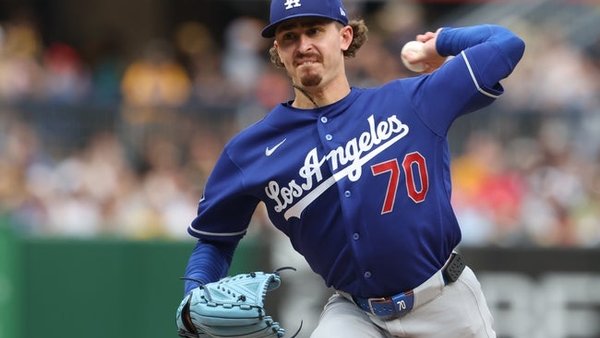
The Reds took yesterday’s game 6-2, handing the Dodgers a 6-2 loss, with Elly De La Cruz doing what he’s done all series — his 28th home run, his fifth of the season against Los Angeles specifically, put Cincinnati ahead to stay. But today the pitching matchup shifts dramatically, and that shift is where this betting decision lives. Justin Wrobleski (11-5, 3.78 ERA, 1.16 WHIP) against Brady Singer (6-14, 5.38 ERA, 1.51 WHIP) is not a competitive arms race. It’s a significant mismatch on the mound. The problem is that mismatch is already priced into a -167 moneyline that violates the juice ceiling, locking out the most direct expression of the edge. That forces a different question: given that we can’t back the Dodgers at that number, does the total offer a cleaner path?
The numbers project LAD 5.4, CIN 4.9 — a combined 10.3 against a posted total of 10.0. That’s barely above the number, not a screaming over signal. But Wrobleski’s ability to suppress a weak Reds offense, combined with the Dodgers operating without Shohei Ohtani (15-Day IL, biceps), creates a ceiling question on both sides. The under at -116 is the play — not because this game is destined to be low-scoring, but because the evidence tilts that way when you account for the pitching gap.
Game Info & Betting Lines
- Date/Time: Thursday, September 17, 2026 | 12:40 PM ET
- Venue: Great American Ball Park | Park Factor: 1.10 (hitter-friendly)
- Probable Starters: Justin Wrobleski (LAD) vs. Brady Singer (CIN)
- Moneyline: Los Angeles Dodgers -167 / Cincinnati Reds +138
- Run Line: Los Angeles Dodgers -1.5 (-105) / Cincinnati Reds +1.5 (-115)
- Total: 10.0 (Over -104 / Under -116)
Why This Number Is Close
The market has set this total at 10.0, and the honest answer is that it’s a reasonable number. Great American Ball Park carries a 1.10 park factor — hitter-friendly, and historically a place where runs tend to accumulate. Singer’s volatility is well-documented. The market is pricing in the legitimate possibility that the Dodgers tag Singer early, the Reds respond with their power threats, and this game gets into the bullpens in a hurry with both offenses producing.
The legitimate case for the over: Singer’s 30 home runs allowed in 150.2 innings are not an anomaly. The Dodgers carry real pop — Max Muncy (.419 xwOBA, 28 HR), Teoscar Hernández (.426 xwOBA, 15 HR), Freddie Freeman (.405 xwOBA) — and Singer’s sinker-heavy approach (50.6% usage at 91.2 mph, .364 xwOBA against) tends to induce weak contact but leaks when the pitch misses location. The over at -104 is actually the cheaper side of this total.
But here’s the problem: the component scores sum to 10.3 combined — only 0.3 runs above the posted total. That gap is noise, not signal. Meanwhile, Wrobleski’s peripherals argue for genuine suppression on the Reds’ half — and Ohtani’s absence softens the Dodgers’ ceiling meaningfully. The under at -116 isn’t a steep price for a lean that the numbers essentially confirm. The market is balanced, but slightly too generous to the over given who’s starting for Los Angeles.
What Separates the Pitching
The gap between these two starters is real and it matters for how you frame this total. Wrobleski builds innings on the back of a 4-seam fastball at 94.6 mph deployed 48.6% of the time, generating a .308 xwOBA against and a 21.9% whiff rate. He pairs it with a slider (28.6% usage, .320 xwOBA, 19.2% whiff) that keeps hitters uncomfortable against the same look. His WHIP of 1.16 reflects genuine contact management — he’s not surviving on strand rate. His 21 home runs allowed in 133.1 innings is manageable given that the Reds rank outside the top tier in hard contact outside of De La Cruz and Sal Stewart.
Singer is a different story. His primary weapon is a sinker he leans on more than half the time, but that pitch produces a .364 xwOBA against — above average for a ground-ball inducer. The sweeper (13.2% usage, 37.6% whiff, .298 xwOBA) is his best pitch, but it’s a distant secondary option. The slider (27.7% usage, .330 xwOBA) is serviceable, yet Singer’s 56 walks and 1.51 WHIP show what happens when he can’t locate: runners accumulate and the pitch count climbs. Freddie Freeman’s .410 xwOBA versus right-handed pitching and Teoscar Hernández’s .401 xwOBA-vs-RHP profile both target what Singer is most vulnerable to.
The relevant gap for the total is this: Wrobleski creates outs efficiently, limits damage, and keeps pitch counts clean. Singer creates traffic and danger on every inning. The asymmetry means the Dodgers’ half of the game stays more contained than the Reds’ half, but even Singer’s volatility has a cap when the Dodgers are missing their most dangerous bat in Ohtani.
The Pushback
The strongest argument against the under starts and ends with Elly De La Cruz. His .488 xwOBA and 9.6% barrel rate make him the most dangerous hitter in this park against anyone. He hit his 28th homer Wednesday — his fifth of the season specifically against Los Angeles — and his splits show no meaningful platoon gap: .485 xwOBA vs. lefties, .489 vs. righties. Wrobleski is right-handed, which means De La Cruz gets no relief in the matchup. One swing can single-handedly push this game toward the over, and De La Cruz has demonstrated all series that he treats Dodgers pitching like a personal punching bag.
The run line also tempts here. If Singer implodes early and the Dodgers build a lead, the Reds’ power bats could make a game of it and push the total over without either team needing to have a great offensive night. De La Cruz plus Sal Stewart (.410 xwOBA) in the middle of that Cincinnati lineup gives the Reds two legitimate over threats even in a losing effort.
But the pushback doesn’t fully kill the under thesis. De La Cruz is one hitter in a lineup where the rest of the Reds’ order profiles as decidedly below average against quality pitching. Dane Myers (.355 xwOBA), Ke’Bryan Hayes (.345 xwOBA), and Matt McLain at the bottom offer Wrobleski legitimate outs to work through. The Dodgers, meanwhile, lose Ohtani — a bat that would have been Singer’s biggest problem — and their lineup shuffles around a gap they can’t fully replace. The 10.3 combined projection barely clears the posted number, and Wrobleski’s suppression edge on the Reds’ half is the real anchor of this play.
Run Environment & Game Shape
Great American Ball Park’s 1.10 park factor creates real amplification risk — it’s not a neutral site. When Singer is leaking walks and runs are accumulating, the park factor turns a 5-run inning threat into something closer to a 6-run reality. The Reds’ bullpen (team ERA 4.85) isn’t a shutdown unit either, so if Singer exits early, the runs-allowed ceiling climbs further on the Cincinnati side.
That said, the game shape that benefits the under is a Wrobleski-dominant first five innings keeping the Dodgers’ half quiet — and the numbers suggest that’s the likelier outcome. Wrobleski’s 3.78 ERA and 1.16 WHIP in 133.1 innings aren’t flukes; they reflect a starter who genuinely limits traffic. If Singer implodes by the fourth, the environment amplifies the damage. The under survives that scenario only if the Dodgers bank their runs efficiently rather than in one crooked-number explosion — which, without Ohtani, is a real possibility for a lineup that tends to grind rather than mash.
Ultimately, the case for the under is a convergence of modest signals rather than one dominant factor: Wrobleski’s genuine suppression edge on the Reds’ half, Ohtani’s absence capping the Dodgers’ ceiling, and a projected combined total of 10.3 that barely clears the posted number. That 0.3-run margin is too thin to confidently back the over at any price. The under at -116 is a reasonable ask for a lean that the components support, even accounting for De La Cruz’s threat and Singer’s volatility.
Bet: Under 10.0 at -116 | 2 units | Moderate confidence