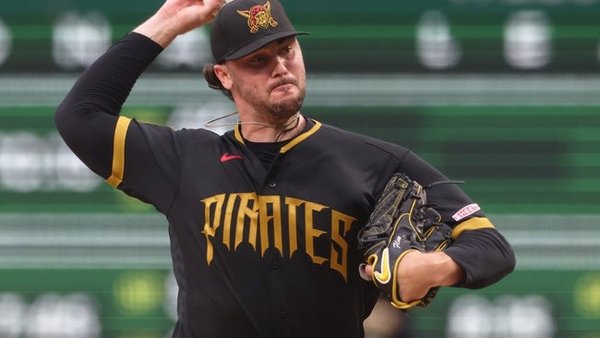
Paul Skenes brings a 10.28 K/9 into a matchup against a Kansas City lineup with 1,198 team strikeouts and a .711 OPS — the kind of collision that should pull a total down, not anchor it at 8.0. The number reflects two moderate offenses and a pitcher-friendly park, but it hasn’t fully accounted for how dominant Skenes can be against exactly this type of contact-light, strikeout-heavy lineup.
Randy Dobnak vs Paul Skenes: Kansas City Royals at Pittsburgh Pirates Betting Preview
The posted total of 8.0 is where the market landed — two teams with moderate offenses, a pitcher-friendly park, and starters who have kept runs off the board. But the market is balancing a lot of noise here: late-season irrelevance for Kansas City, Pittsburgh’s fading playoff hopes, and a Royals roster that is considerably more depleted than the surface numbers suggest. Strip away the context and you’re left with one of the better arms in the National League going up against one of the weaker offensive units in baseball.
Paul Skenes is the engine of this thesis. His 10.28 K/9 over 162.0 innings isn’t a small-sample anomaly — it’s a sustained, season-long demonstration of a pitcher who misses bats at an elite rate. Pair that strikeout profile with Kansas City’s 1,198 team strikeouts, and the matchup creates a genuine suppression environment for the Royals’ half of every inning.
The Kansas City offense arrives in Pittsburgh having just dropped a 6-2 decision to Houston, and their season-long .711 OPS is the weaker of the two team profiles in this game. Randy Dobnak has been serviceable enough to keep Pittsburgh’s half quiet, too. The under at -114 is the cleanest expression of a pitching-driven thesis that neither moneyline nor run line captures efficiently.
Game Info & Betting Lines
- Date/Time: Friday, September 18, 2026 — 6:40 PM ET
- Venue: PNC Park | Park Factor: 0.96 (pitcher-friendly)
- TV: MLB.TV, Royals.TV
- Probable Starters: Randy Dobnak (KC) vs Paul Skenes (PIT)
- Moneyline: Kansas City Royals +157 / Pittsburgh Pirates -191
- Run Line: Pittsburgh Pirates -1.5 (+114) / Kansas City Royals +1.5 (-138)
- Total: 8.0 — Over -106 / Under -114
Why This Number Is Close — But Still Off
The market has set 8.0 with a reason. The numbers project a combined 8.7 runs, which means the posted total is already sitting below that expectation. On paper, that argues for the over. The Royals have shown they can score — KC put up five runs against Houston just two nights ago — and Pittsburgh’s lineup has legitimate power, including Brandon Lowe‘s 31 home runs and Oneil Cruz‘s .503 xwOBA. The case for the over is real and shouldn’t be dismissed.
But here’s the problem with leaning on that projection too heavily: the 8.7 combined estimate is weighted toward Pittsburgh’s offense producing in the mid-4s. Skenes doesn’t give up 4+ runs to a lineup like Kansas City’s often. The Royals are 67-86 with a -97 run differential, and their team OPS of .711 ranks among the weakest offensive environments you’ll find at this point in the season. The market has priced in some suppression at -114 on the under, but not enough to reflect how dominant Skenes can be against a strikeout-heavy, low-slug lineup.
PNC Park’s 0.96 run factor doesn’t create dramatic suppression on its own, but it nudges the environment in the right direction. Combined with what Skenes does to weak contact, the total looks one run too generous for what the pitching situation actually supports.
What Separates the Pitching
The gap between these two starters is real, and it’s measured in more than ERA. Paul Skenes operates with a 96.8 mph four-seam fastball that he throws 40.7% of the time — and that pitch produces a 26.7% whiff rate with an xwOBA-against of .280. That’s a put-away pitch, not just a count pitch. He layers in a sweeper at 84.3 mph (.239 xwOBA against), a changeup at 88.7 mph that generates a 32.9% whiff rate, and a slider sitting at 86.7 mph with a 33.3% whiff rate. The arsenal is deep, the command is sound — 46 walks over 162.0 innings — and the K/9 of 10.28 is the headline number that matters most against this lineup.
Kansas City’s top hitters struggle against that profile. Carter Jensen carries a 27.7% strikeout rate. Jac Caglianone punches out 27.0% of the time. Even Bobby Witt Jr., the best bat in the KC lineup with a .429 xwOBA, carries a 22.9% season whiff rate that Skenes’ velocity profile can pressure.
Randy Dobnak works a completely different approach — a ground-ball sinker at 91.6 mph that he throws 38.6% of the time (xwOBA against .371), complemented by a sweeper at 82.4 mph (29.8% whiff, .349 xwOBA) and a changeup that generates 28.5% whiffs and posts a .251 xwOBA against. Dobnak’s 2.73 ERA over 69.1 innings is genuinely impressive for the sample he’s worked, and his WHIP of 1.27 suggests he’s keeping baserunners manageable. Pittsburgh’s lineup has power — Cruz’s .503 xwOBA and Flores Jr.’s 7.2% barrel rate are legitimate threats — but Dobnak’s ground-ball profile and Pittsburgh’s own 1,429 team strikeouts create enough friction to keep their run total in check. The gap between the starters is significant on paper, but Dobnak’s performance this season makes KC’s half of the inning look quiet, not wide open.
The Pushback
The concern I can’t completely dismiss is Kansas City’s bullpen situation. With Carlos Estevez, Nick Mears, Connor Seabold, and Beck Way all on the IL, the Royals’ relief corps is running thin. If Dobnak exits early — and at 69.1 innings of work heading into late September, there’s no guarantee of a deep outing — the Pittsburgh lineup could do real damage against depleted arms. Cruz’s 33.8% K rate cuts both ways: he’s a strikeout waiting to happen, but he’s also one of the few hitters in this game capable of turning a 2-1 game into a 4-1 game with a single swing.
Pittsburgh’s power production is also worth flagging. The Pirates have hit a franchise-record 175 home runs this season, and Brandon Lowe (31 HR) and Oneil Cruz (19 HR) represent genuine over threats even against a ground-ball pitcher. Dobnak is a small-sample story — 69.1 innings doesn’t guarantee the ERA holds — and if the Pirates get to him early, the under thesis unravels quickly.
The counter to all of this is Skenes. When one pitcher in a game is posting 10.28 K/9 against a lineup with 1,198 team strikeouts, the total has a natural ceiling. The Pirates would need to significantly outperform their half of the game to compensate for what Skenes figures to do to the KC order, and that’s a tough ask even with bullpen exposure acknowledged.
The Rejected Angles
The Pirates moneyline at -191 exceeds the juice threshold where the value evaporates. You’re laying nearly two dollars to win one against a team that, however weak, has won 67 games and has a functional roster. The implied probability doesn’t justify the price, and a Skenes stumble or early KC crooked number makes that bet look very bad very fast.
The run line at Pittsburgh -1.5 (+114) requires a blowout path that Dobnak’s performance this season partially closes. He’s been too effective to simply assume Pittsburgh rolls to a multi-run cushion. The positive juice is appealing, but the path to covering -1.5 demands more than a pitching mismatch — it demands a Royals offensive collapse and a Pirates offense that doesn’t get strand-happy with runners against a ground-ball pitcher. Too many conditions.
Run Environment & Game Shape
The expected game shape here is pitcher-driven from the first inning. Skenes figures to log 6-7 innings — his 162.0 innings on the season show no sign of a workload curtailment — and the KC lineup’s strikeout profile means his pitch count stays manageable against a lineup that doesn’t work deep counts consistently. The Royals’ .711 OPS and 1,198 team strikeouts paint a picture of an offense that gets through an at-bat quickly and rarely manufactures crooked numbers against quality pitching. Dobnak’s side of the ledger is quieter than his ERA suggests it should be for a pitcher of his profile, and while Pittsburgh’s power is real, their 1,429 team strikeouts indicate an all-or-nothing offense that can be contained when pitchers execute.
Bullpen exposure exists on both sides — Kansas City’s relief corps is especially thin given the IL casualties — but the window of risk is limited. Skenes eating 6-7 innings compresses that exposure significantly, and what remains is a late-game environment where both bullpens are working in a relatively low-scoring context. PNC Park at 0.96 doesn’t create offense out of nothing, and nothing about this matchup screams that runs will come in bunches. The game shape points under, the pitching matchup supports it, and 8.0 is one run too many given what Skenes does to lineups like Kansas City’s.
Bet: Under 8.0 at -114 for 2 units.