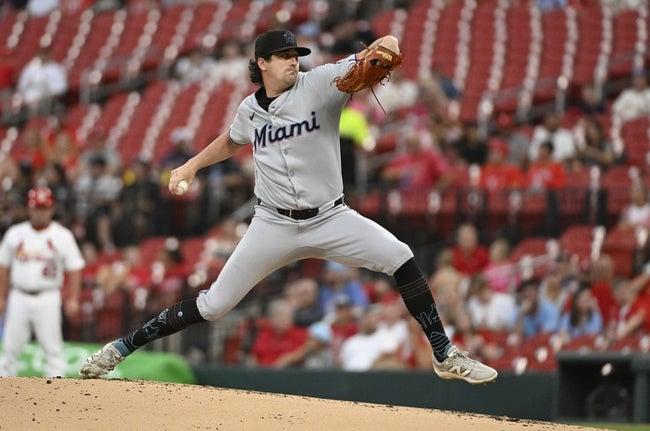
Cal Quantrill’s 2.90 ERA and 1.05 WHIP represent a genuine starter-level edge over Jose Soriano’s 1.27 WHIP and 72 walks surrendered — yet the market still has Toronto installed as a -125 favorite. The pitching profiles point one way; the number does not.
Jose Soriano vs Cal Quantrill: Toronto Blue Jays at Texas Rangers Betting Preview
The market is pricing this like a standard home-underdog spot, leaning Toronto at -125 based largely on the Blue Jays’ AL champion pedigree and their modest moneyline edge. But pedigree is a lagging indicator in late September, and what’s actually happening on the field in 2026 tells a different story. Texas just demolished Toronto 7-1 in Game 1 of this series — five of those runs unearned, the result of three throwing errors and 10 walks surrendered by a Blue Jays pitching staff that looked rattled from the second inning on.
The core argument here isn’t about last night’s blowout. It’s about a pricing inefficiency driven by the pitching matchup the market appears to be underweighting. Cal Quantrill brings a 2.90 ERA and 1.05 WHIP — among the cleanest command profiles in this game — against a Toronto lineup already showing cracks. Meanwhile, Jose Soriano carries a 1.27 WHIP and has issued 72 walks in 169.1 innings, a 3.83 BB/9 rate that will stress any defense. Getting the Rangers at +104 feels like the market forgot to look at who’s on the mound.
Game Info & Betting Lines
- Date/Time: Saturday, September 19, 2026 | 7:05 PM ET
- Venue: Globe Life Field (Dome — weather-neutral; Park Factor 1.05, slight hitter-friendly lean)
- TV: MLB.TV, Rangers Sports Network, Sportsnet, TVA
- Probable Starters: Jose Soriano (TOR) vs Cal Quantrill (TEX)
- Moneyline: Toronto Blue Jays -125 / Texas Rangers +104
- Run Line: Texas Rangers +1.5 (-170) / Toronto Blue Jays -1.5 (+140)
- Total: 8.0 (Over -115 / Under -105)
Why This Number Is Off
The market’s logic is understandable on the surface. Toronto entered the season as AL champions, their rotation has a lower ERA (3.91 vs. Texas’s 4.28), and home-underdog spots are notoriously tricky to price. The Blue Jays at -125 reflects all of that — the market isn’t being lazy, it’s accounting for real factors.
But here’s the problem: the market is leaning on team-level pitching ERA while ignoring what’s actually happening in this specific start. Soriano’s 3.56 ERA is solid, but his 1.27 WHIP and 72 walks tell a different story about base-runner environment. Quantrill’s ERA advantage is nearly a full run, and his WHIP gap over Soriano is enormous — 1.05 vs. 1.27. That’s not a coin-flip matchup; that’s a meaningful starter edge buried under team-level noise.
The Rangers also carry a .716 OPS vs. Toronto’s .693 OPS, with a real advantage in on-base percentage (.318 vs. .310) and home runs (174 vs. 148). When you run the numbers on a near-coin-flip game — Texas comes out at 58% win probability — getting the home team at +104 represents roughly a 7-8% implied probability advantage over the market. That’s the inefficiency worth targeting.
What Separates the Pitching
The gap between these two starters is real, and it lives primarily in command and contact quality. Quantrill has walked just 25 batters in 108.2 innings — an elite 2.1 BB/9 that generates quick, low-leverage counts. His Statcast arsenal is built around weak contact: his sinker (25.1% usage, 94.0 mph) produces a .287 xwOBA, his split-finger (22.8% usage, 84.6 mph) limits hitters to a .266 xwOBA with a 25.0% whiff rate, and his curveball generates a .246 xwOBA. The one concern in his arsenal is the cutter — a .430 xwOBA against suggests Toronto’s lineup could tee up that pitch, particularly Kazuma Okamoto, whose .428 xwOBA and 33 home runs make him the most dangerous bat in this game.
Soriano is a different animal. He throws hard — his four-seamer sits at 97.2 mph and his sinker at 96.4 mph — and his knuckle curve is genuinely wipeout stuff (40.5% whiff rate, .274 xwOBA). His split-finger is also effective at .250 xwOBA with a 30.4% whiff rate. The problem isn’t stuff — it’s command. At 3.83 BB/9, he consistently loads the bases, and against a Rangers lineup built on patience (.318 OBP), that’s a combustible combination. Corey Seager’s .416 xwOBA and 8.0% barrel rate profile him as the most dangerous matchup in the Rangers’ order against Soriano’s high-velocity attack — 14 plate appearances of BvP history, a .333 average, and one home run already on the ledger. Wyatt Langford is also a concern at .500 in 8 BvP plate appearances, suggesting he reads Soriano well. The type of innings each pitcher creates diverges sharply: Quantrill pitches to contact and gets outs efficiently; Soriano pitches to volume, generates swing-and-miss, but leaks runners who turn into runs.
The Pushback
The concern that weighs on me most is Joc Pederson. He’s listed day-to-day with a hand injury, and there’s real uncertainty about whether he suits up tonight. Pederson isn’t the top weapon in this lineup — Seager’s .416 xwOBA grades out well above him, and Justin Foscue’s .403 xwOBA also edges him — but Pederson is a genuine depth threat with legitimate pop: a .402 xwOBA, 26 home runs, a 5.7% barrel rate, and a 31.1% hard-hit rate. As a lefty DH with pull power against a right-handed sinker-baller like Soriano, he represents a meaningful lineup piece whose absence reduces Texas’s threat ceiling even if it doesn’t eliminate the team’s primary weapons. If he’s out, the order loses a high-leverage middle-of-the-lineup bat and becomes incrementally easier to navigate. That matters, but it doesn’t flip the pitching edge.
On the run line: Texas +1.5 at -170 is a price I’m not willing to pay here. This projects as a near-coin-flip game, and laying -170 to cover a single run in a tight spot erodes value in a hurry. If you believe in Texas, the moneyline at +104 is the efficient expression of that belief — you’re not giving back half your edge to a run-line price that assumes far more separation than the numbers support. The moneyline is the play.
The broader counter-case is Toronto’s situational urgency. The Blue Jays are 76-78, two games out of the final wild-card spot, and with just eight games left, they’re essentially in elimination mode. Playoff urgency has a real way of sharpening focus and raising effort level — especially for a roster that knows what’s at stake. On the other side, Texas is 77-77, one game out, and playing at home after a momentum-building 7-1 win last night. Both teams need this game. The edge doesn’t evaporate because of narrative pressure, but it’s worth acknowledging that Toronto won’t be rolling over.
Momentum & Context
Texas is 6-4 over its last 10, has won four of its last five, and just reached .500 for a major-league-leading 23rd time. The Rangers are playing with genuine energy right now — the kind that comes from a team that spent months chasing .500 and finally finding footing in late September. Toronto, meanwhile, is 4-6 over its last 10, just got hammered 7-1, and watched Kazuma Okamoto commit two throwing errors in that game. A team playing tight defense when its margin for error is smallest is a team that may be feeling the weight of the moment.
Globe Life Field’s dome neutralizes weather as a variable entirely. The 1.05 park factor introduces a slight hitter-friendly lean — not enough to move the needle dramatically, but meaningful when both offenses are projecting to be active.
Run Environment & Game Shape
The total is set at 8.0, and with Quantrill’s contact-management profile working against a Toronto lineup that ranks toward the bottom of the AL in OPS (.693), the Rangers’ half of this game should be the higher-leverage offensive environment. Soriano’s walk rate ensures that Texas will see plenty of baserunners, and a lineup with Seager (.416 xwOBA), Jung (.387 xwOBA), and Langford (.361 xwOBA) is well-positioned to capitalize on traffic. That tight run environment also reinforces the moneyline-only approach — in a game projected this close, you want clean plus-money exposure, not run-line risk at a price that assumes a blowout.
The Play
Texas Rangers moneyline +104 — 2 units, moderate confidence.
The case comes down to two things: a genuine pitching edge and plus-money pricing on the better side. Quantrill’s 1.05 WHIP against Soriano’s 1.27, combined with a 2.1 BB/9 vs. 3.83 BB/9 command gap, gives Texas a real structural advantage in run prevention tonight. Pair that with a Rangers offense that carries a .716 OPS and a .318 OBP — a lineup built to punish a pitcher who leaks walks — and the numbers point clearly home. Getting the better-staffed, better-hitting team at plus money in a game that figures to be close is exactly the kind of spot worth pressing. Bet the Rangers.