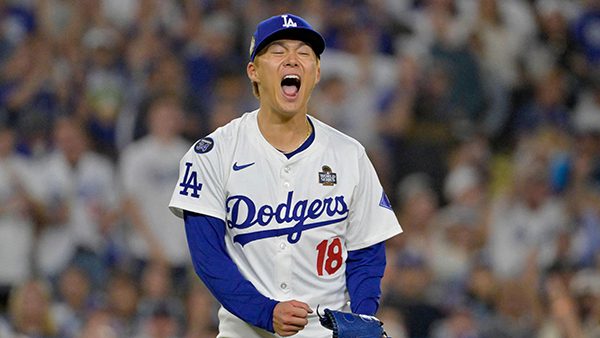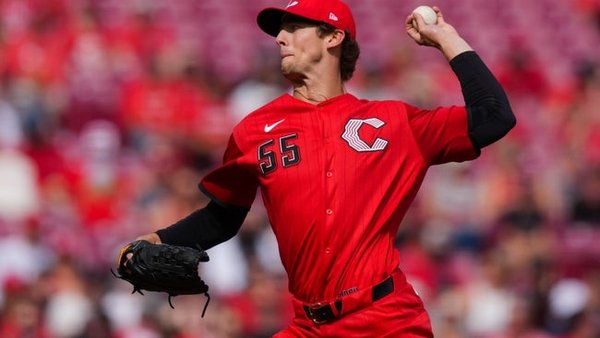
Brandon Williamson’s .587 xwOBA sinker is walking into a lineup featuring Olson, Acuña, and Baldwin — all sitting north of .430 xwOBA against right-handed pitching. The total sits at 9.0, but a projected run environment of 9.7 and two relief anchors missing from Atlanta’s bullpen say the market has left something on the table here.
Brandon Williamson vs JR Ritchie: Cincinnati Reds at Atlanta Braves Betting Preview
The market has set the total at 9.0 for a matchup that puts two of the NL’s leakier starters on the same mound on the same night. Brandon Williamson carries a 5.56 ERA and 1.53 WHIP into Truist Park, facing an Atlanta lineup that has been one of the most dangerous in the National League all season. On the other side, JR Ritchie — the home starter — isn’t much of a stabilizing force either, posting a 5.03 ERA and 1.47 WHIP across 62.2 innings. Neither arm projects as a run-suppressor tonight, and the question worth asking is whether 9.0 adequately accounts for everything broken in this pitching matchup.
The price on the Over is -120. That’s not cheap, but when two starters profile as walk machines who allow hard contact, the over at this number deserves serious attention. I looked hard at Atlanta -193 on the moneyline — the Braves are clearly the superior team — but at that price, the juice blows past any reasonable value threshold. The Over is the correct vehicle here.
Game Info & Betting Lines
- Date/Time: Tuesday, September 22, 2026 | 7:15 PM ET
- Venue: Truist Park (Park Factor: 1.01 — neutral/slight hitter tilt)
- Probable Starters: Brandon Williamson (CIN) vs JR Ritchie (ATL)
- Moneyline: Cincinnati Reds +158 / Atlanta Braves -193
- Run Line: Atlanta Braves -1.5 (+109) / Cincinnati Reds +1.5 (-131)
- Total: 9.0 (Over -120 / Under +100)
Why This Number Is Off
The market is balancing two legitimate concerns when setting this at 9.0. First, Cincinnati’s lineup is built for strikeouts — 1,482 Ks on the season, ranking among the NL’s highest. If Ritchie is locating his curveball (25.2% usage, 29.9% whiff rate) and changeup (18.3% usage, 24.0% whiff rate), he can quiet a Reds lineup that doesn’t make consistent contact (.229 AVG). Second, Williamson’s sweeper generates a 32.8% whiff rate and his cutter sits at 31.4% usage — there are genuine put-away pitches in the mix even for a guy walking the park.
Those are real factors. The 9.0 isn’t a number pulled from thin air.
But here’s where the market undersells the scoring potential: Williamson’s four-seam fastball and sinker are disasters. His four-seamer carries a .557 xwOBA against with only a 2.2% put-away rate. His sinker is even worse at .587 xwOBA. That’s batting-practice territory against a lineup with Matt Olson (.438 xwOBA, 40 HR), Ronald Acuña Jr. (.431 xwOBA), and Drake Baldwin (.436 xwOBA) sitting in the top three spots — all of whom post xwOBA north of .430 against right-handed pitching specifically. When Williamson misses his cutter command — which his 27 walks in 43.2 innings suggests happens often — he’s exposing those flat fastballs to the most dangerous part of Atlanta’s order. Every walk Williamson issues is a potential crooked-number inning waiting to happen. The Under at +100 with no juice tells you the market isn’t strongly committed to the low-scoring scenario either.
What Separates the Pitching
Both starters create high-baserunner innings, but the mechanisms differ — and so does the damage potential against each lineup. The key connective tissue for the Over is this: neither pitcher profiles as someone capable of surviving a mistake-filled stretch, and both are demonstrably prone to those stretches.
Williamson’s core problem is a walk-and-contact combination that’s hard to survive. At 27 walks in 43.2 innings (5.57 BB/9) with 8 home runs allowed at 1.65 HR/9, he consistently puts runners on base and then serves up balls that leave the yard. His cutter and sweeper can generate whiffs, but those pitches only work when he has count leverage — which free passes constantly undermine. Against Atlanta’s top-of-order, Olson’s .455 xwOBA vs right-handed pitching and Baldwin’s .457 xwOBA vs righties amplify every mistake. Acuña has homered in three of his last four games. This is not an ideal time for a pitcher with a .557 xwOBA on his primary fastball to be walking hitters into scoring position in front of that trio. Williamson’s profile doesn’t just make Atlanta likely to win — it makes a multi-run inning likely, which is exactly what feeds the Over.
Ritchie is a different pitcher but arrives at a similar destination for the Over thesis. His curveball and changeup give him more bat-missing capacity — his K/9 of 8.33 dwarfs Williamson’s 6.39 — but his 38 walks in 62.2 innings (5.46 BB/9) create the same baserunner accumulation problem. His cutter, at a .440 xwOBA against, is his most hittable pitch. Cincinnati’s Sal Stewart (.415 xwOBA, 32 HR) and Elly De La Cruz (.487 xwOBA) present genuine power threats when Ritchie loses the zone — and with a 5.46 BB/9, losing the zone is part of his regular operating procedure. The key difference is that Atlanta’s confirmed lineup contributors — Olson (.830 OPS), Acuña (.815 OPS), Baldwin (.812 OPS), Harris (.804 OPS), and Dubón (.712 OPS) — form a deeper and more consistent band of damage than Cincinnati’s order, which carries more volatility and strikeout risk top to bottom.
The pitching gap here isn’t about who’s dominant. It’s about which starter runs into a bigger inning faster — and both of their profiles suggest it happens early and often. That’s the Over argument, not just the Atlanta-wins argument.
The Pushback
The honest concern here starts with Cincinnati’s strikeout profile. A lineup that has posted 1,482 strikeouts against Ritchie’s 8.33 K/9 and three-pitch mix is a real mismatch. If Ritchie locates his curveball early and forces the Reds to chase, Cincinnati could go 3-and-out through multiple innings — which is exactly what you don’t want to see when betting the over. Juan Brito’s .225 xwOBA vs right-handed pitching and Carlos Jorge’s .289 xwOBA vs righties at the top of the order for Cincinnati don’t inspire confidence that the Reds will solve Ritchie before he settles in.
The other pushback is game shape. If Atlanta jumps out to a 4-0 or 5-1 lead early — which Williamson’s profile makes plausible — both managers may go to their pens sooner than expected. A shorter leash on Williamson limits Cincinnati’s at-bats against him, and if Atlanta’s relievers are healthy and locked in, the back half of this game could run dry. That’s a 5-3 game shape that doesn’t clear 9.0.
I take those concerns seriously. But neither of them eliminates the Over case — they just require both pitchers to avoid their worst tendencies simultaneously, and the walk and HR rates say that’s unlikely for a full game.
Run Environment & Bullpen Context
Truist Park’s 1.01 park factor is effectively neutral — it’s not artificially suppressing runs the way some environments do. That matters because it means the scoring potential embedded in both pitching profiles isn’t being discounted by the venue. What the numbers project for combined run output in this environment is 9.7 — a full seven-tenths above the posted total. That gap is the edge.
The bullpen picture reinforces it. Atlanta is without Reynaldo Lopez (15-Day IL, shoulder) and Robert Suarez (60-Day IL, elbow) — two of their most reliable late-inning arms. That’s meaningful in a game where Ritchie’s 5.46 BB/9 makes it likely he doesn’t finish six clean innings. If Atlanta is turning to a depleted pen in the fifth or sixth with runners on base, the back-end run prevention that might otherwise cap this game at 7-8 is simply not available at full strength. Cincinnati is also missing Julian Garcia from their bullpen. Both late-inning pictures are compromised, which is a structural tailwind for the Over in any close or high-leverage late-game scenario.
Joe Jensen’s Pick
I considered the Atlanta moneyline and rejected it — -193 is beyond the value ceiling for any team, regardless of how lopsided the matchup is. The Over is the right play.
The numbers project 9.7 combined runs. The posted total is 9.0. Williamson’s fastball (.557 xwOBA) and sinker (.587 xwOBA) are generational contact pitches walking into one of the NL’s most dangerous top-of-orders. Ritchie’s 5.46 BB/9 ensures Atlanta’s pen — already missing Lopez and Suarez — gets tested before this game is decided. Truist Park isn’t saving anyone. The Under at a flat +100 tells you the market isn’t even confident in its own number.
Two starters with a combined 65 walks and 19 home runs allowed in under 107 innings, a park factor of 1.01, and two compromised bullpens. The only way this stays under 9.0 is if both pitchers find command they haven’t demonstrated all season. That’s not a bet I’m willing to make against them.
Bet: Over 9.0 (-120), 2 units, moderate confidence.