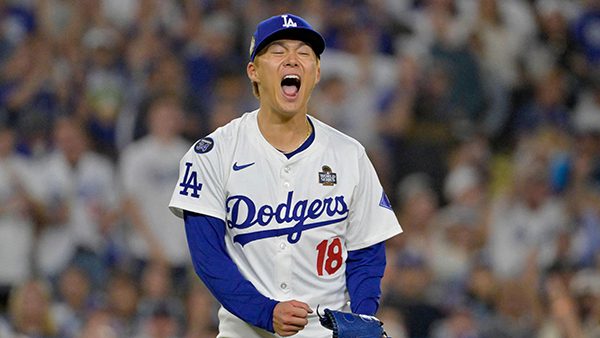
Yoshinobu Yamamoto’s 2.51 ERA against Michael King’s 1.33 WHIP and 83 walks in 162.1 innings is a genuine pitching gap — yet the Dodgers are priced at just -120. Ohtani’s IL stint is already baked into that number; what it hasn’t fully absorbed is how precisely the Dodgers’ lineup is built to punish King’s leaky fastball command.
Michael King vs. Yoshinobu Yamamoto: San Diego Padres at Los Angeles Dodgers Betting Preview
The market is offering Los Angeles at -120 on a night when Yoshinobu Yamamoto — one of the best starters in baseball with a 2.51 ERA — is toeing the rubber at Dodger Stadium against a San Diego club that needs every win it can get. That price looks palatable, maybe even generous, once you strip away the noise around Shohei Ohtani’s absence and the Padres’ recent hot streak. The juice clears the threshold that keeps this bet actionable, and the underlying quality gap between these rosters is not subtle.
San Diego enters Tuesday at 9-1 in their last ten games with a magic number of two for a wild-card berth. That kind of urgency earns real respect. But momentum is a narrative, not a handicapping tool. What actually drives the outcome here is a meaningful pitching edge, a superior offensive infrastructure, and a run differential gap — +193 for Los Angeles versus +41 for San Diego — that tells you everything about the full-season quality separation between these clubs.
The Dodgers are 96-60. They’ve already clinched the NL West. They know this opponent. And tonight, they’re sending out their best arm.
Game Info & Betting Lines
- Date/Time: Tuesday, September 22, 2026 | 10:10 PM ET
- Venue: Dodger Stadium (Park Factor: 0.98 — neutral, slight pitcher lean)
- TV: MLB.TV, TBS, SportsNet LA, Padres.TV
- Probable Starters: Michael King (SD) vs. Yoshinobu Yamamoto (LAD)
- Moneyline: San Diego Padres +100 / Los Angeles Dodgers -120
- Run Line: Los Angeles Dodgers +1.5 (-200) / San Diego Padres -1.5 (+164)
- Total: 8.0 (Over -115 / Under -105)
Why This Number Is Close — But Not Wrong
The market’s hesitation to price the Dodgers heavier than -120 makes sense on the surface. Ohtani is on the 15-day IL with a biceps issue, removing the most dangerous bat in baseball from an already potent lineup. Kyle Tucker is listed day-to-day with a knee ailment. Two elite offensive contributors potentially missing from the same club in the same game is a legitimate reason to keep the number tight.
San Diego’s case is real too. Michael King’s ESPN ERA of 3.03 suggests his recent outings have been sharper than his season-long 3.60 ERA indicates. The Padres are playing with genuine purpose, not just running through September — they could clinch a playoff spot Tuesday night at Dodger Stadium, which is the kind of moment that focuses a clubhouse.
But here’s the problem with anchoring to those narratives: King’s underlying numbers still show systemic vulnerability. His 1.33 WHIP and 83 walks in 162.1 innings mean he consistently puts traffic on the bases — and the Dodgers lineup, even without Ohtani, is built to exploit exactly that. The market has priced in Ohtani’s absence. What it hasn’t fully accounted for is just how large the pitching gap is between these two starters.
What Separates the Pitching
Yoshinobu Yamamoto at 2.51 ERA (14-8) is the best number on the board tonight. His arsenal doesn’t have an obvious weak link. He works with command and deception, and Dodger Stadium’s 0.98 park factor — slightly suppressing run environments — is a natural fit for his profile. He creates soft innings, minimizes free passes, and gives the bullpen rest. That matters late in September when postseason rosters are being set and managers are managing backward.
Michael King is a quality arm — the 3.03 ESPN ERA reflects real improvement in recent starts. His knuckle curve generates a 36.0% whiff rate with an xwOBA-against of just .233, and his changeup sits at .263 xwOBA at 24.3% whiff. Those are legitimate put-away weapons. The concern isn’t his breaking stuff — it’s his fastball command. His sinker carries an xwOBA-against of .399, and his four-seamer at 93.3 mph is getting hit to a .376 xwOBA. When King misses with his primary velocity pitches, he leaks runs.
That leak runs directly into a lineup featuring Max Muncy (.422 xwOBA, 29 HR), Teoscar Hernández (.422 xwOBA), and Freddie Freeman (.405 xwOBA). Hernández is particularly dangerous here — he carries a .462 batting average with 2 HR across 16 BvP plate appearances against King, a sample large enough to carry real weight. Freeman is hitting .312 in 19 plate appearances against King with solid discipline (4K in those 19PA), meaning he works counts — exactly the approach that capitalizes on King’s walk tendencies.
The gap between these two starters isn’t just ERA. It’s inning quality. Yamamoto creates three-up, three-down sequences. King creates traffic that the Dodgers’ patient lineup is built to punish.
The Pushback
I want to be honest about what could unravel this play. Ohtani’s absence is not a minor footnote — it’s the removal of a generational talent from the middle of a lineup, and it changes LA’s offensive ceiling in a meaningful way. Tucker’s day-to-day status compounds that concern. If both are out, the Dodgers are operating with a noticeably diminished run-scoring capacity against a pitcher who, on his best days, is genuinely difficult to square up.
San Diego’s lineup isn’t just hot — it has real teeth. Fernando Tatis Jr. (.437 xwOBA, 8.0% barrel rate, 35.7% hard-hit) leads off and punishes any mistake left in the zone. Ty France (.384 xwOBA) hitting cleanup provides legitimate middle-of-the-order punch. And Jackson Merrill, batting 5th, is a legitimate threat in that spot — his .439 xwOBA and .445 xwOBA versus right-handed pitching makes him a real risk in any count where Yamamoto falls behind. The 9-1 run didn’t happen by accident, and this lineup is capable of generating offense against anyone.
King’s recent form also deserves respect. The gap between his 3.03 ESPN ERA and his season-long 3.60 suggests he’s been locating better and executing his knuckle curve and changeup with more precision. A version of King who commands his secondary stuff and limits the four-seamer is a genuinely difficult assignment, even for a lineup as deep as LA’s.
Rejected Angles
The run line at -200 for Los Angeles to cover -1.5 is not a number I’m willing to pay. That price asks me to lay two dollars for every dollar I win on a team facing a pitcher who, even at his worst, doesn’t give up blowouts. King’s 22 HR allowed in 162.1 innings is workable, not catastrophic. The -200 run line bakes in a margin of victory that isn’t guaranteed just because Yamamoto is on the mound.
The total sitting at 8.0 with the over at -115 is similarly uninteresting. Dodger Stadium’s 0.98 park factor nudges the run environment slightly below neutral. With Yamamoto projected to suppress San Diego’s offense and King’s changeup (.263 xwOBA) and knuckle curve (.233 xwOBA) providing real swing-and-miss weapons, the over requires both offenses to perform at or above their average output. That’s not a number I want to force.
Run Environment & Game Shape
The projected scoring environment — Dodgers 4.7, Padres 3.9 — reflects something important: this figures to be a close, low-scoring game decided by a single sequence rather than a blowout. The run differential gap (+193 vs. +41) confirms that LA is the better team across the full season, but it doesn’t guarantee a comfortable margin on any given Tuesday night.
Both the park factor and the starter quality point toward the same shape: a 3-2 or 4-3 game where the pitching edges get compressed into one or two critical at-bats. In that environment, having Yamamoto on the mound instead of King isn’t just a quality advantage — it’s a structural one. The numbers back up a projected home scoring edge, the offensive components favor LA even without Ohtani, and the run-prevention gap between these rotations is real. This is the exact run environment where the pitching edge matters most: tight margins, starter quality, and one clean inning can be the entire difference. That’s Yamamoto’s game, and it’s why -120 is a number worth paying tonight.
The Pick
Everything in this game points the same direction. Yamamoto’s 2.51 ERA and command-based arsenal is a structural advantage over King’s walk-prone profile in a neutral-to-pitcher-friendly park. LA’s offensive infrastructure — Muncy, Hernández, Freeman, and Betts, even shorthanded — carries enough firepower to capitalize on King’s fastball vulnerabilities and walk tendencies. The +193 versus +41 run differential tells you which organization has been better, more consistently, all season long.
At -120, I’m not being asked to pay a premium I can’t justify. That’s a fair price for a meaningful pitching edge, a superior roster, and a home-field advantage at one of the better pitcher’s parks in the National League. The number doesn’t feel wrong because it isn’t wrong.
Bet: Los Angeles Dodgers Moneyline -120 | 2 Units | Moderate Confidence