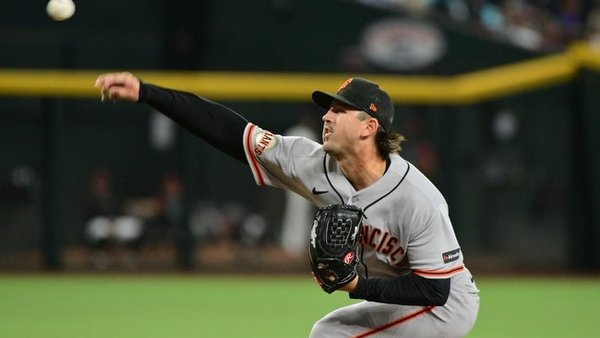
Brady Singer’s 5.67 ERA and a sinker that surrenders hard contact run directly into a Braves lineup that posted 200 home runs — yet Atlanta’s run line is sitting at an even +100. The pitching gap between Singer and Tyler Mahle is not subtle, and the price has not fully caught up to it.
Brady Singer vs Tyler Mahle: Cincinnati Reds at Atlanta Braves Betting Preview
After Wednesday night’s 3-2 Braves walk-off in extras — Mauricio Dubón delivering the winning single in the 10th — this series finale sets up a dramatically different pitching environment. Chris Sale and his 200 strikeouts gave way to the postseason, and now Atlanta hands the ball to Tyler Mahle while Cincinnati sends out Brady Singer, whose 2026 season has been one of the worst starter campaigns in the National League. This isn’t a close matchup disguised as one — it’s a genuine mismatch that the market has only partially priced in.
The core thesis is simple: the Braves -1.5 at +100 offers legitimate value when you account for the full picture — pitching gap, lineup depth, home field, and a park factor of 1.01 that won’t suppress the run environment enough to bail Singer out. The moneyline at -225 is off the table entirely given juice constraints, which makes the run line the only clean expression of a bet I genuinely like here.
Game Info & Betting Lines
- Date/Time: Thursday, September 24, 2026 | 7:15 PM ET
- Venue: Truist Park | Park Factor: 1.01 (essentially neutral)
- TV: MLB.TV, FS1, BravesVision, Reds.TV
- Probable Starters: Brady Singer (CIN) vs. Tyler Mahle (ATL)
- Moneyline: Cincinnati Reds +183 / Atlanta Braves -225
- Run Line: Atlanta Braves -1.5 (+100) / Cincinnati Reds +1.5 (-120)
- Total: 7.5 (Over -112 / Under -108)
Why This Number Is Off
The market set a total of 7.5 with the Braves as heavy -225 moneyline favorites, and the run line lands at +100 for Atlanta laying the 1.5. The books are respecting the low total — partly because Mahle is a legitimate innings-eater who suppresses run scoring, and partly because Singer, for all his volatility, has kept some games close before unraveling. The market isn’t wrong to hedge.
But here’s where I think the number is slightly off: Singer’s profile isn’t just “bad” — it’s specifically home-run prone. He’s surrendered 31 home runs in 154 innings, a rate of 1.81 HR/9 that ranks among the worst in baseball. Against a Braves lineup that hit 200 home runs as a team — including Matt Olson’s 41 — that profile doesn’t suggest a tight 2-1 ballgame. It suggests a short outing with crooked numbers possible.
Meanwhile, the +100 price on Atlanta -1.5 is where the market creates an opening. You’re being paid even money to back a team with an 81.5% projected win probability to win by two or more. The flat money price on -1.5 essentially compensates for the legitimate concern about covering the margin, and that’s what makes this worth acting on.
What Separates the Pitching
The gap between these two starters is not subtle. Tyler Mahle operates with a four-seam fastball that sits at 92.8 mph and generates a 19.6% whiff rate and a .293 xwOBA against — a genuinely above-average pitch at 47.9% usage. He pairs it with a split-finger at 86.2 mph that holds hitters to a .292 xwOBA with a 25.3% whiff rate, making his two primary offerings nearly identical in run-prevention quality. His cutter rounds out a three-pitch primary mix — the slider exists at 7.0% usage but plays a minor role — that produced 133 strikeouts in 144 innings and a 1.22 WHIP. Against the Reds lineup — which carries a .305 OBP and a 1,507-strikeout season — Mahle’s swing-and-miss arsenal is a genuine problem for Cincinnati’s hitters.
Brady Singer is the inverse. His primary offering is a 91.2 mph sinker at 50.6% usage that generates a .374 xwOBA against — hittable, not dominant. He does mix in a slider at 27.9% usage (82.6 mph, .340 xwOBA, 27.8% whiff) that qualifies as a usable secondary option, but it isn’t nearly good enough to offset the damage the sinker invites. His sweeper is his best pitch at a 37.6% whiff rate and a .298 xwOBA, but it’s used only 12.9% of the time. The cutter, at 6.4% usage, is actively dangerous with a .466 xwOBA against and a 0.0% put-away rate. The 6-15 record, 5.67 ERA, and 1.56 WHIP aren’t outliers — they reflect a pitcher whose primary weapon gives up hard contact and whose secondary options don’t compensate.
The BvP sample for Matt Olson against Singer (18 plate appearances, .286 average, 2 HR, .453 xwOBA) tells a specific story: Atlanta’s most dangerous hitter has already found Singer, and his xwOBA against right-handed pitching sits at .453. Add Drake Baldwin (.455 xwOBA vs. RHP) and Michael Harris II (.433 xwOBA vs. RHP) and the top of this Atlanta order is positioned to punish Singer’s sinker-heavy approach.
The Pushback
The concern is real, and I won’t paper over it. Tuesday’s 4-0 Reds win over Atlanta is a direct reminder that Brandon Williamson — a pitcher far less accomplished than Singer’s reputation as a run-generator would suggest — held this Braves lineup scoreless on three hits. Singer can keep games closer early than his season-long numbers imply, and a 7.5 total suggests the market doesn’t expect a blowout either.
Ronald Acuña Jr. is day-to-day with a lower leg injury suffered Tuesday. If he sits, Atlanta loses one of its top OPS contributors (.814 OPS, .430 xwOBA), which isn’t nothing. Importantly, the 81.5% win probability already factors in Acuña’s projected absence — so while the concern is real, it’s already partially absorbed into the numbers, which actually makes the run-line value thesis cleaner, not weaker. The Braves lineup as currently projected doesn’t feature Acuña, and his absence shifts the ceiling down slightly, but the depth behind him — Harris (.407 xwOBA), Baldwin (.433 xwOBA), and Olson with his established history against Singer — keeps this a formidable group.
Elly De La Cruz deserves respect at the top of the Reds order. His 3 PA against Mahle is too small a sample to dismiss entirely, and a .485 xwOBA with a 9.4% barrel rate is the kind of profile that can change a game in a single at-bat. If De La Cruz gets to Mahle early, the Reds have the lineup depth — Sal Stewart (6 PA, .500, 2 HR vs. Singer) hitting behind him — to string something together. The pushback is legitimate. I’m just not convinced it shifts the value line.
The game shape matters here too. A 5-4 final covers the run line just as cleanly as a 9-3 blowout. Atlanta doesn’t need to run Singer off the mound in the third inning — they just need to build a two-run lead and protect it, which is exactly what Mahle’s profile (.293 xwOBA against on his fastball, .292 on his splitter) is designed to do once Atlanta gets ahead.
Joe Jensen’s Pick
Atlanta Braves -1.5 (+100) — 2 Units
The moneyline at -225 is a hard pass. I’m not laying that kind of juice on a regular-season game this late in September, even with an 81.5% win probability attached. The over at 7.5 is a legitimate secondary angle — the projected total of 9.4 runs is a significant gap — but I’d rather capture the win probability through the run line than chase a total that depends on Singer staying up long enough to let both offenses cook.
Backing Atlanta to win by 2+ rewards the pitching edge, the lineup depth, and a +100 price that essentially gives us a free margin on a team the numbers project to win 81.5% of the time. The over is a legitimate secondary angle, but the run line is the cleaner bet when Singer’s profile — a sinker-heavy approach with a 1.81 HR/9 against a lineup built to punish it — is what it is.
Bet: Atlanta Braves Run Line -1.5 (+100) — 2 Units | Confidence: Moderate