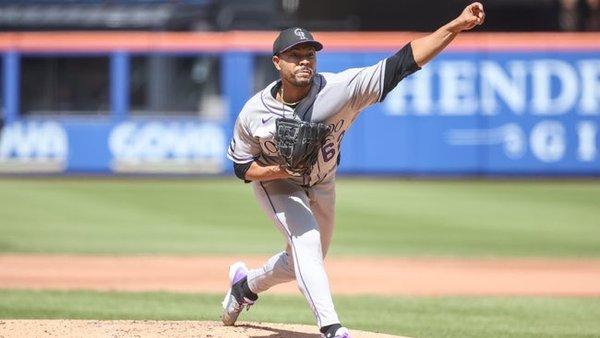
Davis Martin’s 3.84 ERA and multi-pitch soft-contact profile lines up against Jose Quintana’s 5.40 ERA, 1.51 WHIP, and a sinker generating a .454 xwOBA-against — a starter mismatch that is as lopsided as any on the September slate. The moneyline at -238 prices the gap correctly but makes it structurally unplayable, which shifts everything to the run line at -107.
Jose Quintana vs. Davis Martin: Colorado Rockies at Chicago White Sox Betting Preview
Chicago’s moneyline at -238 reflects a team the market strongly believes will win — and the underlying case for that belief is real. Davis Martin has been one of the more reliable mid-rotation starters in the AL this season, while Jose Quintana brings a 5.40 ERA and 1.51 WHIP across just 45 innings of work into a hostile environment. But paying -238 on a baseball moneyline is a structural problem. No price justifies that exposure on a single game, regardless of the matchup quality. The juice ceiling eliminates the ML as a viable angle, which pushes the conversation squarely toward the run line.
After Friday night’s 6-1 result — in which Munetaka Murakami launched two home runs against a struggling Colorado staff — the game shape for Saturday looks familiar. Chicago is chasing Cleveland in the AL Central with a tiebreaker advantage and three home games against a 57-103 club that has lost 17 of its last 20. Motivation doesn’t get more asymmetric than this. The question isn’t whether Chicago wins; it’s whether they win by enough to cover -1.5 at -107.
That’s where the pitching gap earns its money. A multi-run Chicago win is the most probable game script when you stack Martin’s track record against Quintana’s shaky numbers and a White Sox power lineup that feasted on a soft Colorado arm the night before.
Game Info & Betting Lines
- Date/Time: Saturday, September 26, 2026 | 7:10 PM ET
- Venue: Rate Field (Park Factor: 0.98 — essentially neutral)
- Probable Starters: Jose Quintana (COL) vs. Davis Martin (CHW)
- Moneyline: Colorado Rockies +193 / Chicago White Sox -238
- Run Line: Chicago White Sox -1.5 (-107) / Colorado Rockies +1.5 (-112)
- Total: 8.0 (Over -118 / Under -102)
Why This Number Is Off
The market is doing something reasonable here: it’s setting a high moneyline price on a significant pitching mismatch while keeping the run line near even money to account for the possibility of a tight finish. The logic behind that construction isn’t wrong. Late-September games can produce odd results, and Colorado — even at 57-103 — can still put up runs. Their team OPS sits at .738, and Hunter Goodman‘s 39 home runs represent a genuine threat in any individual at-bat. The market isn’t ignoring Colorado; it’s just heavily discounting them.
Where I think the number is slightly off is on the run line price itself. Chicago White Sox -1.5 (-107) is effectively near even money to win by two or more runs. Given that Martin has a 3.84 ERA in 145.1 innings and Quintana carries a 1.6 HR/9 rate into a lineup with 206 home runs on the season, the margin should lean further toward a comfortable Chicago win than the 5.2-4.3 projection suggests. That projection likely underestimates Quintana’s vulnerability — 45 innings is a small sample, and his 18 walks alongside 8 home runs allowed paints a picture of a pitcher who can unravel quickly.
The run line at -107 is pricing in real uncertainty, which is fair. But the underlying mismatch is sharp enough that the price represents genuine value rather than a coin flip.
What Separates the Pitching
The gap between these two starters is substantial, and it shows up in every meaningful category. Davis Martin brings a full-season workload of 145.1 innings — more than three times what Quintana has logged — with a 3.84 ERA, 1.29 WHIP, and 7.49 K/9. His four-seam fastball sits at 93.9 mph with a 20.6% whiff rate and an xwOBA-against of .315. His curveball is the standout weapon: 39.5% whiff rate, .276 xwOBA-against, and a 27.4% put-away rate that makes it a genuine strikeout pitch. His slider adds another layer at 36.0% whiff and .292 xwOBA-against. Martin isn’t overpowering, but he generates soft contact consistently and limits damage. His 14 HR allowed in 145.1 IP (0.87 HR/9) is manageable at a neutral park.
Jose Quintana operates in a different tier entirely. His four-seamer tops out at 89.8 mph — a 4.1 mph velocity deficit against Martin — and his sinker, which he throws 20.4% of the time, generates a .454 xwOBA-against. That’s a premium hard-hit pitch for opposing hitters, not a ground-ball suppressor. His changeup shows an encouraging 28.4% whiff rate, but the overall command profile (18 walks, 8 home runs in 45 innings) undermines any sequencing advantage he might create.
The matchup problem for Quintana is specific: Murakami’s .488 xwOBA against left-handed pitching is nearly identical to his overall .484 — he has no platoon weakness for Quintana to exploit, and is equally dangerous regardless of handedness. Murakami hit two home runs off a right-hander Friday night and now faces a soft-tossing lefty who surrenders hard contact at an alarming rate. Murakami’s 9.7% barrel rate and 33.5% hard-hit rate make him a nightmare assignment for a pitcher who can’t elevate his velocity. Miguel Vargas (.452 xwOBA vs. LHP) and Randal Grichuk (.420 xwOBA overall) compound the problem throughout the Chicago order. Martin creates weak-contact innings; Quintana invites multi-run frames.
The Pushback
The honest concern here is the margin. The numbers project a final of 5.2-4.3 Chicago — that’s a 0.9-run projected victory. Run lines live and die by margin of victory, and a one-run Chicago win — which is entirely plausible given Quintana’s changeup offering some legitimate swing-and-miss — kills this ticket outright. Colorado isn’t a team incapable of putting up crooked numbers; their team OPS of .738 isn’t dominant, but Hunter Goodman‘s 27.4% hard-hit rate this season and 39 home runs mean a single mistake from Martin could flip the run differential in a hurry.
The Chase Meidroth day-to-day hamstring situation is also worth noting. If he’s out of the lineup, Chicago loses a .275 hitter with genuine plate discipline (10.2% walk rate) from the top of the order. That’s not a backbreaker, but it’s a variable that slightly narrows the projected run margin.
I’m also aware that Hunter Goodman — sitting at 39 home runs and chasing a milestone number — has every incentive to be locked in at the plate on Saturday. Motivated hitters in late-September situations can outperform their baseline. Martin’s cutter generates a .403 xwOBA-against, which is the softest spot in his arsenal. If Goodman gets to that pitch in a favorable count, it’s a real threat.
Run Environment & Game Shape
The posted total of 8.0 is interesting given the context. Guaranteed Rate Field plays as a near-neutral park (0.98 factor), and with both bullpens in play, the back-of-envelope math points to a game that settles somewhere in the 9–10 run range when you account for Quintana’s vulnerability and Chicago’s power. That’s more runs than the total implies, but it’s also worth noting that most of those runs are likely concentrated on the Chicago side — which is precisely the game shape that makes the run line attractive rather than the over.
The scenario I want is simple: Martin holds Colorado to two or three runs over five or six innings, Chicago’s power core — Murakami, Vargas, Grichuk — does damage against a lefty who can’t miss bats consistently, and the White Sox win 5-2 or 6-3. That script is realistic. It doesn’t require Colorado to collapse entirely; it just requires Martin to be Martin and Quintana to be what his ERA says he is. The pitching gap, the motivation asymmetry, and the near-even-money price on the run line all point in the same direction.
The risk is the one-run game — always a live scenario in baseball, always the run line bettor’s nightmare. But when you’re getting -1.5 at -107 against a 57-103 team starting a 5.40 ERA lefty on the road, that’s the kind of spot where accepting the margin risk is worth it.
Bet: Chicago White Sox -1.5 (-107) — 2 units, moderate confidence.