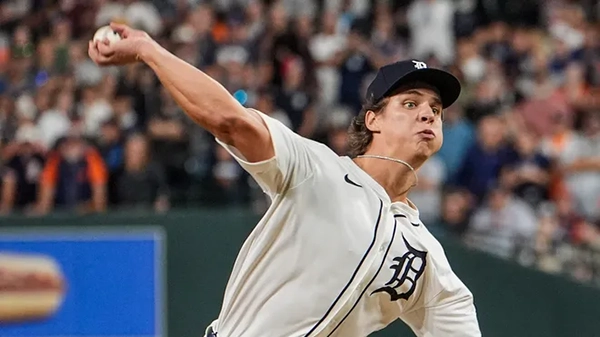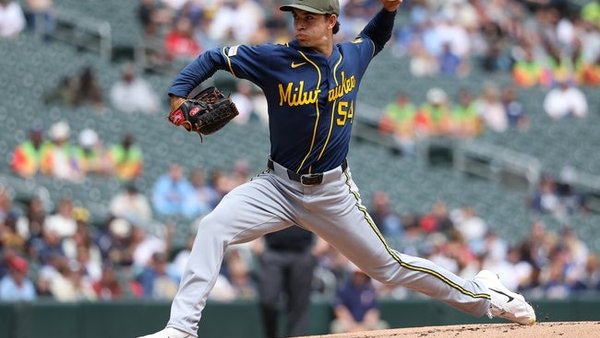
Two starters with nearly identical WHIPs (1.25 and 1.24) take the mound in a neutral dome, but the Cardinals are arriving short-handed — three bats on the IL — against a pitcher running 8.19 K/9. The Brewers are -185 on the moneyline, a price that takes the most obvious path off the table and forces the real question toward the total sitting at 8.0.
Michael McGreevy vs. Robert Gasser: St. Louis Cardinals at Milwaukee Brewers Betting Preview
Milwaukee is 100-59, riding a 7-3 stretch over their last ten games, and sending a left-hander with genuine swing-and-miss stuff against a Cardinals offense that is missing multiple bats and arriving cold from Pittsburgh. The case for the Brewers to win is real. The problem is the market has already priced it at -185, which is simply not a number I’m willing to touch regardless of how clean the matchup looks.
So the question becomes: where does the edge actually live? When you strip away the moneyline and look at what this game actually projects to be — two mid-rotation starters with sub-1.25 WHIPs, a neutral dome with a 1.00 park factor, and a Cardinals lineup running below its already modest season average — the total of 8.0 becomes the number that deserves the most scrutiny.
The numbers project a combined 9.4 runs, which technically leans over. But that projection doesn’t account for the fact that three Cardinals bats are on the IL, doesn’t weight Gasser’s strikeout rate against a free-swinging lineup, and doesn’t fully account for how much run-scoring variance gets compressed in a dome game with two pitchers who generate weak contact and limit walks. This is a contrarian lean — moderate confidence, not a hammer — but the under at -111 is where I’m landing.
Game Info & Betting Lines
- Date/Time: Friday, September 25, 2026 | 7:40 PM ET
- Venue: American Family Field (Dome) | Park Factor: 1.00 (neutral)
- Away Starter: Michael McGreevy (7-9, 3.84 ERA, 1.25 WHIP, 164.0 IP)
- Home Starter: Robert Gasser (5-5, 4.01 ERA, 1.24 WHIP, 103.1 IP)
- Moneyline: Cardinals +152 / Brewers -185
- Run Line: Milwaukee Brewers -1.5 (+119) / St. Louis Cardinals +1.5 (-143)
- Total: 8.0 (Over -109 / Under -111)
Why This Number Is Close
The market has this right in the sense that 8.0 is a reasonable total. Two starters with WHIPs of 1.25 and 1.24 in a neutral dome is not a recipe for a fireworks display. The question isn’t whether 8.0 is defensible — it clearly is — the question is which side has the fractional advantage at the current price.
The legitimate case for the over starts with Milwaukee’s offense. The Brewers are averaging 5.13 runs per game this season with a .742 OPS and 161 stolen bases — a lineup that creates pressure in multiple ways, not just via the long ball. McGreevy has allowed 21 home runs in 164 innings, which is not an elite suppression number, and a Brewers order featuring Jake Bauers (.456 xwOBA, 8.1% barrel rate) and Garrett Mitchell (.502 xwOBA vs. RHP) can do real damage against a low-90s fastball-heavy profile. The over isn’t a bad bet — the market isn’t wrong to sit at 8.0.
But here’s where I find the lean: the Cardinals’ lineup is thinned by injury (Blaze Jordan, Joshua Baez, and Everson Pereira all on IL) and arriving genuinely cold. Their season OPS of .693 already ranks among the lower outputs in the National League, and Gasser’s 8.19 K/9 is tailor-made to exploit a lineup that strikes out 1,271 times on the season. One side of this game has a clear suppression path. The other doesn’t. That asymmetry gives the under its edge.
What Separates the Pitching
McGreevy and Gasser are closer in profile than the win-loss records suggest, but they create innings in meaningfully different ways — and that difference matters for the total.
McGreevy works with a six-pitch mix, leaning on a 91.8 mph four-seam fastball (24.5% usage) and a changeup (19.9%) that generates a 26.9% whiff rate and an xwOBA-against of .313. His curveball also suppresses quality contact at .289 xwOBA. The concern is his sweeper (.410 xwOBA) and slider (.421 xwOBA) — secondary offerings that can get hit hard when hitters sit on them. Against a Milwaukee lineup that profiles well versus right-handed pitching — Bauers is at .481 xwOBA vs. RHP and Mitchell at .502 xwOBA vs. RHP — those secondary pitches become a real exposure point. McGreevy’s sinker (16.7% usage, .315 xwOBA) helps generate weak contact and groundballs, but his HR rate of 21 in 164 innings reflects a pitcher who doesn’t fully neutralize power.
Gasser’s separation is in his strikeout rate. At 8.19 K/9 against a Cardinals lineup that produces a team-wide .693 OPS and whiffs at a high volume, the matchup structurally favors him. The Cardinals’ top bats — Jordan Walker (30.1% whiff rate), Leo Bernal (20.9% whiff rate, batting as DH tonight) — profile as swing-and-miss hitters against quality spin. Alec Burleson has a strong season xwOBA of .423, but is 0-for-7 with two strikeouts against Gasser in limited BvP looks. The caveat is Gasser’s workload: 103.1 innings is a smaller base, he could be on a pitch count limit, and his ERA of 4.01 reflects some vulnerability when he gets hit. But in terms of what each pitcher creates at the start — Gasser limits the Cardinals, and McGreevy is capable enough to keep the Brewers from going crooked — the game shape points to a tight, moderate-scoring outcome.
The Pushback
The honest pushback here is that the raw projection data disagrees with this pick. The edge engine spits out 9.4 combined runs, and that’s not a number I can just wave away. When the numbers are that far over the line, a contrarian position requires a clear explanation of what the projection is missing — not just a vague appeal to “feel” or “context.”
So here’s the specific case for why I’m fading the projection: First, the Cardinals’ injury situation is material. Blaze Jordan, Joshua Baez, and Everson Pereira are all on the IL, and the lineup construction that shows up tonight is meaningfully weaker than the seasonal averages the projection inputs are built on. Second, the projection’s bullpen component shows an even split between the two teams — but Milwaukee’s pen is also dealing with injuries (Brian Fitzpatrick, Angel Zerpa, Bryse Wilson, and Grant Anderson all unavailable), which compresses the quality depth available in a game that might need six or seven innings of relief work. Both bullpens are thinner than their season profiles suggest. Third, the dome neutralizes park variance entirely — there’s no wind, no weather, no unexpected offensive environment to account for. A 1.00 park factor in a controlled setting means the game is more likely to settle near its projected midpoint than to blow out in either direction.
None of that makes the over wrong. It just makes the under the better price given the specific circumstances of tonight’s game.
What about the run line? Milwaukee -1.5 at +119 is genuinely interesting — the Brewers are the right side, and getting plus money to lay a run and a half against a cold, short-handed Cardinals team is a reasonable bet. But I need the Cardinals to score fewer than four runs for the under to cash, and I need the Brewers to win by two or more for the run line to cash. The under doesn’t require Milwaukee to roll — it just requires the game to stay tight, which is the more conservative position. Run line at +119 is tempting, but the margin requirements make it a secondary consideration. The under is the cleaner play.
Run Environment & Game Shape
American Family Field with a 1.00 park factor is as neutral a venue as baseball offers — no elevation, no prevailing wind, no quirky dimensions that inflate or deflate run scoring relative to what the pitching matchup generates on its own. What that means practically is that tonight’s total lives or dies on the arms, not the environment.
The game shape I’m projecting looks something like this: Gasser works five to six innings against a Cardinals lineup that’s striking out at a high clip and missing three contributors to injury, holding St. Louis to two or three runs before the shortened Brewers bullpen takes over. McGreevy, for his part, is a good-enough pitcher to keep this from becoming a blowout — his changeup and curveball generate weak contact, and while the Brewers have the lineup to push against him, the dome suppresses any weather-driven variance that might inflate a crooked number. The realistic ceiling for Milwaukee is four or five runs, and the realistic floor for St. Louis is one or two. That’s a 6-8 run game, not a 9-10 run game, which means the total of 8.0 is sitting right at the edge — and at -111, the under has just enough cushion to be worth the position.
This isn’t a bet that requires everything to go right. It requires Gasser to be Gasser against a thinned, cold offense, and McGreevy to be competent enough to prevent a blowout. Both of those outcomes are well within the range of what these pitchers have shown all season.
The Pick
Cardinals lineup deficiencies plus Gasser’s strikeout upside against a short-handed, cold offense in a neutral dome is a combination that tilts this game under the number. The projection leans the other way, and I’ve acknowledged that throughout — but the specific injury context and the structural matchup advantage Gasser holds tonight are enough to override the raw totals output.
Bet: Under 8.0 (-111) | 2 Units | Moderate Confidence