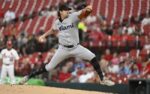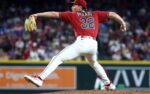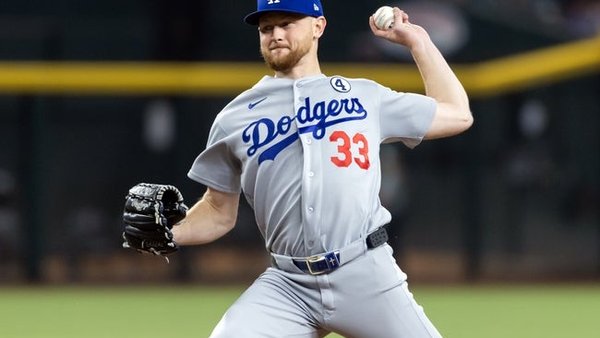
Imanaga’s 3.67 ERA and 1.07 WHIP face off against Lauer’s 4.50 ERA and a 2.05 HR/9 rate — a gap in starter quality the Cubs -118 price barely reflects. The Dodgers are on a five-game losing streak and have lost the first two games of this series by a combined 15-6, yet the moneyline is treating this like a near-coin flip on the strength of the opposing lineup’s ceiling alone.
Eric Lauer vs. Shota Imanaga: Los Angeles Dodgers at Chicago Cubs Betting Preview
The line on this game reads like a coin flip. It isn’t. The Cubs are -118 moneyline favorites at home with the clearly superior starter on the mound, riding a series sweep through the first two games and facing a Dodgers rotation so gutted by injuries that Eric Lauer is the answer to the question “who starts Game 3?” That setup doesn’t produce a near-even market on its own — it produces one because Shohei Ohtani, Freddie Freeman, and Max Muncy are in the opposing lineup, and the market is rightly afraid of what that trio can do to any pitcher on any given afternoon.
The Cubs have outscored Los Angeles 15-6 across the first two games of this series. The Dodgers are mired in a five-game losing streak — their worst skid since early September 2025 — and have gone 3-7 over their last ten games. Meanwhile, Chicago sits at 6-4 over that same stretch, with Pete Crow-Armstrong and Seiya Suzuki doing consistent damage in the heart of the lineup. This is the better team, the hotter team, at home, with the better pitcher. The price reflects the Dodgers’ elite offensive ceiling, not the actual gap between these two clubs right now.
The core thesis is simple: Imanaga is a genuine mid-rotation quality arm; Lauer is a back-end emergency option plugging holes in a rotation stripped bare by injury. At -118, the Cubs offer genuine value given that gap.
Game Info & Betting Lines
- Date/Time: Wednesday, August 5, 2026 | 2:20 PM ET
- Venue: Wrigley Field | Park Factor: 1.02 (essentially neutral)
- Probable Starters: Eric Lauer (LAD, 6-5, 4.50 ERA) vs. Shota Imanaga (CHC, 7-9, 3.67 ERA)
- Moneyline: Los Angeles Dodgers +110 / Chicago Cubs -118
- Run Line: Chicago Cubs -1.5 (+160) / Los Angeles Dodgers +1.5 (-194)
- Total: 9.5 (Over -112 / Under -108)
Why This Number Is Close
The market is pricing this game at roughly 54% implied probability for Chicago, which tells you exactly what the oddsmakers are doing: they respect the Dodgers’ lineup enough to keep the Cubs from being a bigger favorite than they would otherwise be. That’s a rational position. Ohtani’s .511 xwOBA and 9.5% barrel rate make him dangerous against any arm, and his .482 xwOBA against left-handed pitching specifically means Imanaga doesn’t get a platoon pass. Freeman at .417 xwOBA and Muncy at .419 xwOBA round out a top of the order that can do real damage even in a down stretch.
But here’s where I think the market leans slightly wrong: the Dodgers’ offensive numbers are season-long averages compiled largely against better pitching than Lauer can provide in return. The question isn’t just whether the Dodgers can score — they can — it’s whether this lineup can outscore a Cubs offense facing Lauer, who carries a 4.50 ERA, a 1.19 WHIP, and a 5.7 K/9 through 88 innings. The run prevention edge the market gives Los Angeles evaporates when Lauer is the arm on the mound.
The line already accounts for the Dodgers’ talent ceiling and the Cubs’ slightly weaker overall team ERA (4.09 vs. 3.70). What it may not fully account for is the rotation context: Tyler Glasnow, Gavin Stone, Blake Snell, and Kris Bubic are all on the 60-Day IL. Lauer isn’t filling a gap — he is the rotation right now, and that matters.
What Separates the Pitching
The gap between these two starters is the kind that should move a line, not neutralize it. Shota Imanaga carries a 3.67 ERA, a 1.07 WHIP, and 8.4 K/9 — numbers that reflect a pitcher generating genuine swing-and-miss at every level of the count. His split-finger fastball sits at 83.1 mph with a 39.7% whiff rate and an xwOBA-against of .244 — that’s an elite put-away pitch. His four-seamer, used 41.3% of the time at 91.8 mph, holds hitters to a .315 xwOBA with an 18.0% put-away rate. When Imanaga is locating both pitches, he creates weak contact and empty swings in equal measure.
Eric Lauer offers a different profile entirely. His 5.7 K/9 is below league average, and his four-seamer — deployed 44.3% of the time at just 91.0 mph — generates a .365 xwOBA against with only a 17.5% put-away rate. That’s a primary offering that hitters are squaring up with regularity. His slider is his sharpest weapon (.240 xwOBA against), but it accounts for only 8.7% of his pitches. The concern with Lauer isn’t one bad inning — it’s the cumulative damage of a below-average strikeout pitcher facing a Cubs lineup where Crow-Armstrong posts a .449 xwOBA and a 29.2% hard-hit rate.
The innings these two create look completely different. Imanaga tends to generate weak contact and quick outs through his split-finger, keeping the Dodgers from stringing at-bats together. Lauer tends to give up hard contact in clusters, and his 20 HR allowed in 88 innings — a 2.05 HR/9 rate — creates an environment where one swing can swing the score. At Wrigley’s neutral 1.02 park factor, there’s no environmental suppression to bail him out.
The Pushback
The honest version of the case against this bet starts with Ohtani. His BvP sample against Imanaga is small — 13 PA, .250 average, 0 HR, 3 strikeouts — but it doesn’t show the kind of swing-and-miss dominance you’d hope for from a left-hander with Imanaga’s split-finger. Ohtani makes contact against Imanaga, and given his .482 xwOBA against lefties overall, that’s a real concern. One well-timed, hard-hit ball from Ohtani in a tight game can flip a moneyline result in a way that a season-long sample can’t protect against.
The more structural worry is Imanaga’s home run rate. He’s allowed 24 HR in 127.2 innings this season — roughly 1.69 per nine, which is not elite. Andy Pages has gone deep twice in just 10 PA against Imanaga (.444 average, 2 HR, 2 K in that sample), which is a genuinely alarming BvP line for a number-two hitter who will see Imanaga multiple times today. Small sample, yes — but two home runs in ten at-bats isn’t noise, it’s a pattern worth respecting.
Muncy also has a home run in 9 PA against Imanaga (.333 average). So the three, four, and five spots in the Dodgers order each carry legitimate power threat against this specific pitcher. The Dodgers aren’t just scary in the abstract — they have specific, documented history of putting the ball over the fence against the pitcher they’re facing today.
That’s the honest tension in this bet. Imanaga is the better pitcher by a wide margin, but he’s not a shutdown arm who eliminates home runs. If Ohtani or Pages get to him early, this game can flip fast.
Rejected Angles
I looked at the Cubs -1.5 run line at +160 and passed. The problem is straightforward: Imanaga has allowed 24 home runs in 127.2 innings this season, and a single Dodgers blast can change the margin in a game that projects as competitive. You’re paying +160 for a line that Imanaga’s homer vulnerability can unravel with one swing. The juice doesn’t justify the added exposure when the moneyline is already a reasonable price.
The total at 9.5 is also a pass. The numbers project this game at 9.4 combined runs — essentially right at the market price with no meaningful edge. Lauer’s high home run rate creates variance on the over, but Imanaga’s ability to suppress contact on the other side muddies the picture. There’s no clean directional read on the total, and I’m not paying -112 for a coin flip on a number that’s already priced efficiently.
Run Environment & Game Shape
This game figures to be close. Imanaga is capable of keeping it a one- or two-run affair through six innings, and even Lauer — for all his vulnerabilities — isn’t guaranteed to get shelled. The Dodgers’ lineup is too talented for a blowout to be the most likely outcome. What the numbers suggest is a game where the Cubs win by a narrow margin more often than the market implies at -118.
The park factor (1.02) doesn’t do much work here in either direction. Wrigley is essentially neutral for this game, which means the pitching matchup drives the shape more than the environment does. Imanaga’s ability to get quick outs through his split-finger limits the Dodgers’ capacity to sustain multi-inning rallies, while Lauer’s contact-heavy profile means the Cubs should find scoring opportunities without needing to string together perfectly executed innings.
What that adds up to is a game where home field, momentum, and the starter gap all point in the same direction. You’re not looking for a multi-run blowout here — you’re looking for a team that wins a tight game more often than the market is giving them credit for. At -118, the Cubs are that team. The starter advantage is real, the home field is real, and a five-game Dodgers losing streak against a Cubs club that’s 6-4 over its last ten games is not a coincidence. This is the side I want.
Bet: Chicago Cubs moneyline -118 — 2 units, moderate confidence.