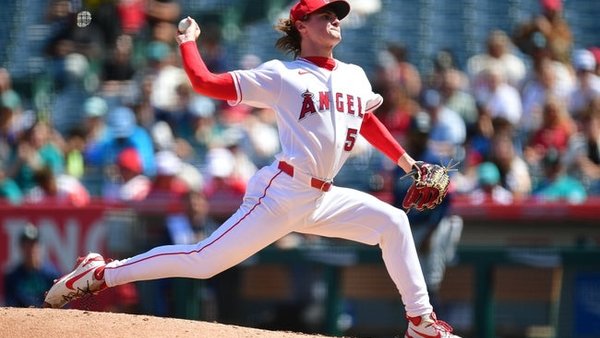
Angel Stadium’s run-suppressing park factor and a combined projected total of 8.7 runs tell one story — the posted 9.5 tells another. Klassen’s split ERA profile and a banged-up Texas bullpen add noise, but the run environment points in a clear direction the number hasn’t fully absorbed.
Cal Quantrill vs. George Klassen: Texas Rangers at Los Angeles Angels Betting Preview
After the Angels squeaked out a 3-2 win over Texas on Tuesday night, the series shifts to a Wednesday nightcap at Angel Stadium with two pitchers who couldn’t be more different on paper — and in practice. The market has settled on a 9.5 total for a game where the Angels are rolling out a starter with a significant ERA discrepancy in his profile, and Texas counters with a mid-rotation arm who has been quietly functional all year. The noise around the Angels’ win last night is real, but the run environment here is the actual story.
Angel Stadium carries a park factor of 0.95 — slightly run-suppressing. Both offenses are operating near their season baselines, not surging. The numbers project a combined 8.7 runs, which puts the Under 9.5 at a 0.8-run mispricing. That’s not a hammer play — it’s a lean. But in a game shaped by a significant pitching gap and a tepid scoring environment, it’s the cleaner expression of what the numbers are saying.
The Texas moneyline at -136 was the obvious first look here, but that price exceeds my juice ceiling for a standalone play. The Under is where the value concentrates without overpaying for a win probability that, while real, comes at a cost I’d rather not absorb.
Game Info & Betting Lines
- Date/Time: Wednesday, August 12, 2026 | 10:00 PM ET
- Venue: Angel Stadium (Park Factor: 0.95 — slight run suppressor)
- TV: ESPN
- Probable Starters: Cal Quantrill (TEX) vs. George Klassen (LAA)
- Moneyline: Texas Rangers -136 / Los Angeles Angels +113
- Run Line: Texas Rangers -1.5 (+128) / Los Angeles Angels +1.5 (-155)
- Total: 9.5 (Over +101 / Under -122)
Why This Number Is Off
The market is balancing two things: the Angels’ surprise win last night created legitimate home momentum, and totals in mid-August games at Angel Stadium with two right-handed starters tend to cluster near 9. So a 9.5 isn’t irrational. There’s a reasonable case that Klassen’s 2.83 season ERA reflects a legitimate ground-ball profile capable of suppressing Texas’s offense when his mechanics are right. The other side argues that run lines move for a reason, and at +113, the Angels’ moneyline is pricing in a genuine upset possibility — which means scoring isn’t impossible.
But here’s the problem: ESPN lists Klassen with a 7.27 ERA alongside a separate season ERA of 2.83. The data doesn’t clarify precisely what that 7.27 snapshot represents — it could reflect a different ERA window, a sample-size artifact, or a specific stretch of appearances — but the gap between those two numbers is significant and doesn’t inspire confidence heading into Wednesday. Whatever the explanation, that discrepancy doesn’t suggest a pitcher who is locked in right now. And the Rangers’ team ERA of 4.24 against an Angels offense ranked among the worst in baseball — 46-74 with a -93 run differential — keeps the ceiling on Anaheim’s run production firmly in check.
The 9.5 line is priced for a game that goes average. The projection says this game goes below average. That gap, even at -122, is worth a small play.
What Separates the Pitching
Cal Quantrill enters with a 3.56 ERA and represents the more trustworthy arm in this matchup by a clear margin. The data on his arsenal isn’t broken out in full Statcast detail here, but his season line reflects a contact-management approach that keeps runs off the board without relying on elite strikeout rates. Against an Angels lineup that carries a team OPS of just .687 and features a rotation of hitters whose xwOBA readings cluster between .336 (Schanuel) and .388 (Neto), Quantrill doesn’t need to be dominant — he needs to be functional. And against this lineup, functional is good enough.
Mike Trout is the legitimate threat, carrying an xwOBA of .477 with a 7.5% barrel rate. His .488 xwOBA against right-handed pitching specifically is the one number that keeps Quantrill honest. But Trout is surrounded by a lineup that drops off sharply — Schanuel posts a 1.5% barrel rate and a .336 xwOBA, and the middle of the order from spots four through six offers very little over-the-fence pop.
George Klassen leans heavily on two pitches: a sinker at 97.8 mph (31.3% usage) and a changeup at 90.6 mph (29.8% usage, 35.2% whiff rate, .220 xwOBA against). When the changeup is working, that’s a legitimate weapon — a .220 xwOBA-against is elite-tier contact suppression. He also mixes in a sweeper (15.2% usage, 36.0% whiff) that generates swing-and-miss against right-handed bats. The gap in the arsenal shows up against hitters like Brandon Nimmo, whose xwOBA of .446 and .459 mark against right-handed pitching profiles him as the biggest mismatch in the Texas lineup. Corey Seager (.404 xwOBA, 8.0% barrel rate) is another bat Klassen cannot afford to miss over the plate. The sinker’s .366 xwOBA-against suggests it gets hit when hitters sit on it — and a Rangers lineup posting a .243 team average will be looking for a fastball to drive.
The Pushback
The honest counterargument here isn’t small. First, Klassen’s 2.83 season ERA is real — 101.2 innings of work doesn’t lie, and if his ground-ball sinker is operating at its baseline rather than its worst, the Rangers’ lineup (.243 AVG, .714 OPS) isn’t one that automatically punishes contact-first pitchers. Second, the Texas bullpen is banged up. Robert Garcia, Jalen Beeks, and Jakob Junis are all on the IL, which means if Quantrill exits early, the bridge to a save situation gets thin. A bullpen-driven game can swing the run environment in a hurry. Third, the 7.27 ESPN ERA figure is genuinely murky — I’m not treating it as a confirmed single-game implosion because the data doesn’t verify it as such. If Klassen’s mechanics are closer to his season profile than that number implies, the case for the Under actually gets stronger, not weaker, since both starters would be suppressing runs. Either way, this is a lean, not a lock — and the juice at -122 keeps it squarely in small-play territory.
Run Environment & Game Shape
The run-scoring environment checks every box for a low-total game. Angel Stadium’s 0.95 park factor actively works against offense. The Angels carry a -93 run differential and a .687 team OPS — they are not a lineup that manufactures runs against competent pitching. Texas is better offensively but isn’t surging; the Rangers sit at .714 OPS and have scored 495 runs on the season, which is functional but not overwhelming.
The numbers break down to Rangers 4.5 and Angels 4.2, for a projected combined total of 8.7. That’s 0.8 runs below the posted 9.5. In a vacuum, 0.8 runs of projected edge on a total is a moderate signal — not a sledgehammer, but meaningful. At -122, you’re laying a little over a dime to access that edge, which is acceptable for a lean-confidence play. The juice cascade logic here is straightforward: the Rangers ML at -136 was the cleaner directional bet but costs too much for the confidence level attached. The Under captures the same suppressed-scoring thesis at a more palatable price and doesn’t require Texas to win outright to cash.
Klassen’s arsenal, the park, the Angels’ offensive profile, and Texas’s run-prevention numbers all point the same direction. Nothing about this game screams over. I’ll take the Under 9.5 at -122 as a small play and move on.
Bet: Under 9.5 (-122) — Lean/Small Play