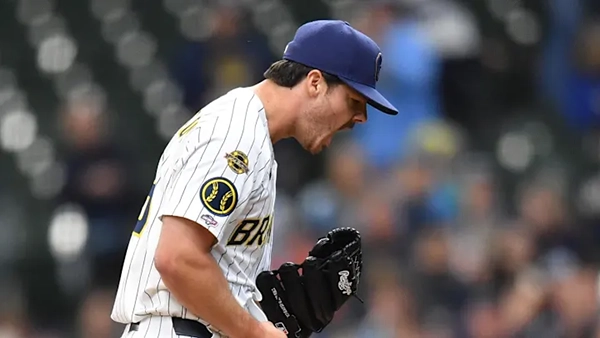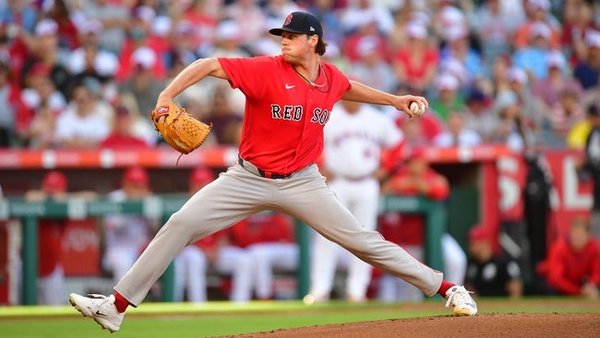
Jake Bennett’s 1.04 WHIP against Brandon Young’s 1.34 is a 30-point gap the moneyline at Red Sox -136 is barely accounting for. Young is handing out free baserunners at nearly twice Bennett’s rate — and Boston’s lineup, with 143 home runs on the season, is built to punish exactly that kind of starter.
Jake Bennett vs. Brandon Young: Boston Red Sox at Baltimore Orioles Betting Preview
The market has priced this as a near coin-flip — Boston Red Sox -136, Baltimore at +113 — and on the surface, that makes some sense. Young is 9-3 with a 3.38 ERA, the Orioles are at home chasing a wild-card spot, and ERA-watchers see two starters pitching at roughly similar levels. But ERA is a lagging indicator, and what’s underneath Young’s numbers is uglier than the record suggests.
The core thesis here is simple: Jake Bennett has been a command artist, posting a 1.04 WHIP against Young’s bloated 1.34 WHIP. That gap — 30 points of WHIP — isn’t noise. It reflects two genuinely different kinds of pitcher, and the market is conflating them because their ERAs sit within 11 points of each other.
Boston arrives having dropped a rough series to Seattle, while Baltimore stumbles home after dropping two of three in Colorado. Neither offense is running hot right now. That cold context actually sharpens the pitching edge — in a tight, low-run environment, command separates starters more than power does.
Game Info & Betting Lines
- Date/Time: Thursday, September 3, 2026 — 7:15 PM ET
- Venue: Oriole Park at Camden Yards (Park Factor: 1.01 — essentially neutral)
- TV: MLB.TV, FOX
- Probable Starters: Jake Bennett (BOS, 9-6, 3.27 ERA) vs. Brandon Young (BAL, 9-3, 3.38 ERA)
- Moneyline: Boston Red Sox -136 / Baltimore Orioles +113
- Run Line: Boston Red Sox -1.5 (+128) / Baltimore Orioles +1.5 (-155)
- Total: 8.5 (Over -103 / Under -117)
Why This Number Is Close — But Slightly Off
The market’s reasoning is defensible. Young is 9-3. Home field, even at the modest advantage MLB research supports, tilts the price toward Baltimore. The Orioles carry a legitimate wild-card incentive — they’re 1.5 games behind Cleveland — and that kind of pressure can sharpen a roster. You can absolutely make the case for Baltimore at +113.
But here’s the problem: ERA hides what Young is actually doing out there. He’s issued 46 walks in 130.1 innings — a walk rate of roughly 3.2 per nine — while Bennett has walked just 18 in 93.2 innings, closer to 1.7 per nine. Free baserunners are the original sin of pitching, and Young is handing them out at nearly twice the rate Bennett is.
Boston’s lineup has hit 143 home runs this season. Young has surrendered 17 home runs in 130.1 innings — a rate of 1.17 per nine. Put runners on and allow hard contact against a lineup with that kind of power, and the ERA starts to look like borrowed time. The market is pricing ERA. The edge is in process metrics, and process metrics favor Boston’s starter by a meaningful margin.
What Separates the Pitching
Line these two arsenals up side by side and you see starters with different profiles and different risk floors. Bennett’s best weapon isn’t his fastball — it’s his changeup, which he throws 25.7% of the time and generates a 31.2% whiff rate with an xwOBA-against of just .192. That’s a genuine out pitch. His sinker, used nearly 24% of the time, holds a .277 xwOBA and generates grounders rather than fly balls — which matters against a Baltimore lineup that has hit 169 home runs but does so at the cost of a .235 team batting average. His 92.9 mph four-seamer stays in the .325 xwOBA range and fills counts without getting punished. The combination creates weak contact and soft at-bats, which is reflected in that 1.04 WHIP.
Young leans heavily on a 94.3 mph four-seamer (40.2% usage) that generates a .329 xwOBA — above Bennett’s equivalent. His best secondary is a slider that whiffs 41.0% of hitters and holds a .268 xwOBA, but he’s getting to that pitch less predictably because he can’t command the zone consistently. When a pitcher walks 3.2 batters per nine, hitters don’t chase — they wait, they take, and eventually they get something they can drive.
The Boston lineup is built to punish exactly that approach. Roman Anthony posts a .462 xwOBA against right-handed pitching — the highest in the top of Boston’s order — and Wilyer Abreu carries a .416 xwOBA vs. RHP with 23 home runs. His small BvP sample against Young (3 PA, .667, 1 HR) is too thin to lean on, but the underlying profile fits the matchup. Mickey Gasper adds a .404 xwOBA against righties at the two-hole. This is a lineup that can make a walk-happy starter pay.
On the other side, Pete Alonso is the most dangerous bat Bennett will face — .481 xwOBA, 32 home runs, 6.8% barrel rate, and a .487 xwOBA against right-handed pitching. Bennett’s changeup-heavy approach should limit the damage — .192 xwOBA on that pitch is elite — but Alonso is the one matchup that keeps this from being a comfortable lean.
The Pushback
There are real reasons to slow down here. Boston’s offense has gone cold — they scored just three runs in their most recent loss to Seattle, and the injury list is piling up. Masataka Yoshida is on the IL with a hamstring issue, Willson Contreras is out with a hamstring of his own, and Curtis Mead and Marcelo Mayer are also sidelined. That’s real lineup depth being stripped away. On the other side, Baltimore’s most dangerous threat — Alonso at .481 xwOBA — is fully healthy and capable of turning a single Bennett mistake into a game-changer. And the Orioles have gone 6-4 over their last ten, which isn’t the form of a team ready to roll over.
Run Environment & Game Shape
Camden Yards plays almost dead neutral at a 1.01 park factor, so the venue isn’t pushing the total in either direction. The projected combined run total of 9.1 sits above the posted 8.5, but the gap is narrow enough that the over isn’t a clean play — a tick of pitching outperformance from either starter closes it quickly. The under at -117 is paying up for a result that requires Young to suddenly find his command, which the 1.34 WHIP suggests is unlikely to happen consistently.
Both offenses are running cold coming in, which depresses the run environment independently of the pitching. The shape of this game points toward a modest-scoring contest decided by which starter keeps runners off the bases longer — and that favors Bennett. The run line and total were considered and neither clears the bar: Boston -1.5 at +128 requires them to win by two in a projected coin-flip, and the over asks Young to implode rather than merely underperform. The only actionable angle here is the moneyline, and even that comes with a price caveat.
Joe Jensen’s Pick
The numbers project Boston 4.6, Baltimore 4.5 — a coin-flip by any honest read. I’m not going to pretend there’s a hammer here, because -136 on a 55% win probability game doesn’t give you enough cushion to play full size. The run line and total don’t clear the bar, so I’m not going there either.
What I will say is this: the WHIP gap is real, the process metrics favor Bennett, and Young’s walk rate is a structural problem that a disciplined Boston lineup is positioned to exploit. That’s enough to lean Boston ML — but strictly as a parlay leg or small-stakes beer-money play only. At -136, the juice exceeds the ceiling for a standalone full-unit bet. Don’t treat this as a feature play.
Pick: LEAN — Boston Red Sox ML (-136) | Parlay leg or small stakes only | Projected score: Boston 4.6, Baltimore 4.5