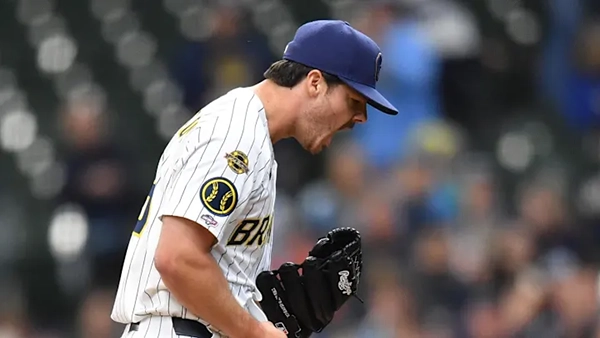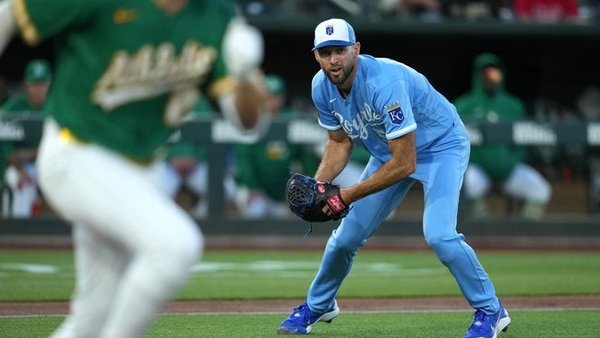
The market sees Boston’s 10-run explosion over two games — but those came against arms with a combined 1-5 record. Wacha’s 0.99 WHIP represents a significant step up in class that the -118 price hasn’t fully absorbed.
Connelly Early vs Michael Wacha: Boston Red Sox at Kansas City Royals Betting Preview
After Boston’s consecutive 7-1 and 3-1 victories opened this series, the market has adjusted exactly as you’d expect — the Red Sox sit at even money despite being on the road, while Kansas City finds itself as a modest -118 favorite. The noise around Boston’s recent surge is real, but it’s masking a fundamental mismatch in starting pitching quality that this price doesn’t fully capture.
The numbers tell a clear story: Michael Wacha brings a 2.83 ERA and pristine 0.99 WHIP to the mound, while Connelly Early counters with a 3.21 ERA and concerning 1.20 WHIP. When you layer in Kauffman Stadium’s pitcher-friendly 0.95 park factor and Kansas City’s home field edge, that -118 price starts looking generous.
Game Info & Betting Lines
- Date/Time: Wednesday, May 20, 2026 | 7:40 PM ET
- Venue: Kauffman Stadium (Park Factor: 0.95)
- Probable Starters: Connelly Early (3-2, 3.21 ERA) vs Michael Wacha (4-2, 2.83 ERA)
- Moneyline: Boston Red Sox +100 / Kansas City Royals -118
- Run Line: Kansas City Royals +1.5 (-205) / Boston Red Sox -1.5 (+168)
- Total: 8 (O -110 / U -110)
Why This Number Is Close
The market is balancing Boston’s recent offensive explosion against Kansas City’s pitching advantage, and honestly, there’s merit to both sides. The Red Sox have scored 10 runs across their last two games, with Willson Contreras driving in five and Jarren Duran providing consistent production at the top of the order. Their lineup is clicking at exactly the right time.
But here’s where the market might be slightly off: those impressive Boston victories came against Bailey Falter (0-1) and Seth Lugo (1-4) — not exactly the caliber of arm they’re facing tonight. Wacha represents a significant step up in class, and the price suggests the market is giving more weight to Boston’s recent results than the underlying pitching matchup warrants.
What Separates the Pitching
The gap between these starters becomes apparent when you dig into their arsenals and command profiles. Wacha’s 28.5% four-seam fastball sits at 92.8 mph and pairs beautifully with a devastating 23.0% changeup that generates a 31.0% whiff rate and holds hitters to just .218 xwOBA. His secondary offerings — particularly a 15.8% cutter with .316 xwOBA against — give him multiple ways to attack the strike zone.
Early relies more heavily on his 32.8% four-seam fastball at 94.0 mph, but the concerning signs emerge in his command metrics. That 1.20 WHIP reflects inconsistent location, and his 20.3% changeup, while effective (.323 xwOBA), doesn’t generate the same swing-and-miss that Wacha’s does. Early’s curveball and slider both allow alarming xwOBA marks above .450, creating potential trouble spots against Kansas City’s top-of-order threats.
The control differential is where this matchup tilts decisively. Wacha’s 0.99 WHIP versus Early’s 1.20 WHIP translates to fewer baserunners and less pressure in high-leverage spots. In a projected tight game, that edge becomes magnified.
The Pushback
The concern here is obvious: Boston has momentum, and momentum matters in baseball. Contreras is scorching hot with 10 home runs already, and the Red Sox offense just put up crooked numbers two games running. Early’s 8.50 K/9 rate also suggests strikeout upside that could neutralize Kansas City’s modest offensive threats.
That said, what works against this momentum narrative is the quality of pitching Boston faced to build it. Falter and Lugo combined for a 1-5 record coming into this series — you’d expect a major league offense to have success there. The flip side is that Kansas City’s lineup ranks nearly identical to Boston’s in team batting average (.238 vs .239), so this isn’t a case of backing a clearly superior offensive unit.
The risk is Early finding his command early and Kansas City’s struggling offense — just 2-8 in their last 10 — failing to capitalize on their pitching advantage.
Run Environment & Game Shape
Kauffman Stadium’s 0.95 park factor creates a pitcher-friendly environment that should amplify Wacha’s control advantage. The market expects a relatively low-scoring affair with the total sitting at 8, and that scoring range favors the team with superior starting pitching.
Both teams’ recent offensive numbers support a tight game — Kansas City averages 3.9 runs per game while Boston sits at 3.69. In this type of run environment, where single runs matter more, Wacha’s ability to limit baserunners becomes the deciding factor. The projected scoring range of 3-4 runs per team means late-game bullpen decisions will likely determine the outcome, making Early’s control issues even more problematic.
Joe Jensen’s Pick
JENSEN’S PICK: Kansas City Royals Moneyline — 2 Units
Projected score: Kansas City Royals 4, Boston Red Sox 3
I considered Kansas City Royals +1.5 at -205, but the juice on the cushion is steep — I’d rather take the moneyline. The pitching gap is real, Wacha’s control advantage should play up in this run environment, and getting the better starter plus home field at -118 provides sufficient value.
This isn’t a spot to go heavy given Boston’s recent offensive surge, but Wacha’s track record and superior command metrics give Kansas City enough of an edge to warrant a moderate play. The line already accounts for most of Boston’s momentum — it doesn’t fully price in the step up in pitching quality they’re about to face.