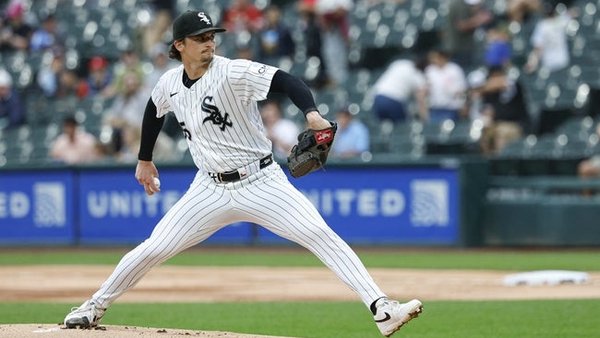
Troy Melton’s 2.52 ERA and 1.10 WHIP represent a tier the market hasn’t fully separated from Davis Martin’s 3.96 ERA and contact-heavy 1.30 WHIP. Two sub-.720 OPS lineups, a slightly pitcher-friendly park, and the sharpest run-prevention arm in this matchup all point toward a run environment the 8.0 total treats as ordinary — it is not.
Troy Melton vs. Davis Martin: Detroit Tigers at Chicago White Sox Betting Preview
Yesterday’s 3-1 White Sox win shifted the series momentum, but today’s game looks nothing like Saturday’s. The pitching matchup flips significantly — Troy Melton (8-4, 2.52 ERA) takes the hill for Detroit, and that changes the entire scoring calculus. Chicago’s rotation turns over to Davis Martin (9-7, 3.96 ERA), a respectable mid-rotation arm but a noticeable step down from what Detroit is bringing.
The market has set the total at 8.0, which prices in a fairly average scoring environment for two below-average offensive clubs. But that number doesn’t fully account for what Melton does to opposing lineups — suppressing baserunners, controlling counts, and preventing the kind of multi-run innings that push totals over the line. The under at -114 is the cleanest expression of this game’s run environment.
Both Detroit’s team OPS (.718) and Chicago’s (.720) sit below league average. Neither lineup is built to punish quality pitching consistently. Layer in a slightly pitcher-friendly park and a starter on the visiting side who has been one of the better run-prevention arms in this division, and the 8.0 total starts to look like a gift for under bettors.
Game Info & Betting Lines
- Date/Time: Sunday, September 20, 2026 | 2:10 PM ET
- Venue: Guaranteed Rate Field | Park Factor: 0.98 (slightly pitcher-friendly)
- TV: MLB.TV, Tigers.TV, CHSN
- Probable Starters: Troy Melton (DET, 8-4, 2.52 ERA) vs. Davis Martin (CWS, 9-7, 3.96 ERA)
- Moneyline: Detroit Tigers +100 / Chicago White Sox -120
- Run Line: Chicago White Sox +1.5 (-206) / Detroit Tigers -1.5 (+168)
- Total: 8.0 (Over -105 / Under -114)
Why This Number Is Close — But Slightly Off
The market isn’t stupid. Setting the total at 8.0 with modest juice on both sides reflects the genuine tension here: two cold offenses, two functional starters, a neutral park. Books have priced the under at -114 — a slight lean — which tells you professional money has already nudged the number toward the under. That’s meaningful context.
The legitimate case for the over rests on the series history. Friday’s 11-8 blowout showed these lineups can erupt. Detroit rallied from six down, Lee and Greene went deep in the same inning, and the White Sox bullpen collapsed late. If both starters exit early — something Melton’s 110.2 innings and Martin’s 141.0 innings suggest is at least possible in a September finale — the late-game scoring can snowball.
But here’s where I think the market is slightly wrong: it’s weighting the Friday outlier too heavily. That game featured a rookie in his third career start (Andrew Sears) getting shelled for six unearned runs in the first. Sunday’s matchup is structurally different. Melton is in a different tier than what Detroit sent out Friday, and Martin, while not dominant, has generally kept games manageable. The -114 juice on the under reflects where the sharp money is sitting, and the structural case — Melton’s run-prevention profile, two sub-.720 OPS lineups, a 0.98 park factor — points toward a final score that stays south of 8 more often than the raw line implies.
What Separates the Pitching
The gap between these two starters is real, and it matters for how this game scores.
Melton is operating at a different level. His 2.52 ERA and 1.10 WHIP across 110.2 innings aren’t a small-sample artifact — this is a full season of legitimate run prevention. His arsenal is built around deception and bat-missing: his slider generates a 32.9% whiff rate with an xwOBA of just .283 against, and his changeup sits at a .224 xwOBA with 27.8% whiffs. His 96.4 mph four-seamer (32.1% usage) keeps hitters honest up in the zone while the secondary stuff works below. The result is a pitcher who rarely creates traffic — 34 walks in 110.2 IP — and limits the kind of multi-baserunner sequences that produce crooked numbers.
Against Chicago’s lineup, the matchup signals are mixed but manageable. Miguel Vargas is batting .182 in 11 plate appearances against Melton with three strikeouts — a small sample, but his vsRHP xwOBA of .397 suggests Melton’s slider profile can keep him off-balance. Murakami’s .477 xwOBA is the scariest number in this lineup, and his 9.5% barrel rate paired with 33.5% hard-hit rate means one mistake gets punished. But his 40.1% whiff rate is a vulnerability Melton can exploit with his breaking ball mix.
Martin is a different profile. His 3.96 ERA and 1.30 WHIP reflect a contact-heavy approach — his sinker (18.6% usage, .354 xwOBA against, only 5.6% whiff rate) generates contact rather than misses. His curveball is his best swing-and-miss weapon at 39.0% whiff rate and .258 xwOBA, but his cutter leaks — a .409 xwOBA against suggests it’s a pitch the Tigers can square up. Riley Greene is 7-for-17 in his career sample against Martin (15 PA qualifying threshold met), hitting .417 with an xwOBA of .475 — a genuine matchup problem for the White Sox in the middle of Detroit’s order.
The innings each starter creates look different: Melton produces quick outs and low-traffic frames; Martin generates contact and baserunners that require the lineup to strand them. Both profiles can keep totals in check when the offense behind them is this limited, but Melton’s floor is substantially higher than Martin’s.
Rejected Angles
The White Sox moneyline at -120 doesn’t hold up. Chicago is 4-6 over its last 10, and while it owns the home-field edge today, it’s sending a starter with a 1.30 WHIP against a Tigers lineup that has shown it can manufacture runs — Detroit posted a +75 run differential on the season, better than Chicago’s +35. Paying -120 for a team in mild free-fall on the wrong side of this pitching matchup is bad value.
The run line at Chicago -1.5 (-206) is worse. -206 to cover 1.5 runs is a number I’d need a far higher conviction edge to touch. With Melton going for Detroit, the Tigers are a real threat to win outright. Laying -206 on the home side against that arm is a losing proposition on expected value alone.
Detroit’s moneyline at +100 is interesting — genuinely interesting — but I don’t want to build an article around a coin-flip. The Tigers have the pitching edge today, but Detroit’s bullpen has enough question marks late in the season that I’d rather express this view through the total than through the win-loss line.
Run Environment & Game Shape
Guaranteed Rate Field plays nearly neutral at a 0.98 park factor — not a suppressive environment the way some AL parks are, but not a launching pad either. That slight pitcher lean matters at the margin when you’re deciding whether an 8-run total is accurate or generous.
The broader context: both clubs are carrying sub-.720 OPS lineups into this game. Detroit (.718 OPS) and Chicago (.720 OPS) rank among the weaker offensive units in the American League. Against an average starter, these offenses can scratch out enough runs to push a total. Against Melton — who is not an average starter — the ceiling for the White Sox side compresses considerably. Chicago’s lineup projects to face a pitcher whose slider-changeup combination generates some of the lowest contact quality in the division, and the top of their order (Grichuk, Teel, Vargas) carries the weight without a lot of lineup depth behind position five.
Detroit’s side against Martin is more open. Greene’s .417 BvP average over 15 PA is a real threat, and Torkelson has made contact in 19 career plate appearances against Martin. But Martin has generally kept the ball in the park — 14 home runs allowed in 141.0 innings — and with Detroit’s lineup missing several regulars to injury, the upper bound on their offensive output is capped as well.
The game shape that cashes the under looks like this: Melton works six-plus efficient innings, limiting Chicago to one or two runs; Martin keeps Detroit to three or fewer through five before the bullpens take over; and neither side’s relief corps blows the game open late. That scenario is more likely than not given the structural inputs, and it’s the scenario Melton’s profile makes most plausible.
The Pick
The qualitative and Statcast case here is straightforward: a legitimate ace-tier starter in Melton, two offenses operating below the league average floor, and a park that offers no boost to help either side clear 8 runs. I don’t need the total line to be dramatically wrong to find value — I just need it to be slightly off, and at -114, it is.
Bet: Under 8.0 (-114) — 2 units. Melton’s slider-changeup arsenal and 1.10 WHIP make him the best run-suppressor on this field, and neither sub-.720 OPS lineup has the offensive floor to consistently manufacture 4-plus runs against quality pitching. The under is the play.