Minnesota’s bullpen is down four arms to injury while Cleveland’s closer leads all of baseball with 29 saves — yet the moneyline is pricing this game like a virtual coin flip at -122. The Twins carry a -36 run differential and a 4.75 team ERA into a park that does nothing to mask those cracks. The structural gap is real, and the number hasn’t fully closed it.
Bailey Ober vs. Slade Cecconi: Minnesota Twins at Cleveland Guardians Betting Preview
After the numbers correctly identified value on the under in Tuesday’s 5-2 Cleveland win, today’s pitching matchup presents a structurally different puzzle — one where the edge is less about run suppression and more about which organization has actually built a roster capable of sustaining a late-inning lead. The Guardians have now beaten Minnesota three straight times in this series, and the structural argument for Cleveland hasn’t changed: better team ERA, a healthier bullpen, and a run differential that tells the real story of each club’s season.
Minnesota enters at +104 on the moneyline — essentially a coin flip — but the Twins are 49-53 with a -36 run differential on the season. Cleveland is 54-48 with a neutral run differential and has gone 7-3 over their last 10 games. The market is offering Cleveland at -122, a price that clears the juice ceiling with room to spare. That gap between what the odds imply and what the season-long data shows is where the value lives.
Minnesota’s bullpen is genuinely decimated — Cole Sands, Anthony Banda, Marco Raya, and Garrett Acton are all on the IL. Cleveland’s pen, led by Cade Smith with 29 saves (tops in all of baseball), is functioning at a high level. In a game projected to be decided by a single run, that late-inning advantage could be decisive.
Game Info & Betting Lines
- Date/Time: Wednesday, July 22, 2026 | 6:40 PM ET
- Venue: Progressive Field | Park Factor: 0.98 (essentially neutral)
- TV: MLB.TV, CLEGuardians.TV, Twins.TV
- Probable Starters: Bailey Ober (MIN, 7-3, 4.32 ERA) vs. Slade Cecconi (CLE, 4-6, 4.55 ERA)
- Moneyline: Minnesota Twins +104 / Cleveland Guardians -122
- Run Line: Cleveland Guardians -1.5 (-215) / Minnesota Twins +1.5 (+176)
- Total: 8 (Over -110 / Under -110)
Why This Number Is Close
The market is doing its job here. Minnesota has genuine offensive firepower — Byron Buxton (25 HR, .907 OPS) and Ryan Jeffers (.941 OPS, 8 HR through 139 at-bats) are legitimate threats, and Kody Clemens adds 18 home runs of middle-of-the-order power. Against a pitcher with Cecconi’s contact profile, the Twins’ lineup demands respect. That’s why this isn’t priced at -140 or -150 for Cleveland.
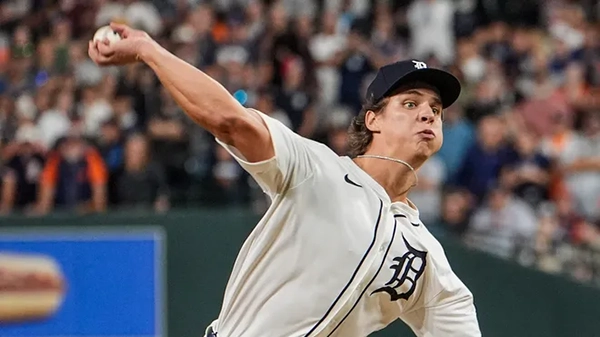
The legitimate case for Minnesota also includes Ober’s record: the right-hander is 7-3 on the season with a 1.19 WHIP that suggests he’s commanding the zone better than his 4.32 ERA implies. He’s been a winning pitcher in 2026, and his sweeper — sitting at a 32.9% whiff rate with a .159 xwOBA against — gives him a genuine put-away weapon. The market isn’t wrong to keep this close.
But where the line edges toward incorrect is in how it values Cleveland’s team-wide pitching infrastructure versus Minnesota’s. The Guardians carry a 3.76 ERA as a staff versus Minnesota’s 4.75. That’s not a starter-level difference — it’s a systemic one that runs through the rotation, the bullpen, and the overall run prevention profile. A full run of team ERA separation doesn’t just disappear because two individual starters have similar surface numbers.
What Separates the Pitching
This matchup looks even on the surface — Ober at 4.32 ERA, Cecconi at 4.55 — but the underlying arsenal data tells a more nuanced story. Bailey Ober leans heavily on his changeup (36.1% usage, 82.9 mph, 22.7% whiff) and a four-seamer that sits at just 88.5 mph. The velocity is well below average, which means Ober lives on movement and deception. His sweeper is his best swing-and-miss pitch — 32.9% whiff, .159 xwOBA against — but it’s only deployed 10.6% of the time. The concern is his sinker (4.0% usage) producing a .688 xwOBA against when it surfaces, and his overall soft-contact dependency makes him vulnerable when hitters get comfortable timing his lower-velocity repertoire.
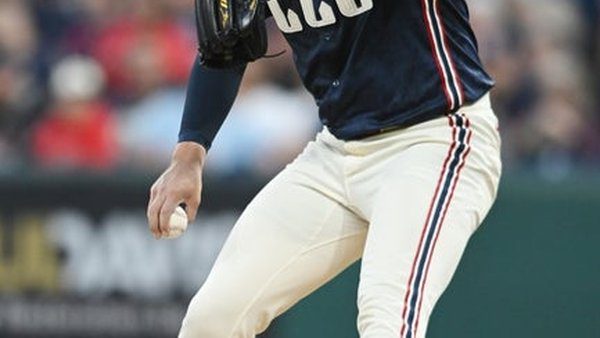
Slade Cecconi operates in a completely different velocity band. His four-seamer sits at 93.5 mph (28.1% usage) with a 16.8% whiff rate, backed by a cutter at 88.2 mph that generates a 21.3% whiff and .308 xwOBA against. His slider, though used sparingly at 4.8%, is his sharpest swing-and-miss offering at a 31.1% whiff rate and just .212 xwOBA against. The problem isn’t Cecconi’s stuff — it’s his command. A 1.41 WHIP across 99 innings signals chronic baserunner accumulation, and that’s a real vulnerability against a lineup with Buxton’s .440 xwOBA and Jeffers’ .398 xwOBA. Cecconi gets hitters out; he just tends to make it harder than it needs to be.
The gap that matters for betting purposes isn’t starter vs. starter — it’s what happens in innings six through nine. Cecconi’s contact issues get amplified when the bullpen is managing elevated pitch counts and baserunner jams. That’s where Cleveland’s healthy pen (Smith, Holderman, Gaddis) versus Minnesota’s depleted unit becomes the actual margin in a close game.
The Pushback
Let me steelman the case against Cleveland before I land on a side.
First, Cecconi’s WHIP is a genuine problem. A 1.41 across 99 innings isn’t a small-sample blip — it’s a pattern. Against a Minnesota lineup that has Buxton (.440 xwOBA), Jeffers (.398 xwOBA), and Josh Bell (.384 xwOBA) in the heart of the order, free baserunners get expensive fast. Cecconi’s four-seamer grades out at just a .348 xwOBA against, and his sinker is even worse at .350. When his cutter and slider aren’t working, he has no high-leverage fallback. That’s a real risk in a tight game.
Second, Cleveland’s lineup is carrying some real absences. Jose Ramirez is on the 10-Day IL with a hand injury, and while he’s been a below-average offensive performer by 2026 standards — his .757 OPS and .239 average this season don’t match his perennial star reputation — losing a lineup mainstay still disrupts structure and depth. The team’s actual leading offensive contributor this season is Chase DeLauter (.809 OPS, 11 HR, 50 RBI), who remains in the lineup and projects as a genuine middle-of-the-order threat against Ober. DeLauter’s .364 xwOBA and 29.3% hard-hit rate give Cleveland a legitimate run-scoring focal point. The Ramirez absence matters, but it doesn’t hollow out the offense the way it might have in prior seasons.
Third, the raw win probability sits at 57/43 in Cleveland’s favor — essentially a coin flip with a slight lean. Anyone betting this game needs to acknowledge that Minnesota wins this game four times out of ten in expectation. -122 is not a lock price, and it shouldn’t be treated like one.
Run Environment & Game Shape
Both starters have elevated WHIPs and home run vulnerability — Ober has surrendered 13 HR in 77 innings, Cecconi has given up 13 in 99 — which pointed toward a higher-scoring game in early projections. The raw numbers come out to a projected total of 9.1 runs against a market line of 8. That’s a meaningful gap on paper.
But the over isn’t the play, and here’s why: Progressive Field carries a 0.98 park factor, making it essentially run-neutral. Mixed bullpens on both sides means neither team has a dominant late-inning run-prevention advantage that would push scoring up dramatically. The 1.1-run gap between the projected total and the market number sounds significant, but in a neutral park with inconsistent relief depth on both sides, the variance is too wide to justify the juice on the over. The edge doesn’t survive the real-world conditions well enough to make it a playable number. The total stays off the board.
What the run environment does tell us is that this game is likely to be decided by one run — which circles back to the bullpen disparity. Cleveland’s pen is intact. Minnesota’s is not. In a game where the margin is razor-thin, the team with Cade Smith available in the ninth has a structural closing advantage that the market hasn’t fully priced at -122.
The run line at -1.5 (-215) is also a hard pass. A projected margin of 0.1 runs offers zero credible path to a multi-run Cleveland win in expectation. Laying -215 for a side that wins by exactly one run more often than two in this scenario is pure value destruction. That number is for the books, not us.
The Pick
Cleveland Guardians Moneyline -122 | 2 Units | Moderate Confidence
The case for Cleveland comes down to three compounding edges, not one decisive one: a pitching infrastructure gap (3.76 team ERA vs. 4.75), a healthy bullpen going up against Minnesota’s genuinely decimated relief corps, and a season-long run differential of -36 for a Twins club the market is treating like a .500 team. At -122, we’re not paying a premium to lay juice on a heavy favorite — we’re getting a structurally superior team at a price that still offers positive expected value over time.
Minnesota wins this game roughly four times out of ten. But at -122, Cleveland doesn’t need to win seven times out of ten to be the right side — it needs to win about 55%, and the numbers say they clear that bar. Take the Guardians.
Bet: Cleveland Guardians Moneyline -122 | 2 Units