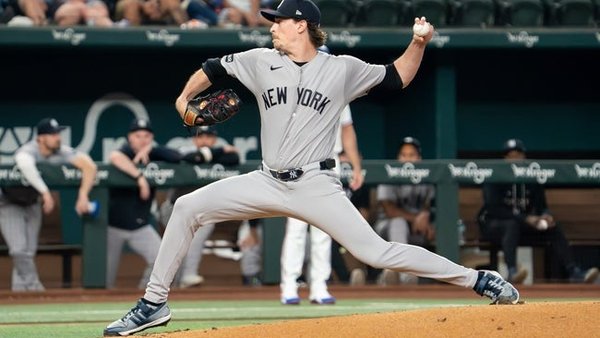
Max Fried’s 2.73 ERA and 0.99 WHIP run into a Twins lineup missing Byron Buxton, Royce Lewis, and Trevor Larnach — yet the total sits at 8.0, pricing both halves of the ledger as if the pitching profiles were equal. The mound gap here is steep, and it points somewhere other than the moneyline.
Max Fried vs. Bailey Ober: New York Yankees at Minnesota Twins Betting Preview
After the Yankees roughed up Minnesota’s bullpen for eight runs Monday — capped by Aaron Judge’s three-run shot in the eighth — the series shifts to a genuine starter’s duel. Or rather, a matchup where one starter is genuinely elite and the other is meaningfully vulnerable, and the market’s total of 8.0 may not fully account for which half of the ledger is more likely to stay quiet.
The Yankees ML at -180 is dead money for my purposes — that’s hard juice against a price ceiling I don’t cross. But the pitching edge Max Fried brings into Target Field tonight doesn’t disappear just because the moneyline is overpriced. It gets redirected. With a neutral park factor, a depleted Twins lineup, and Fried’s elite run-suppression profile anchoring the Yankees’ side of the scoring equation, the Under at -116 becomes the most efficient expression of this edge.
The combined run estimate comes out at 9.1 against a posted total of 8.0. I’m going to address that tension directly — because it’s real, and it’s the central debate in this game.
Game Info & Betting Lines
- Date/Time: Tuesday, September 15, 2026 | 7:40 PM ET
- Venue: Target Field — Park Factor 1.00 (perfectly neutral, no run inflation)
- Probable Starters: Max Fried (NYY) vs. Bailey Ober (MIN)
- Moneyline: Yankees -180 / Twins +148
- Run Line: Yankees -1.5 (-102) / Twins +1.5 (-118)
- Total: 8.0 (Over -104 / Under -116)
Why This Number Is Close — But Tilts Under
The market has set 8.0 knowing exactly what it’s working with: a quality left-hander against a middling right-hander, in a neutral park, with a Yankees lineup that doesn’t grind out runs cheaply (they strike out 1,371 times as a team and bat .235). The number isn’t careless. Books see Bailey Ober’s vulnerability — 18 home runs allowed in 117.2 innings, a 4.28 ERA, 1.25 WHIP — and they’ve priced in the fact that the Yankees can get to him.
Where I think the market is slightly wrong: it’s appropriately pricing Ober’s side of the ledger but underweighting Fried’s suppression effect on the Twins. Minnesota’s lineup is stripped down tonight — Byron Buxton (hip), Royce Lewis (shoulder), and Trevor Larnach (wrist) are all sidelined or limited. The lineup Fried faces is built around Luke Keaschall (.307 xwOBA), Brooks Lee (.297 xwOBA), and a supporting cast that lacks the Statcast profile to consistently damage elite pitching. Fried’s 2.73 ERA and 0.99 WHIP over 99 innings isn’t a small-sample illusion — it’s a real run-suppression engine facing one of the thinnest lineups he’ll see all season.
The numbers technically lean toward the over, but that lean is only 1.1 runs — well within normal variance. At -116 juice on the Under, I’m getting acceptable value to fade that razor-thin over signal.
What Separates the Pitching
The gap between these two starters is the core of the betting case. Max Fried operates with a seven-pitch arsenal built around deception and soft contact. His cutter — used 21.7% of the time at 91.9 mph — holds hitters to a .235 xwOBA with a 23.6% whiff rate. His curveball at 13.4% usage generates a .194 xwOBA, one of the best put-away weapons in this game. The changeup sits at .245 xwOBA with a 28.3% whiff. Against a Twins lineup where the top two hitters (Keaschall .307 xwOBA, Lee .297 xwOBA) show limited hard-hit capability and sub-20% whiff rates, Fried’s pitch mix is designed to create the exact kind of weak contact Minnesota’s lineup profile produces. Josh Bell has seen Fried 25 times historically, hitting .333 — but with zero home runs and four strikeouts — which suggests contact without damage, exactly the kind of innings Fried manufactures.
Bailey Ober is a different story entirely. His primary weapon is a changeup thrown 34.2% of the time, but it carries a .359 xwOBA-against — soft in sequencing, not in outcomes. His four-seam fastball sits at 88.1 mph with a .348 xwOBA and only a 14.5% whiff rate. Against a Yankees lineup where Aaron Judge posts a .541 xwOBA, Ben Rice sits at .457 xwOBA with a 7.4% barrel rate, and Spencer Jones shows a .488 xwOBA, Ober’s flat four-seamer at 88 mph is a liability. The Yankees have 207 team home runs — Ober’s 1.38 HR/9 against that kind of power creates real blowup risk. The innings Ober creates are high-leverage, contact-heavy frames where one mistake turns into multiple runs. The innings Fried creates are quiet ones — soft grounders, weak fly balls, and a strikeout rate (8.55 K/9) that limits traffic entirely.
The Pushback
The honest argument against the Under starts with the run estimate itself: 9.1 combined runs projected against a posted total of 8.0. I’m betting the Under while the numbers say the game goes over. That deserves real scrutiny, not a hand-wave.
The concern is Bailey Ober against this lineup. Judge homered Monday for his first since May 24 — a player who’s been locked in at .541 xwOBA this season now has momentum behind him. Rice has 38 home runs and a barrel rate that punishes exactly the kind of flat fastball Ober relies on. If those two get going in the same game, the over cashes comfortably regardless of how well Fried pitches his side. Ober’s sweeper does generate a 37.5% whiff rate and a .162 xwOBA — that’s a real weapon — but it’s used only 11.4% of the time, and it doesn’t change the exposure his four-seamer and changeup create against the heart of New York’s order.
I’m also conscious that the Yankees went over in Monday’s 8-3 win, and the bullpen environment in a blowup scenario compounds run totals quickly. That’s the real over path here: not a competitive high-scoring game, but a Ober implosion in the middle innings that the Under can’t survive.
I’m fading that scenario because of the frequency, not the possibility. Ober blowups are real — but so is Fried’s ability to neutralize the Twins side entirely, and a neutral park gives neither offense a structural lift. If this game stays close, the Under wins. The question is how often Ober gets through five innings without a multi-run frame. At his current 4.28 ERA with 18 homers allowed, that’s a coin flip — but I’m not being asked to bet on Ober, I’m being asked to bet on whether both halves of the ledger combine to clear 8. Fried’s half almost certainly doesn’t. That’s enough for me at -116.
Rejected Angles
Yankees Moneyline (-180): Hard no. I have a firm juice ceiling and -180 blows past it. The edge is real — win probability north of 73% — but paying -180 on a baseball moneyline means you need to be right far more often than the bet pays you back over time. I don’t chase value down that road regardless of how confident I am in the outcome.
Yankees Run Line (-1.5 at -102): Tempting price, wrong side of the variance. The margin on this game is narrow enough that a one-run Yankees win — the most common outcome given Fried’s profile — doesn’t cover -1.5. Laying runs on a game I expect to be low-scoring is a structural contradiction. Pass.
Over 8.0 (-104): The numbers lean here, but only barely — 1.1 runs of projected edge in a sport where variance swallows gaps that small on a regular basis. At -104, the over isn’t getting me paid enough to take the side that requires Ober to get hit hard. I’d rather take the Under and let Fried do the heavy lifting on my behalf.
The Play
I’m not pretending this is a slam dunk. The run estimate says over, and I respect that signal enough to go two units instead of three. But -116 on the Under is fair value for a game anchored by Max Fried against a lineup missing its best hitters, in a neutral park, with no structural reason for runs to inflate on either side. The Twins don’t have the Statcast muscle to consistently damage Fried’s pitch mix, and the one scenario that sinks the Under — an Ober implosion — is a single game outcome, not a probability I’m required to price as inevitable.
Bet: Under 8.0 (-116) — 2 Units